
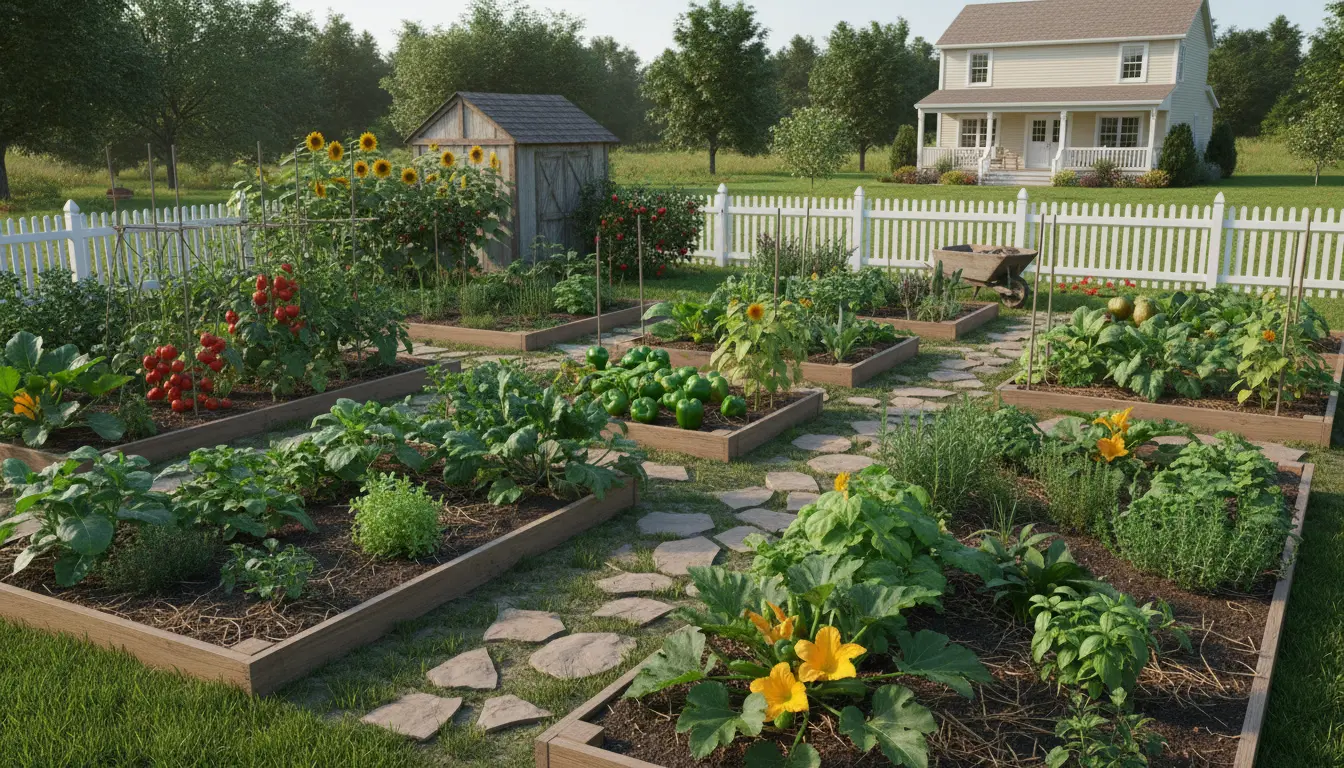
Why a Small Vegetable Garden Works
Starting a small vegetable garden is practical for beginners and busy gardeners. It requires less time, lower cost, and fits patios, balconies, and small yards.
This guide gives clear steps to plan, plant, and maintain a productive small vegetable garden using common materials and seasonal choices.
Plan Your Small Vegetable Garden
Choose location for your small vegetable garden

Pick a spot with at least 6 hours of sunlight for most vegetables. South- or west-facing areas usually work best.
Consider proximity to water and how visible the area is for regular checks and harvesting.
Decide garden type
For small spaces, choose one of these formats:
- Raised beds — good drainage and easy soil control.
- Containers — flexible and perfect for balconies.
- In-ground small beds — lower cost if soil is healthy.
Prepare Soil and Containers
Test and improve soil

Use a simple soil test kit to check pH and nutrients. Most vegetables prefer slightly acidic to neutral soil (pH 6.0–7.0).
Amend heavy clay with compost and coarse sand for better drainage. Add compost to sandy soil to improve water retention.
Choose potting mix for containers
Use a high-quality potting mix for containers, not garden soil. Look for mixes with peat, compost, and perlite for aeration.
Select Vegetables for a Small Vegetable Garden

Pick compact, high-yield, or fast-growing crops. For beginners, choose varieties labeled “bush” or “compact.”
- Leafy greens: lettuce, spinach, kale — quick harvest.
- Root crops: radishes, baby carrots — space-efficient.
- Fruiting plants: cherry tomatoes, dwarf peppers — grow well in containers.
- Herbs: basil, parsley, cilantro — continuous harvest and fragrance.
Planting and Spacing Tips
Follow seed packet spacing, but use succession planting to maximize yield. Sow small seeds in rows or scatter for baby greens.
Use vertical support for vining crops like peas or indeterminate tomatoes to save ground space.
Watering and Feeding Your Small Vegetable Garden
Watering routines
Water deeply and less often to encourage deep root growth. Morning watering reduces disease risk.
Containers dry faster than beds. Check soil moisture daily during hot weather.
Fertilizing schedule
Start with a balanced organic fertilizer at planting. Side-dress heavy feeders (tomatoes, peppers) with compost or fertilizer every 4–6 weeks.
Pest and Disease Management
Monitor plants weekly for signs of pests or disease. Early detection keeps problems small.
- Use row covers to protect seedlings from insects.
- Encourage beneficial insects with flowering herbs like dill and calendula.
- Remove diseased leaves promptly and dispose of them away from the garden.
Maintenance Checklist for a Small Vegetable Garden
- Weed lightly weekly to reduce competition.
- Mulch the surface to retain moisture and suppress weeds.
- Prune and stake plants as needed for airflow and support.
- Harvest regularly to encourage continued production.
Many common vegetables can be harvested multiple times. Leafy greens like lettuce and kale can be cut selectively to regrow, providing continuous harvests from the same plants.
Small Vegetable Garden Case Study
Case study: Anna converted a 4 x 8 foot corner of her small yard into a raised bed. She planted cherry tomatoes, basil, lettuce, and radishes.
After three months she harvested weekly salads and a dozen cherry tomato servings per week. Using compost and monthly side-dressing, she increased yields and reduced store-bought herbs.
Key lessons: choose compact varieties, stagger planting dates, and place the bed near the kitchen for daily care.
Common Mistakes and How to Avoid Them
- Overcrowding — follow spacing recommendations to avoid disease and low yields.
- Underwatering — check moisture; containers need more frequent watering.
- Ignoring soil health — add compost each season to replenish nutrients.
Quick Seasonal Planner for a Small Vegetable Garden
- Spring: Prepare beds, plant cool-season crops, start warm-season seedlings indoors.
- Summer: Maintain watering, mulch, and harvest; plant successive leaf crops.
- Fall: Sow cover crops or fall greens; remove spent plants and add compost.
Final Tips to Start a Small Vegetable Garden
Start small and expand after your first season. Track what grows well and what struggles in your specific microclimate.
Keep a simple garden journal with planting dates, varieties, and harvest notes to improve each year.
With basic planning, good soil, and regular care, a small vegetable garden can supply fresh produce and learning for years to come.