
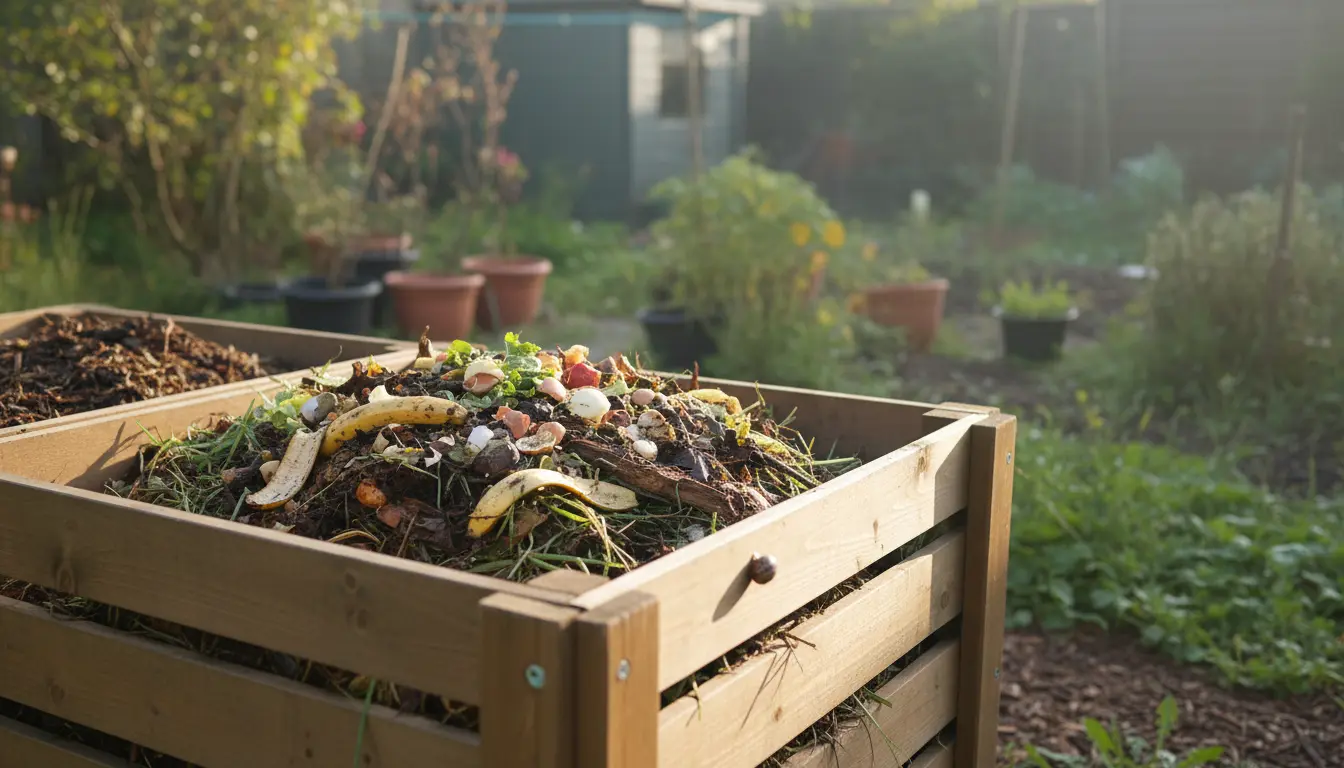
Start Small and Practical
Home composting for beginners is an easy way to reduce waste and create nutrient-rich soil. You don’t need special skills or expensive equipment to get started.
This guide gives clear, step-by-step instructions you can follow this weekend.
Why Home Composting for Beginners Works

Composting breaks down organic matter into a usable soil amendment using microorganisms, water, air, and time. It reduces garbage volume, lowers methane from landfills, and improves garden health.
For beginners, the process is forgiving—small mistakes usually only slow decomposition rather than ruin the pile.
Simple Composting Steps for Beginners
Follow these basic steps to build and maintain a compost pile that works.
- Choose a location: a well-drained, partly shaded spot near your kitchen or garden.
- Pick a container: use a bin, tumbler, or a simple open pile depending on space and preference.
- Build layers: alternate brown (carbon) and green (nitrogen) materials in 2–4 inch layers.
- Maintain moisture: aim for a damp sponge consistency—too dry slows breakdown, too wet causes odors.
- Turn occasionally: aerate the pile every 1–2 weeks to speed decomposition and prevent smells.
Choosing a Compost Bin for Home Composting for Beginners

Your choice of bin affects ease and speed. Beginners should pick a low-maintenance option they will actually use.
- Plastic tumblers: good for fast, tidy composting and easy turning.
- Stationary bins: inexpensive and simple; require a garden fork to turn contents.
- Open piles: best for large yards but need more effort to manage odors and pests.
What to Compost and What to Avoid for Home Composting for Beginners
Knowing what to add helps keep your compost healthy. Use a balance of greens (nitrogen) and browns (carbon).
- Greens: vegetable peels, fruit scraps, coffee grounds, grass clippings.
- Browns: dry leaves, shredded paper, cardboard, straw.
- Avoid: meat, dairy, oils, diseased plants, and pet waste from carnivores.
Adding small amounts of finished compost to a fresh pile introduces beneficial microbes and speeds up decomposition.
Maintaining Your Compost: Practical Tips

Maintenance is mostly about balance and observation. Regular checks prevent common problems.
- Smells: usually caused by too much wet green material. Add more browns and turn the pile.
- Slow decomposition: add water if too dry and turn to introduce oxygen.
- Pests: cover food scraps with browns and use a closed bin or secure lid to deter animals.
- Temperature: a healthy pile heats up; if it stays cool, add more greens and turn it.
How Long Until Compost Is Ready?
Time depends on method and conditions. Hot composting can produce usable compost in 2–3 months. Cold composting may take 6–12 months.
Finished compost is dark, crumbly, and smells earthy. Large items like twigs may still be visible and can be screened out.
Using Your Compost
Apply finished compost to garden beds, use as potting mix amendment, or top-dress lawns. A layer of 1–2 inches improves soil structure and water retention.
Compost is gentle and safe to use around most plants; avoid using unfinished compost directly on seedlings without mixing it into potting soil.
Small Case Study: Apartment Compost Success
Maria, an apartment dweller, started with a 10-gallon indoor bin and a small outdoor bokashi bucket. She collected kitchen scraps in a sealed container and added them to the bokashi system weekly.
After three months of bokashi fermentation and a month of burying the pre-compost in a community garden bed, she had nutrient-rich soil to boost her potted herbs. Her system produced no noticeable odors and reduced her kitchen waste by over 50%.
Troubleshooting Common Problems for Home Composting for Beginners
Address issues early to keep the process moving smoothly.
- Odor: add browns, improve drainage, and turn the pile.
- Slow breakdown: chop materials smaller, keep moist, and aerate regularly.
- Fruit flies: cover fresh scraps with a layer of browns or use a closed container for scraps until you add them to the pile.
Final Checklist for Home Composting for Beginners
- Choose a bin that fits your space and commitment level.
- Keep a balanced mix of greens and browns.
- Maintain moisture and aeration by checking weekly.
- Use finished compost to enrich soil and reduce synthetic fertilizer use.
By starting small, observing your pile, and making simple adjustments, home composting becomes a low-effort, high-reward practice. Try one bin this month and grow your confidence with each batch.