
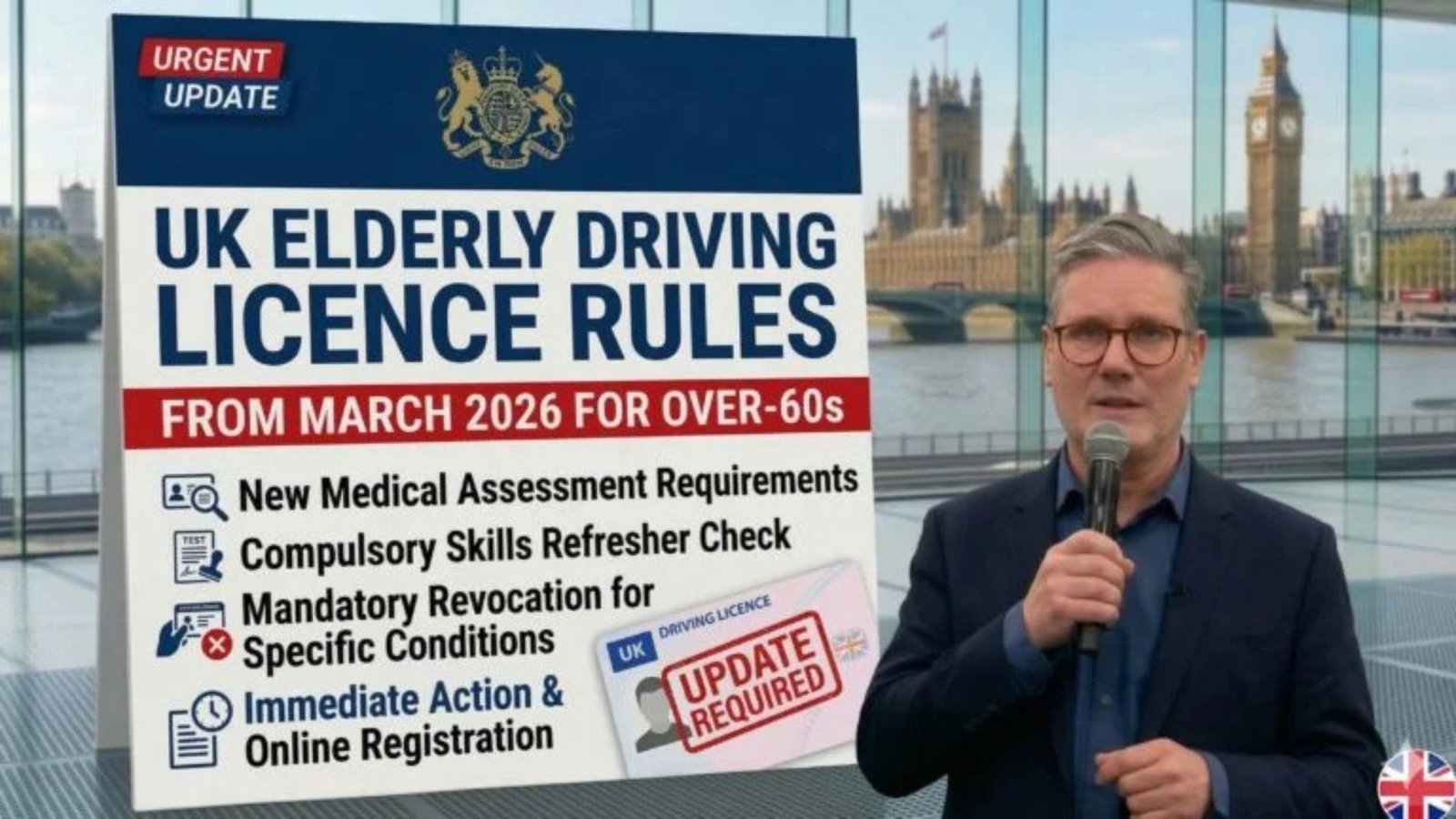
As people live longer and stay active, many older adults in the UK want to keep driving safely. The government and the DVLA (Driver and Vehicle Licensing Agency) focus on road safety while helping seniors stay mobile. From March 2026, there are updates and discussions about driving licence rules, especially for those over 60 and 70. These aim to make renewals easier with digital tools and better health checks.
No one gets banned from driving just because of age. There is no maximum age limit. But rules become stricter after 70 to ensure everyone is fit to drive. Let’s look at the current rules and what might change soon.
Current UK Driving Licence Rules for Older Drivers

In the UK, most people renew their photocard driving licence every 10 years. This changes when you turn 70.
- At age 70: Your licence expires. You must renew it if you want to keep driving.
- After 70: Renew every 3 years. Renewal is free.
- How to renew: Apply online at GOV.UK (fastest – new licence in about 1 week) or by post using form D46P (slower, up to 3 weeks).
- What you declare: You self-declare that you meet eyesight standards (read a number plate from 20 metres) and have no medical conditions that affect driving.
- Medical conditions to report: Things like insulin-treated diabetes, Parkinson’s disease, serious heart problems, seizures, or early dementia. Tell DVLA right away if you have these – it’s the law.
If you don’t report a condition, you could face a £1,000 fine. In an accident, your insurance might not pay.
For some older drivers with extra categories (like C1 for medium vehicles or D1 for minibuses), you may need a medical exam (D4 form) every time you renew after 70, unless you drop those categories.
What Changes Are Coming from March 2026?

The government is reviewing rules for an ageing population. From early 2026 (including March), expect these updates:
- More push for digital renewals via GOV.UK to speed things up and cut delays.
- Stronger focus on eye health. Currently, it’s self-declaration. But there are proposals (under review by Department for Transport) to require proof of a recent eye test from an optician for drivers over 70 during renewal every 3 years.
- Clearer guidelines for doctors (GPs) to check if patients are fit to drive and suggest car changes like automatic gears or special mirrors.
- Easier for family or others to report safety worries to DVLA.
- More people trying voluntary mature driver assessments (like from IAM RoadSmart) to check driving skills and get tips – not a pass/fail test, just helpful advice.
These are not full new laws yet but part of road safety plans. Official GOV.UK pages still show the standard 3-year renewal for over-70s with self-declaration. Any big shift (like mandatory eye tests) would be confirmed officially.
Why These Rules Matter for Drivers Over 60
If you’re in your 60s, start preparing now:
- Get regular eye checks (at least every 2 years).
- Talk to your doctor about any health issues and driving.
- Update your DVLA record if your health changes.
- Learn the online renewal process – it’s simple and quick.
Staying proactive helps you drive longer and safely. Many over-70s renew easily and keep driving into their 80s or 90s.
Renewal Rules at Different Ages
| Age Group | Renewal Frequency | Cost | Key Requirements | Tips for Smooth Renewal |
|---|---|---|---|---|
| Under 70 | Every 10 years | Free (if on time) | Self-declare health & eyesight | Update photo if needed |
| At 70 & Over | Every 3 years | Free | Self-declare (possible eye proof soon) + report conditions | Apply online 90 days before expiry |
| With C1/D1 categories | Every 3 years after 70 | Free | Medical exam (D4 form) often needed | Consider dropping if not used |
Benefits of Staying Safe on the Road
Following these rules keeps you independent. Safe older drivers often get lower insurance with telematics (devices that track safe driving). Voluntary checks can improve skills and even cut costs.
If driving becomes hard, options like public transport, taxis, or community rides help. But many seniors stay safe behind the wheel with small adjustments.
Conclusion
UK driving rules for older people balance freedom and safety. From March 2026, expect easier digital renewals and more attention to eyesight and health – especially for those over 70 who renew every 3 years. Start with regular eye tests, honest health reports, and online applications to avoid problems.
Driving is a big part of life for many. By staying informed and prepared, you can enjoy it safely for years. Always check the official GOV.UK website for the latest updates, as rules can evolve.
FAQ: Common Questions About UK Elderly Driving Licence Rules 2026
Q1: Do drivers over 60 have to renew their licence more often?
No, the 10-year renewal stays the same until 70. After 70, it’s every 3 years.
Q2: Will there be a driving test for over-70s from March 2026?
No official full test is planned. But eye test proof might be required, and voluntary skill checks are encouraged.
Q3: What if I fail to renew at 70?
You can’t drive legally until renewed. But if you apply on time, Section 88 lets you drive while waiting (if no fitness issues).
Q4: Do I need a doctor’s note every time?
Usually no – just self-declare. But for certain conditions or extra vehicle categories, yes.
Q5: How do I check my eyesight standard?
You must read a car number plate from 20 metres (with glasses if needed). Get an optician check regularly.
Q6: Can family report me to DVLA if worried?
Yes, it’s easier now. But it’s to help safety – talk openly if concerns arise.