
Why start composting at home
Composting turns food scraps and yard waste into nutrient-rich soil. It reduces landfill waste and supports healthy plants without chemical fertilizers.
Starting composting at home is practical and low cost. Anyone with a small yard or even a kitchen counter can do it.
What you need to start composting at home

Choose the right container for your space: a simple bin, tumbler, or a DIY heap will work. The system choice affects how fast the composting happens and how often you turn it.
Gather basic tools: a garden fork or aerator, a small shovel, and a kitchen container for scraps. You do not need expensive gear to begin.
Materials to collect
- Greens: fruit and vegetable scraps, coffee grounds, fresh grass clippings.
- Browns: dry leaves, shredded paper, cardboard, small twigs.
- Water: keep the pile as damp as a wrung-out sponge.
Step-by-step: How to start composting at home
Follow these basic steps to build a working compost system that suits your home. Each step focuses on simple actions you can complete this week.
1. Pick the spot and container

Place the bin on bare soil in a partly shaded area if possible. This helps drainage and lets worms and microbes access the pile.
2. Build a base layer
Start with a layer of coarse browns like twigs or straw to help air move through the pile. This reduces odor and improves drainage.
3. Add materials in layers
Alternate thin layers of greens and browns. Aim for about two parts brown to one part green by volume for balanced decomposition.
4. Maintain moisture and aeration

Check moisture weekly and add water if dry. Turn or stir the pile every 1–2 weeks to add oxygen and speed up breakdown.
5. Harvest finished compost
Compost is ready when it is dark, crumbly, and earthy-smelling. This usually takes 2–6 months depending on system and climate.
What to compost and what to avoid
Knowing what to add makes composting safe and effective. Start with common kitchen and yard materials you likely already produce.
Safe to compost
- Vegetable and fruit scraps, coffee grounds, tea bags without staples.
- Eggshells crushed, shredded paper, cardboard, dry leaves.
- Yard trimmings, grass clippings in thin layers.
Avoid these
- Meat, fish, dairy, oily foods — they attract pests and smell.
- Diseased plants and invasive weeds that can survive the pile.
- Pet waste from carnivores and treated wood chips.
Food waste makes up roughly one quarter of household trash by weight in many countries. Composting can divert most of that from landfills.
Troubleshooting common problems
Problems usually come from balance, moisture, or aeration. Fix issues quickly with small, direct actions.
Bad smells
Smells indicate too much wet green material or poor aeration. Add dry browns, turn the pile, and check drainage.
Slow decomposition
Slow breakdown often means the pile is too dry, too cold, or lacks nitrogen. Increase green materials, add water, and chop large pieces smaller.
Pests
Keep meat and dairy out, secure lids on bins, and bury food scraps in the middle of the pile to reduce wildlife activity.
Small real-world example
Case study: A two-person household started a 50-liter kitchen caddy and a 200-liter outdoor bin. After 6 months they produced 150 liters of finished compost.
They reduced their weekly trash by about 30% and used the compost in two raised vegetable beds. Yields improved, and they stopped buying bagged topsoil.
Simple systems by space
Choose a system that matches your available space and time. Each option has clear pros and cons.
- Indoor worm bin (vermicompost): good for apartments, faster, needs regular feeding and attention.
- Outdoor bin or tumbler: low maintenance, larger capacity, works well for yards.
- Open heap: cheapest and simplest, best for large gardens with space.
Final steps to get started this week
- Pick a container and place it on soil or a stable surface.
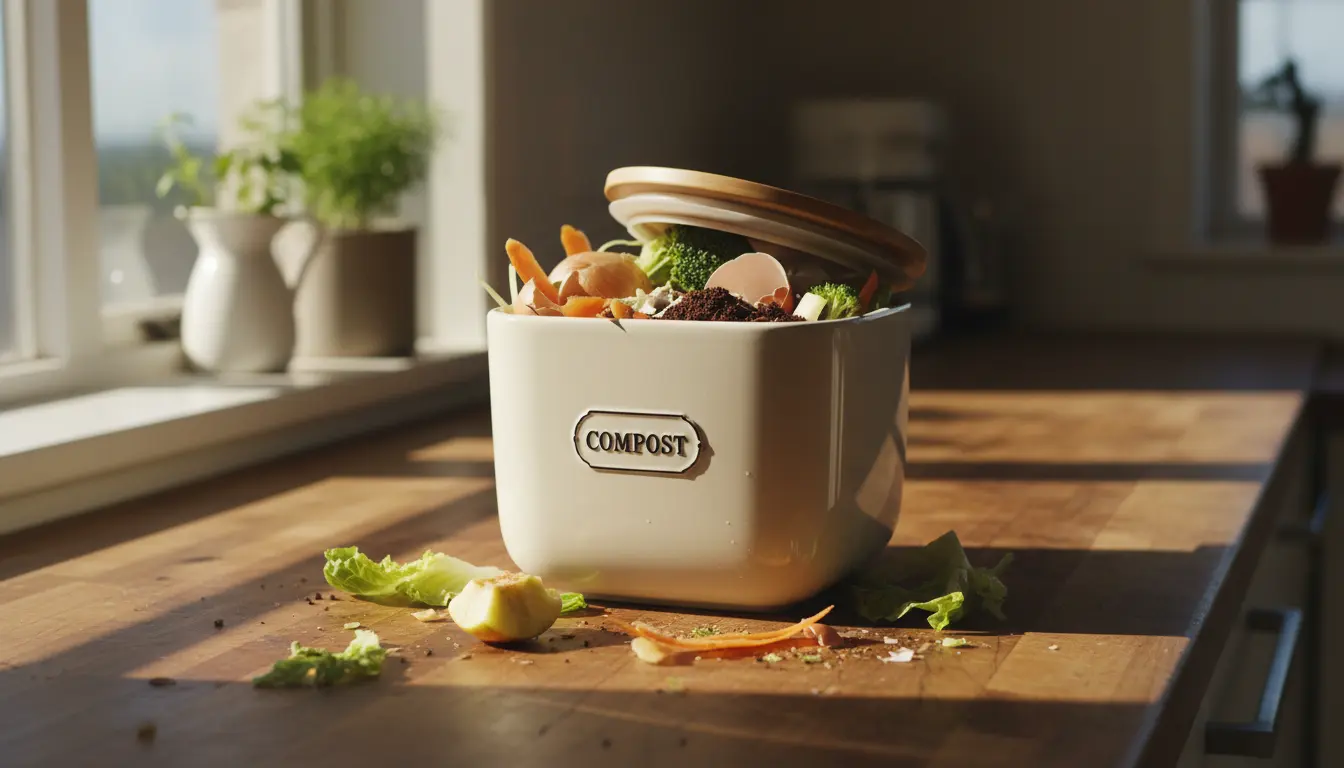
- Start collecting kitchen scraps in a small covered caddy.
- Assemble initial layers of brown and green materials.
- Monitor moisture and turn the pile weekly for the first month.
Starting composting at home is a small habit that yields big environmental and gardening benefits. Keep the system simple, learn by doing, and adjust based on results.