
Why start composting at home
Composting at home turns kitchen and yard waste into a useful soil amendment while reducing landfill trash. It supports healthier plants, reduces methane emissions, and lowers household waste costs.
Starting composting is straightforward and can fit small patios or larger gardens. This guide focuses on practical steps so you can begin quickly and avoid common mistakes.
Basics of home composting

Home composting relies on microbes breaking down organic matter. Success depends on the right mix of materials, moisture, air, and time.
There are several methods—open piles, tumblers, and worm bins—each suited to different spaces and goals.
What to compost
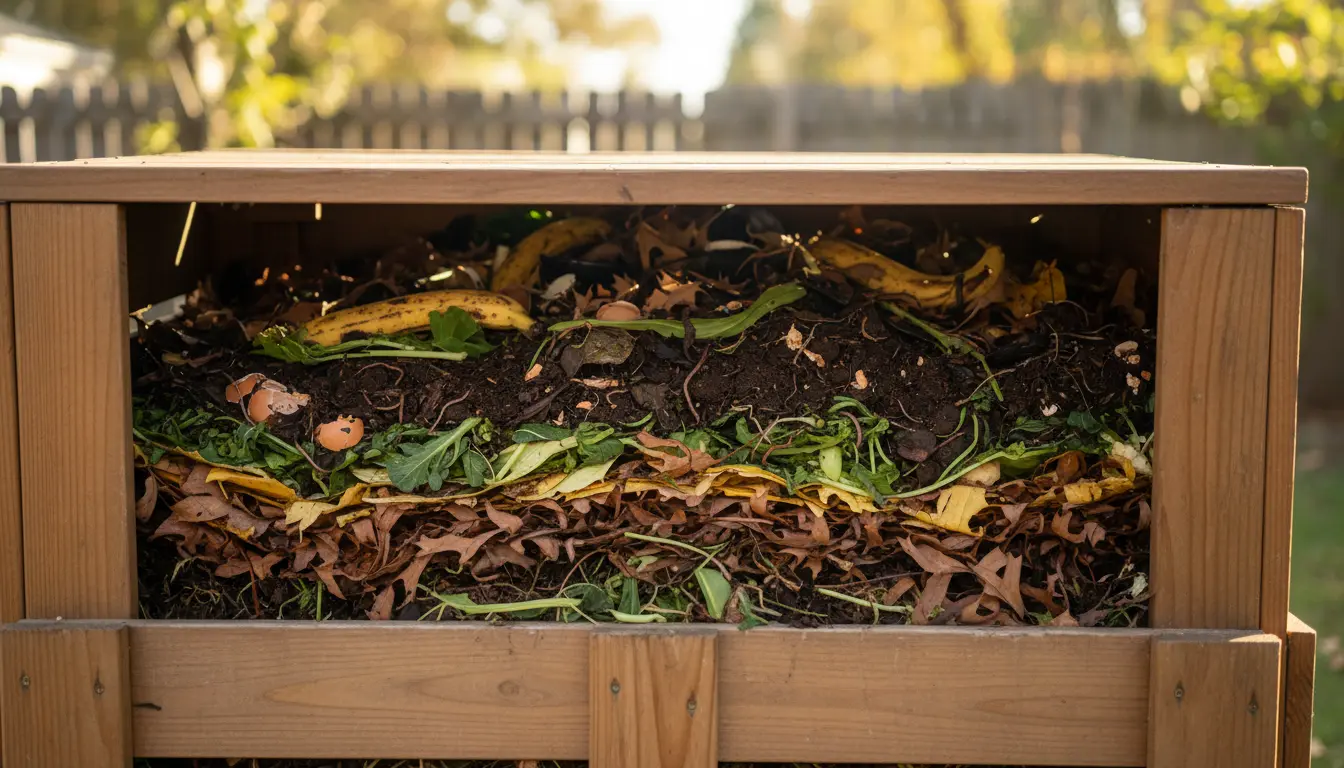
Use a balance of green (nitrogen) and brown (carbon) materials for active decomposition.
- Greens: fruit and vegetable scraps, coffee grounds, fresh grass clippings.
- Browns: dry leaves, shredded cardboard, straw, paper (non-glossy).
What not to compost

Avoid items that attract pests, spread disease, or are slow to break down.
- Meat, fish, bones, dairy, and oily foods
- Diseased plants, pet waste, and glossy or chemically-treated paper
- Large woody branches unless chipped
Step-by-step: How to start composting at home
This step-by-step section helps you set up a simple, low-maintenance system.
Step 1: Choose a method and location
Pick a compost method that fits your space. Use a closed tumbler for small yards or a bin for medium areas. A worm bin works well indoors or on a balcony.

Place the bin on bare soil if possible. That allows beneficial organisms to move in and improves drainage.
Step 2: Build the right mix
Start with a 3–6 inch base layer of coarse brown material for airflow. Add alternating layers of greens and browns.
A common target ratio is about 1 part green to 2–3 parts brown by volume. Adjust based on smell and moisture.
Step 3: Maintain moisture and aeration
Compost should feel like a wrung-out sponge: moist but not soggy. If too dry, add water and more greens. If too wet, add dry browns and turn more often.
Turn the pile every 1–2 weeks to introduce oxygen and speed decomposition. Tumblers make turning easier.
Step 4: Monitor and harvest
Temperature is a good indicator. A hot central core (120–150°F / 50–65°C) means active decomposition. Cooler piles still work but take longer.
Finished compost is dark, crumbly, and smells earthy. Harvest the bottom material after several months for use in pots, beds, or as a soil topdressing.
Troubleshooting composting at home
Problems are usually easy to fix once you identify them. Use simple adjustments rather than starting over.
- Bad smell: Add dry browns, mix to introduce air, and reduce fresh food additions until it stabilizes.
- Pests: Bury food scraps under browns or use a closed bin; avoid meat and dairy.
- Slow breakdown: Chop materials smaller, increase greens or warmth, and turn more frequently.
- Too dry: Add water and more greens; cover with a tarp to retain moisture.
Small case study: A city balcony compost
Maria, a city apartment renter, started a small worm bin on her balcony. She used kitchen scraps and shredded paper as bedding. Within three months she produced enough worm castings to refresh three potted herbs.
Her system reduced her kitchen bag waste by half and improved her plants’ health without odors or pests. She credits consistent feeding and keeping the bin slightly damp.
Quick tips for fast success
- Chop or shred materials to speed decomposition.
- Keep a small kitchen caddy with a lid to store scraps until going to the bin.
- Use finished compost as a soil topper, potting mix additive, or lawn topdressing.
- Label layers or keep a simple log to track turning and additions.
Ready to start composting at home?
Choose one method and commit to a simple routine: add, balance, and turn. Begin with small amounts and learn by adjusting moisture and materials.
Composting is low-cost, supports healthier soil, and reduces household waste. Start small, keep it simple, and you’ll soon have rich compost to improve your garden or houseplants.