
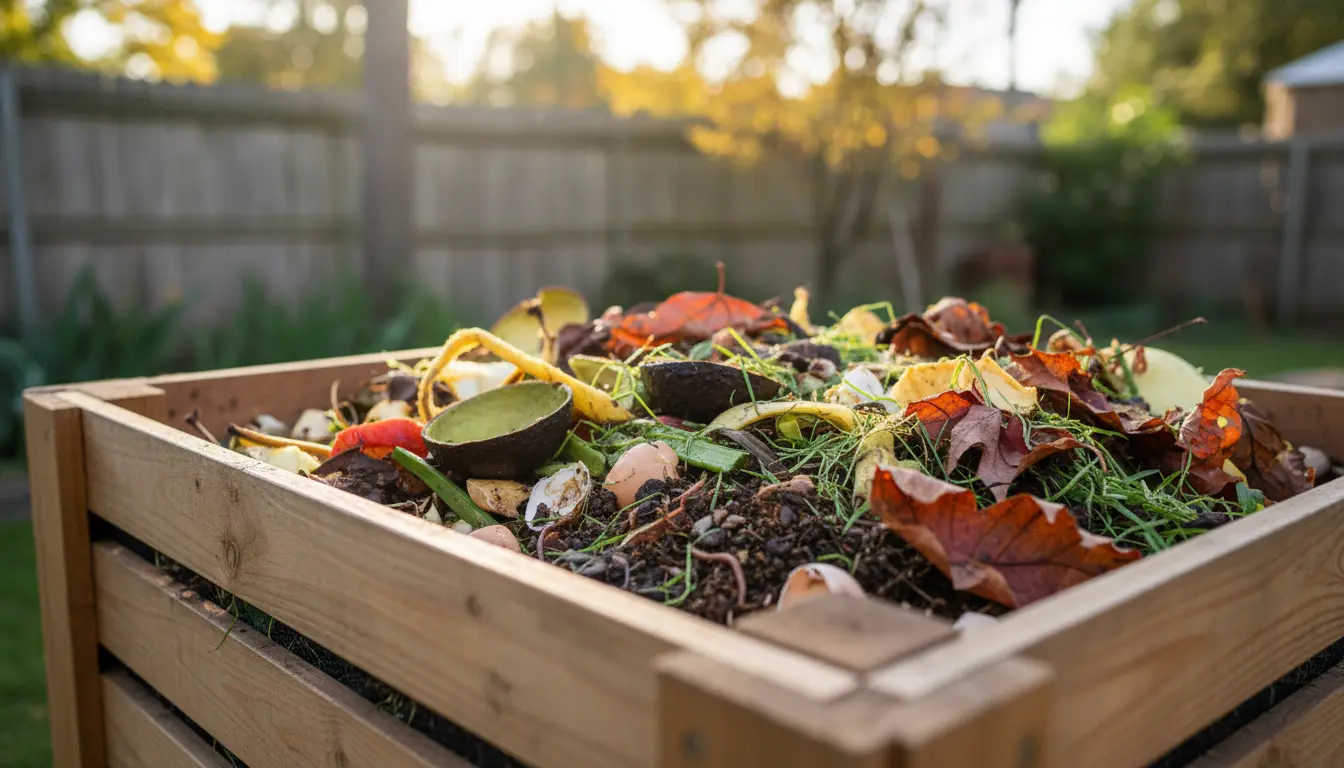
What Is Home Composting and Why It Matters
Home composting turns kitchen scraps and yard waste into rich soil that improves garden health. It reduces landfill waste and cuts household trash volume.
This guide explains step-by-step how to start home composting, choose the right system, maintain balance, and troubleshoot common issues.
How to Start Home Composting in 5 Simple Steps

Start with a small plan and build confidence. Follow these five core steps to begin home composting successfully.
- Pick a location: shaded, level ground near water and easy access.
- Choose a bin or pile: see options below for small yards and apartments.
- Collect materials: separate greens (wet) and browns (dry).
- Layer and mix: alternate greens and browns for airflow and balance.
- Monitor and harvest: keep the pile moist, turn occasionally, and harvest finished compost.
Step 1: Choose the Right System for Home Composting
There are several systems to suit different spaces and lifestyles. Match the method to your needs.
- Open pile: Low cost and simple but needs space and may attract pests.
- Bin or tumbler: Controlled, tidy, and faster decomposition with better pest control.
- Bokashi: Fermentation method ideal for apartments; requires a bucket and bran inoculant.
- Vermicomposting: Uses worms for kitchens or balconies; efficient but requires care.
Step 2: Balance Greens and Browns for Healthy Home Composting
Proper carbon-to-nitrogen balance speeds decomposition and prevents odors. A simple rule helps beginners.
- Greens: vegetable scraps, coffee grounds, fresh grass clippings (nitrogen).
- Browns: dry leaves, shredded paper, straw, cardboard (carbon).
- Aim for roughly 2–3 parts browns to 1 part greens by volume.
Step 3: Maintain Moisture and Airflow in Home Composting

Compost should be about as damp as a wrung-out sponge. Too dry, and breakdown slows; too wet, and it smells.
- Turn the pile every 1–2 weeks to add oxygen.
- If compacted or soggy, add more browns and fluff the pile.
- Cover with a lid or tarp during heavy rain to prevent waterlogging.
Troubleshooting Common Home Composting Problems
Many issues have simple fixes. Use this quick checklist to diagnose problems in your compost.
Problem: Bad Smell
Likely causes are too many greens or poor airflow. Add brown materials and turn the pile to aerate.
Problem: Slow Decomposition

Check moisture, particle size, and balance. Chop materials smaller and maintain a proper green-to-brown ratio.
Problem: Fruit Flies or Pests
Keep food scraps buried under browns, use a closed bin or tumbler, and avoid meat or dairy in home composting.
How to Harvest and Use Finished Compost
Finished compost is dark, crumbly, and smells earthy. Use it to improve soil structure and add nutrients to plants.
- Mix 1–3 inches into garden beds before planting.
- Top-dress lawns or container plants with a thin layer.
- Make a compost tea by steeping compost in water for liquid feed.
Small Real-World Example: Suburban Family Cuts Waste and Boosts Garden
Case study: A family of four started a 3-bin backyard system and kitchen scrap bucket. After six months they diverted about 40% of weekly trash to compost and used the compost to enrich their vegetable beds.
Result: Healthier plants, less grocery expense, and reduced trash pickup volume. They reported fewer weeds and better tomato yields the next season.
Composting one ton of organic waste can prevent roughly 0.5 to 1 tonne of CO2-equivalent from entering the atmosphere compared with landfilling.
Tips and Best Practices for Long-Term Home Composting Success
Consistency and small habits make composting easy over time. Use these practical tips to keep the process smooth.
- Keep a small kitchen caddy with a tight lid for daily scraps.
- Shred or chop larger items to speed breakdown.
- Rotate where you add materials to avoid compacted zones.
- Label bins and keep a simple log of turning and additions if you need reminders.
Final Checklist Before You Begin Home Composting
Use this short checklist to confirm readiness.
- Location chosen with shade and access to water.
- Bin or method selected for your space.
- Plan to collect and balance greens and browns.
- Routine set to turn and monitor the pile.
Home composting is a low-cost, high-impact practice that benefits your garden and the planet. Start small, observe your pile, and adjust the balance of materials. Within months you’ll produce nutrient-rich compost and reduce household waste.