
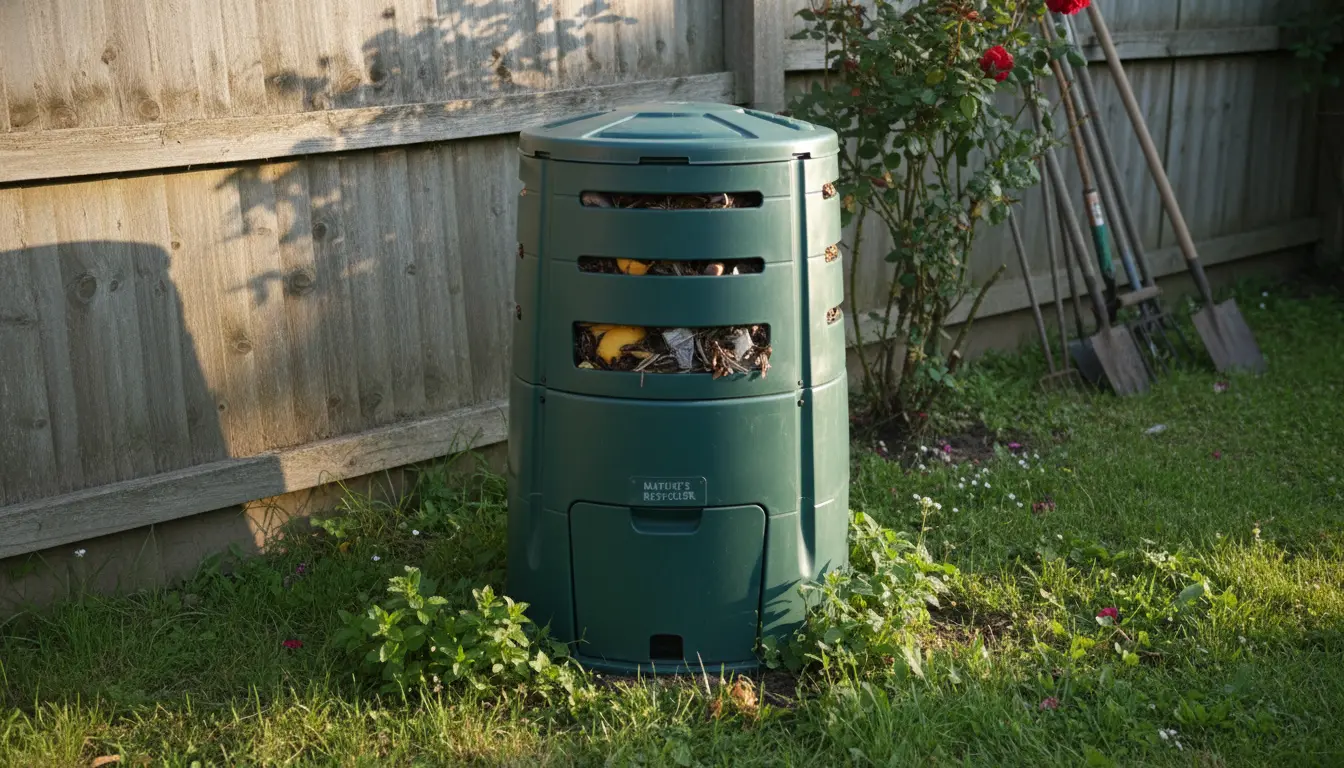
Why Home Composting Matters
Home composting turns kitchen scraps and yard waste into a valuable soil amendment. It reduces household waste, cuts landfill methane, and feeds gardens with nutrient-rich compost.
This guide gives practical, step-by-step instructions so beginners can set up and manage a compost bin with confidence.
How to Start a Home Compost Bin

Starting a home compost system takes a few simple choices and routine maintenance. Follow these steps to begin converting organic waste into compost.
Choose the Right Bin for Home Composting
Select a bin size and style that fits your space and the amount of waste you produce. Options include tumblers, stationary bins, and DIY pallets.
- Tumbler: Faster decomposition, low turning effort, good for small yards.
- Stationary bin: Cheaper, simple, works well for larger volumes.
- DIY pile: Free and flexible, best if you have ample outdoor space.
Pick a Location
Place the bin on soil or a stable surface with some shade. Good drainage and easy kitchen access are key for regular use and maintenance.
Layering Materials for Successful Home Composting

Compost needs a balance of carbon-rich (brown) and nitrogen-rich (green) materials. Layering helps maintain airflow and moisture.
- Brown materials: Dry leaves, shredded paper, straw, cardboard.
- Green materials: Vegetable scraps, coffee grounds, fresh grass clippings.
Start with a base of coarse browns, add greens, then cover with more browns. Aim for roughly a 3:1 ratio of browns to greens by volume.
What to Compost and What to Avoid
Knowing what belongs in your compost bin prevents odors and pests. Use common-sense rules for safe home composting.
Safe Items for Home Composting
- Fruit and vegetable scraps
- Eggshells (crushed)
- Coffee grounds and tea bags (no synthetic filters)
- Yard trimmings and leaves
- Shredded paper and cardboard (unpprinted or minimal ink)
Items to Avoid in Home Composting
- Meat, fish, dairy, and oily foods — attract pests and cause odors
- Pet waste — can contain pathogens
- Diseased plants and invasive weeds — risk spreading problems
- Coal ash and treated wood — contain toxins

Compost can cut household waste by up to 30 percent and returns nutrients to soil, improving water retention and plant health.
Managing Your Compost: Moisture, Air, and Heat
Successful home composting depends on three elements: moisture, oxygen, and a proper carbon-to-nitrogen balance. Monitor these regularly for steady decomposition.
Moisture
The pile should be as damp as a wrung-out sponge. Too dry slows decomposition; too wet creates odors. Add water during dry spells and more brown materials if it becomes soggy.
Turning and Aeration
Turning supplies oxygen and speeds up composting. Use a pitchfork, compost aerator, or rotate a tumbler every 1–2 weeks.
If you cannot turn often, create air channels by layering coarse materials like twigs or adding a perforated pipe to the center.
Temperature
A hot pile (130–160°F or 55–70°C) decomposes quickly and kills many weed seeds and pathogens. Home bins often reach moderate temperatures; more frequent turning and larger volume help retain heat.
Troubleshooting Common Home Composting Problems
Problems are often easy to fix once you identify the cause. Use these quick checks to restore balance.
- Bad smells: Add dry browns, improve aeration, and reduce food scraps temporarily.
- Slow decomposition: Increase greens, chop materials smaller, and turn more often.
- Pests like rodents: Avoid meat and fatty foods, cover fresh scraps with browns, and use a sealed bin if needed.
- Excessive moisture: Mix in dry materials and turn to increase airflow.
Small Case Study: Apartment Compost Success
Maria lives in a two-bedroom apartment and started a small compost system on her balcony. She chose a compact tumbler and collected food scraps in a counter bin.
By combining coffee grounds, fruit scraps, shredded paper, and occasional yard clippings, Maria produced usable compost in about six months. She used the compost in balcony planters and saved on store-bought potting mixes.
Key takeaways from her experience: choose the right container, keep the bin balanced, and empty the kitchen collector daily to avoid odors.
Quick Checklist for Home Composting Beginners
- Choose a bin that fits your space and waste volume.
- Layer browns and greens; aim for roughly 3:1 browns to greens.
- Keep the pile moist but not waterlogged.
- Turn or aerate every 1–2 weeks for active composting.
- Monitor for pests, odors, and slow breakdown; adjust materials accordingly.
Final Tips for Long-Term Home Composting Success
Start small and scale as you learn what works. Keep a small kitchen collector to make composting easy, and use finished compost to improve soil and reduce the need for chemical fertilizers.
With consistent, simple care, home composting becomes an efficient habit that benefits your garden, home, and the environment.