
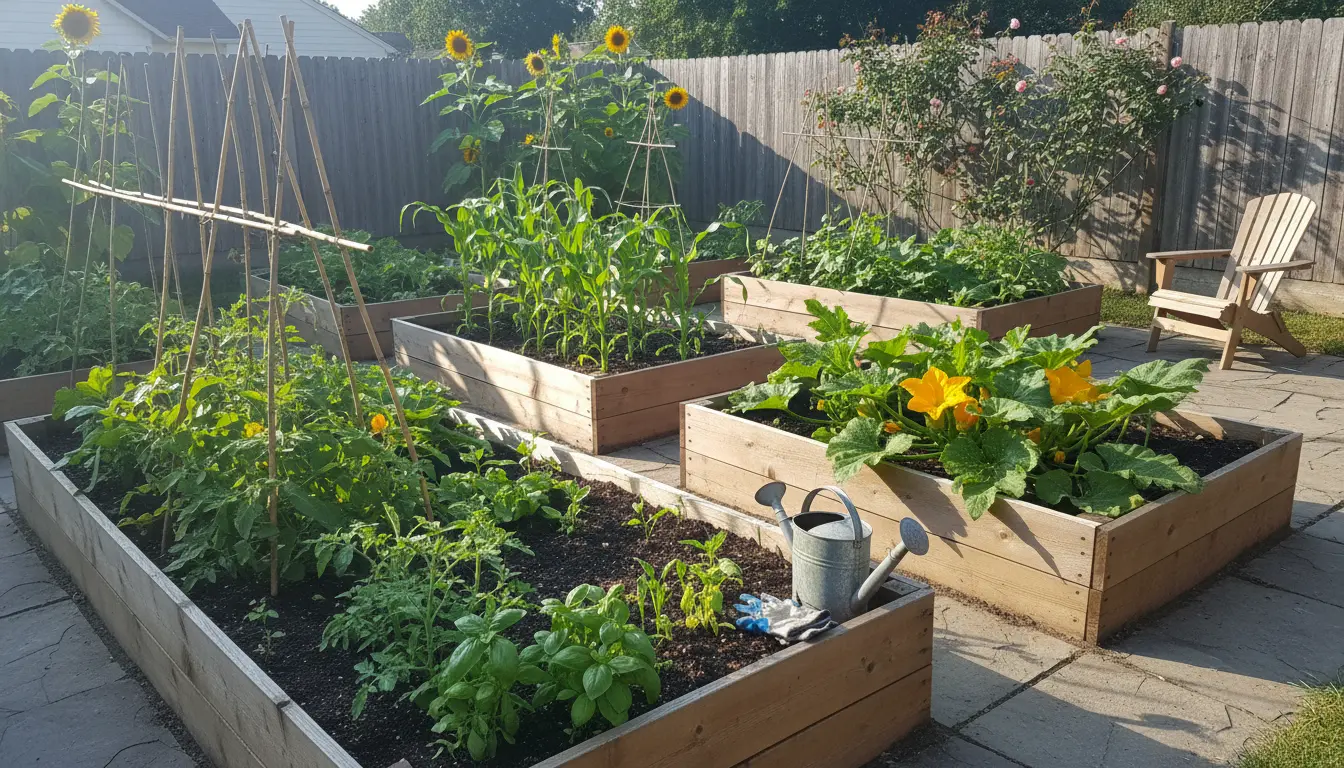
How to Start a Vegetable Garden: Overview
Starting a vegetable garden is a practical way to grow fresh food and learn new skills. This guide explains how to start a vegetable garden with simple steps you can follow this season.
Choose the Right Location
Location is the first decision that affects yields and effort. Pick a spot that gets at least six to eight hours of sunlight daily for most vegetables.

Consider access to water, good drainage, and protection from strong winds. If yard space is limited, plan for containers or raised beds.
Sunlight and Soil Basics
Most vegetables need direct sun. Observe sun patterns for several days to confirm the chosen area.
Test soil by digging a small hole and checking texture and drainage. Clay, sand, and loam require different approaches to improve structure.
Plan What to Grow

Start with easy, productive crops suited to your climate. Focus on a few types rather than many varieties.
- Beginner-friendly vegetables: tomatoes, lettuce, radishes, beans, zucchini
- Consider your household preferences and cooking habits
- Plan succession planting for steady harvests
Choosing Seeds vs. Seedlings
Seeds are cheaper and offer more variety, but they take longer to mature. Seedlings get you a head start and reduce early-care errors.
For first-time gardeners, mix both approaches: seedlings for tomatoes and peppers, seeds for lettuce and radishes.
Prepare Soil and Beds

Soil quality determines plant health. Amend soil rather than relying solely on fertilizers for long-term productivity.
For in-ground beds, remove grass and mix in compost. For raised beds, use a mix of topsoil, compost, and coarse materials for drainage.
Soil Improvement Steps
- Clear the area of weeds and debris
- Add 2 to 4 inches of compost and work it into the top 6 to 8 inches of soil
- Adjust pH only if a soil test shows a large imbalance
- Mulch around plants to retain moisture and suppress weeds
Planting and Spacing
Follow seed packet or plant label spacing recommendations to avoid overcrowding. Good airflow reduces disease risk.
Use row planting or block planting depending on space. Block planting can increase yields in small areas.
Timing and Succession
Check frost dates for your region before planting warm-season crops. Cool-season crops can go in earlier in spring or later in fall.
Practice succession planting: sow small amounts of fast crops every two to three weeks for continuous harvests.
Watering and Fertilizing
Water deeply and less frequently to encourage deep roots. Morning watering reduces evaporation and leaf disease.
Use a balanced organic fertilizer or slow-release granular fertilizer at planting and mid-season as needed.
Practical Watering Tips
- Install a soaker hose or drip irrigation for efficiency
- Aim for 1 to 1.5 inches of water per week, depending on weather
- Check soil moisture by feeling the top few inches
Maintenance and Pest Management
Regular tasks include weeding, harvesting, and monitoring for pests and disease. Small actions every week prevent big problems later.
Use these low-cost tactics to manage pests and keep plants healthy.
- Use row covers to protect young plants from insects
- Handpick pests like slugs and caterpillars
- Encourage beneficial insects by planting flowers and herbs nearby
Harvesting and Storage
Harvest vegetables when they are firm and at peak size for best flavor. Frequent harvesting often encourages more production.
Store root crops in a cool, dark place and leafy greens wrapped in a damp towel in the refrigerator.
Raised beds warm faster in spring, extend the growing season, and make soil improvement easier. Many beginners see quicker success using raised beds.
Small Real-World Example
Case Study: Sarah, a first-time gardener, started a 4×8 raised bed in a sunny corner. She planted tomatoes, lettuce, and bush beans.
By adding 3 inches of compost before planting and using drip irrigation, Sarah harvested fresh salad greens within five weeks and tomatoes by midsummer. Her weekly 20-minute maintenance routine kept weeds and pests under control.
Common Mistakes to Avoid
- Overwatering seedlings, which leads to damping off
- Planting too many varieties at once and becoming overwhelmed
- Ignoring soil health and relying solely on synthetic fertilizers
Quick Checklist to Start
- Pick a sunny site and test the soil
- Decide elevated beds, containers, or in-ground planting
- Choose 3 to 5 easy crops for your first season
- Amend soil with compost and lay out beds
- Plant seeds or seedlings with proper spacing
- Water correctly and set a weekly maintenance plan
Following these practical steps will help you learn how to start a vegetable garden and build confidence each season. Begin small, observe results, and expand as you gain experience.