
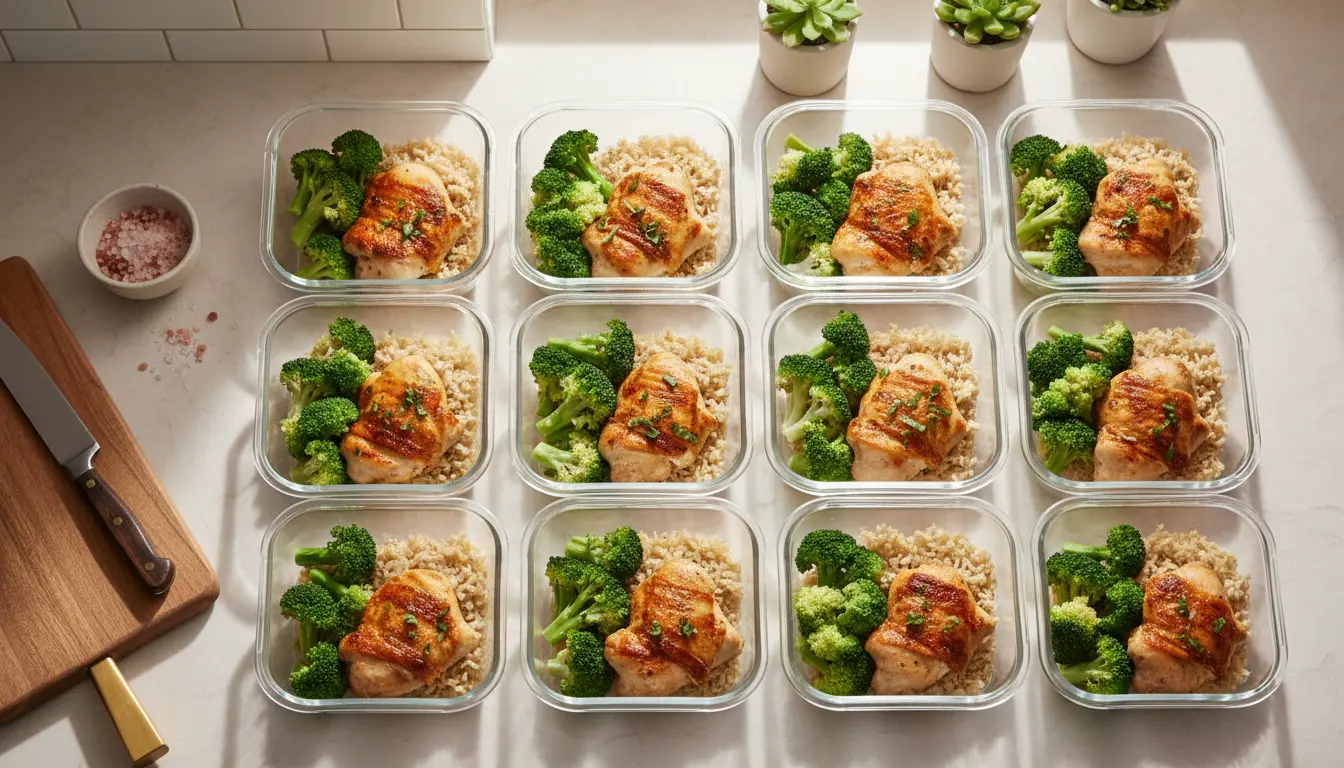
Busy professionals need reliable systems to eat well without wasting time. This guide explains simple, repeatable steps for meal planning that fit a packed schedule. Follow the checklist and examples to build a routine you can keep weekly.
Why Meal Planning for Busy Professionals Works
Meal planning removes daily decision fatigue and reduces the need for last-minute takeout. It helps control nutrition, cost, and waste by creating a predictable food routine.

For professionals with limited evenings, planning ahead means fewer stressful choices and more consistent meals during the workweek.
Core Principles of Meal Planning for Busy Professionals
- Keep meals simple: focus on 3–5 core recipes you enjoy.
- Batch cook strategically: make components, not always full meals.
- Use tools: a calendar, shopping list app, and clear containers.
- Repeat weekly: a rotating 2–4 week menu reduces planning time.
Choose Reliable Recipes
Select recipes that scale and store well. Examples include grain bowls, sheet-pan roasted vegetables with protein, and slow cooker stews.
Prioritize meals that reheat without losing texture or flavor.
Plan Around Your Calendar

Before you shop, check your calendar. Note nights with meetings, late travel, or events where you will eat out. Plan single-serve or quick meals for those days.
Align larger batch cooking days with lighter workdays or weekends.
Step-by-Step Weekly Workflow
Follow this 30-60 minute weekly routine to keep meal planning efficient and repeatable.
1. Review Your Week (5 minutes)

Check appointments and travel. Mark the nights you need quick meals or plan to eat out.
2. Pick 3–5 Meals (10 minutes)
Choose a breakfast, two lunch/dinner options, and one flexible snack or dessert. Rotate proteins and vegetables to maintain variety.
3. Create a Shopping List (10 minutes)
Write a list organized by store section: produce, proteins, grains, dairy, pantry. This saves time in-store and reduces impulse buys.
4. Batch Cook or Prep (30–60 minutes)
Cook grains, roast vegetables, or grill protein in one session. Store components in clear containers for quick assembly.
Examples of components: cooked quinoa, roasted sweet potatoes, grilled chicken strips, chopped salad greens, and vinaigrette in a jar.
Time-Saving Tools and Tips
- Slow cooker or Instant Pot: hands-off cooking for busy mornings.
- Sheet pans: roast protein and vegetables together for one-pan meals.
- Clear containers and labels: label date and contents to rotate stock safely.
- Shopping list apps: reuse lists and check items off in-store.
Smart Shopping Tips
Buy a mix of fresh and longer-lasting items (frozen vegetables, canned beans). Frozen produce is a time-saver and often cheaper.
Consider a weekly subscription or local grocery pick-up to save transit time.
Preparing core components instead of full meals can cut daily prep time to under five minutes. Ready grains, protein, and sauce make quick meals in under 10 minutes.
Meal Planning for Busy Professionals: Food Safety and Storage
Store cooked food in shallow containers to cool quickly. Use airtight containers and follow the 3–4 day fridge rule for cooked foods.
Freeze portions you won’t use within a few days and label with the date to avoid waste.
Sample Weekly Menu for Busy Professionals
- Breakfasts: Overnight oats, yogurt with fruit, or smoothies (prepare jars the night before).
- Lunches: Grain bowl with roasted vegetables and protein; mason jar salad with dressing separate.
- Dinners: Sheet-pan salmon and vegetables; slow cooker chili; stir-fry with pre-chopped veggies.
- Snacks: Hummus with carrots, mixed nuts, or fruit.
Case Study: One Professional’s Routine
Sarah is a project manager who works 9–7 most weekdays. She spends 45 minutes on Sundays to prep for her week.
Her routine: cook 3 cups of brown rice, roast two pans of vegetables, grill four chicken breasts, and portion three salads. Each weekday she assembles a bowl in under five minutes or reheats a portion.
Result: Sarah spends less on takeout, saves two hours per week, and reports less stress around meals.
Common Questions About Meal Planning for Busy Professionals
Q: How do I avoid boredom? Rotate two-to-four weekly menus and swap proteins or sauces.
Q: How long does everything last? Most cooked meals are good for 3–4 days in the fridge; freeze beyond that.
Final Checklist for Getting Started
- Pick 3–5 repeatable meals you enjoy.
- Set aside one short prep session per week.
- Use clear storage and label with dates.
- Keep a shopping list and calendar-based plan.
Meal planning for busy professionals is about creating a small, reliable system that minimizes daily friction. Start small, refine your favorite components, and build a rotating routine that fits your schedule.