
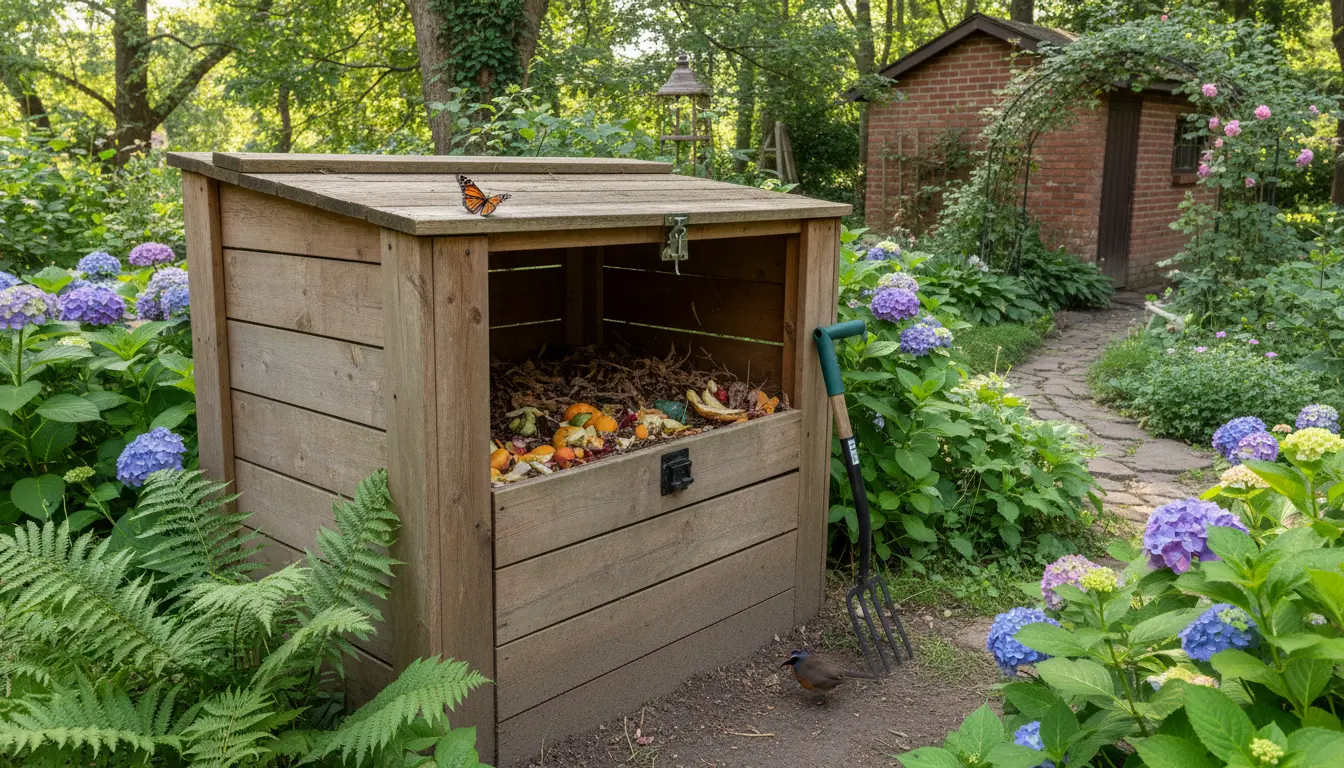
Home composting turns kitchen scraps and yard waste into a useful soil amendment. This guide covers the essentials you need to start composting at home, with clear steps, common problems and solutions, and a short case study to show results.
Why Home Composting Matters
Home composting reduces household waste, lowers methane from landfills, and returns nutrients to your soil. It also saves money on commercial soil mixes and fertilizers.

Even a small household can cut waste by 20–30% with a basic compost system and a little regular effort.
Benefits of home composting
- Reduces kitchen and yard waste volume
- Improves soil structure and moisture retention
- Provides free, nutrient-rich compost for plants
- Supports healthier garden ecosystems
How to Start Home Composting
Starting home composting requires four simple choices: container, location, mix of materials, and maintenance routine. Each choice affects speed and quality of the compost.
Choose a Compost Bin
Options include tumblers, stationary bins, and simple open piles. Tumblers speed mixing and reduce pests. Open piles are cheapest but may need more attention.
Pick a Location

Place your bin on soil or grass to allow worms and microbes in. Choose a partly shaded spot to keep moisture balanced and avoid overheating in summer.
Balance Greens and Browns
Home composting needs a mix of nitrogen-rich “greens” and carbon-rich “browns.” Aim for roughly a 1:2 ratio by volume (greens to browns).
- Greens: vegetable peels, fruit scraps, coffee grounds, fresh grass clippings
- Browns: dry leaves, shredded paper, straw, cardboard
Layering and Turning
Start with a layer of coarse browns for airflow, then add alternating layers of greens and browns. Keep the pile moist like a wrung-out sponge.

Turn the pile every 1–2 weeks to add oxygen and speed decomposition. Tumblers simplify turning with a twist or two each week.
What to Compost and What to Avoid
Knowing what to include helps prevent odors and pests and ensures safe, usable compost for food gardens.
Safe to Compost
- Fruit and vegetable scraps
- Coffee grounds and tea bags (remove staples)
- Crushed eggshells
- Yard waste: leaves, grass clippings, small twigs
- Shredded paper and cardboard
Avoid These Items
- Meat, fish, dairy and oily foods (attract pests)
- Diseased plants or weeds with seeds
- Pet feces and kitty litter
- Coal ash or treated wood
Troubleshooting Home Composting Problems
Common issues have simple fixes. Address the cause rather than only the symptom.
Odors
Sour or rotten smells mean too much nitrogen and poor airflow. Add browns, turn the pile, and check moisture.
Pests
Raccoons, rodents, or flies indicate exposed food scraps. Bury scraps, use a closed bin, or add a secure lid and more browns.
Slow Decomposition
If decomposition is slow, add more greens, chop materials smaller, and increase turning to add oxygen.
Microbes and worms do most of the work in home composting. A healthy compost pile can reach internal temperatures of 120 to 160 degrees Fahrenheit, which helps break down materials and kill many pathogens and weed seeds.
Small Case Study: A Family’s Three-Month Home Composting Trial
In spring, a family of four set up a 60-liter stationary bin and followed a simple routine: add scraps daily, cover with shredded paper, and turn weekly. They collected kitchen waste in a small counter caddy and emptied it into the bin every two days.
After three months they had about 25 liters of decomposed material. They used it to topdress vegetable beds and reported improved soil moisture and healthier tomato plants the following season.
Using Finished Compost in Your Garden
Finished compost is dark, crumbly and smells earthy. Use it as a top dressing, mix into potting soil, or blend into garden beds at a rate of 1–3 inches across the surface.
Compost improves soil structure, adds slow-release nutrients, and supports beneficial soil life.
Quick Home Composting Checklist
- Choose a bin and location
- Maintain a 1:2 greens to browns ratio
- Keep moisture like a wrung-out sponge
- Turn weekly or use a tumbler
- Harvest finished compost after 2–6 months depending on conditions
Home composting is a practical habit that reduces waste and improves your garden. Start small, follow the basic rules, and adjust as you learn what works in your climate and household.