
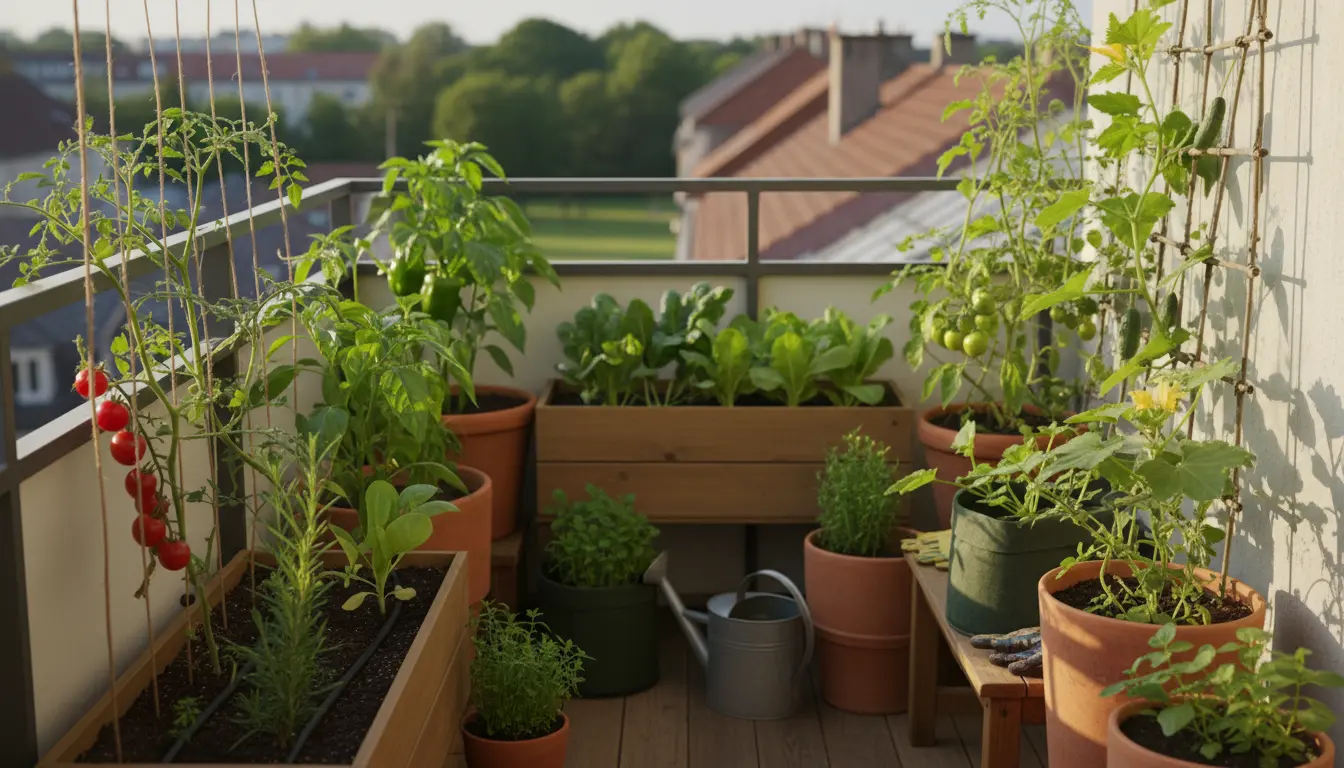
Start a small vegetable garden: a practical overview
Starting a small vegetable garden is achievable with minimal space and a clear plan. This guide covers planning, soil, planting, care, and harvesting so you can grow food reliably at home.
Many common vegetables like lettuce, radishes, and herbs can be ready to harvest in as little as 30 days when grown in containers with consistent care.
Planning your small vegetable garden

Good planning reduces wasted time and money. Start by deciding where you will place your small vegetable garden and what you want to grow.
Choose the right location for a small vegetable garden
Select a spot that receives 5–8 hours of sunlight daily for most vegetables. If full sun is limited, focus on leafy greens and herbs that tolerate partial shade.
Select vegetables for a small vegetable garden
Pick plants that match your space and skill level. For beginners, choose fast-growing and productive crops.
- Lettuce, spinach, arugula — quick harvests.
- Radishes and baby carrots — space-efficient roots.
- Cherry tomatoes and peppers — productive in pots.
- Herbs: basil, parsley, chives — continuous harvest.
Soil and containers for a small vegetable garden

Soil and container choice determine root health and water management. Use containers with drainage for balconies and patios.
Best soil mix for a small vegetable garden
Use a lightweight potting mix blended for vegetables. A good mix drains well while retaining moisture and nutrients.
- Base: quality potting soil or compost-rich topsoil.
- Drainage: perlite or coarse sand to prevent compaction.
- Nutrition: compost or slow-release organic fertilizer.
Container types for a small vegetable garden
Containers should be sized to the plant’s root needs. Deep-rooted crops need larger pots; leafy greens do well in shallow trays.
- Tomatoes: 12–18 inch deep pots.
- Leafy greens: 6–8 inch trays or window boxes.
- Carrots: deep narrow containers.
Planting and care in a small vegetable garden

Consistent care is key. Water, light, and feeding schedules keep plants productive and healthy.
Watering and sunlight for a small vegetable garden
Water early in the day to reduce disease risk. Aim for deep, infrequent watering rather than daily shallow sprinkles.
- Check moisture: stick your finger 1–2 inches into soil; water when dry.
- Move containers if shade patterns change by season.
Feeding and soil health for a small vegetable garden
Apply a balanced organic fertilizer every 4–6 weeks for most vegetables. Top-dress with compost to renew nutrients between crops.
Pest and disease management in a small vegetable garden
Use simple, preventive measures first. Monitor plants and act quickly on early signs of trouble.
- Handpick pests like caterpillars and beetles.
- Use insecticidal soap for soft-bodied pests like aphids.
- Rotate crops each season when possible to reduce disease buildup.
Harvesting and succession planting in a small vegetable garden
Harvest promptly to encourage more production. Many plants will continue producing if you pick regularly.
Timing and techniques
Pick leafy greens by outer leaves; harvest tomatoes when fully colored. Use clean scissors to reduce damage when appropriate.
Succession planting for continuous yield
Plan staggered sowing to keep a steady supply. Sow a new small batch every 2–3 weeks for crops like lettuce and radishes.
Case study: Balcony tomato and lettuce small vegetable garden
Mariana, an apartment dweller, used a 6-foot balcony to grow food. She chose two determinate cherry tomato plants and three lettuce containers.
She used 5-gallon pots, a commercial potting mix, and slow-release organic fertilizer. With consistent watering and weekly checks, she harvested small bowls of salad greens every week and tomatoes through the summer.
Her investment: about $120 for pots, soil, and seedlings. Outcome: fresh produce, lower grocery trips, and a new hobby that reduced food waste.
Quick checklist to start a small vegetable garden
- Choose location with adequate sunlight.
- Select 3–6 compatible crops for your space.
- Buy containers with drainage and a quality potting mix.
- Plant according to seed packet or transplant instructions.
- Water consistently and feed with organic fertilizer.
- Monitor pests and harvest regularly.
Final tips for a successful small vegetable garden
Start small and expand as you learn what works in your microclimate. Keep a simple journal of planting dates, varieties, and results to improve next season.
With planning and consistent care, a small vegetable garden will reward you with fresh produce and practical gardening experience.