
Why start a vegetable garden
Growing vegetables at home saves money, improves food quality, and reduces waste. It also teaches seasonal planning and gives a steady supply of fresh produce.
This guide focuses on practical steps you can follow to start a vegetable garden with minimal fuss and predictable results.
First steps to start a vegetable garden

Begin with a plan. Choose a manageable size for your first season—one or two raised beds or a few containers work well for beginners.
Decide what you want to grow based on your cooking habits and local climate. Pick 3–6 types of vegetables to keep maintenance simple.
Choose the right location to start a vegetable garden
Vegetables generally need 6–8 hours of direct sunlight per day. Observe potential spots for at least a week to confirm exposure.

Other location factors to consider are water access, drainage, and proximity to pests like deer or rabbits.
Size and layout when you start a vegetable garden
Start small. A 4×8 foot raised bed or three to five 12-inch containers is enough for a family to learn and supply fresh greens.
Plan paths at least 18–24 inches wide so you can reach plants without stepping on soil. Compact layouts reduce soil compaction and make maintenance easier.
Soil and compost: the foundation to start a vegetable garden

Good soil is the most important factor for success. Most failures come from poor soil structure or low fertility.
Test texture and pH if possible. Aim for loamy soil with a pH of 6.0–7.0 for most vegetables.
How to improve soil quickly
- Add 2–3 inches of compost and mix into the top 6–8 inches of soil.
- Use well-rotted manure or a balanced organic fertilizer if soil tests show low nutrients.
- Mulch with straw or shredded leaves to retain moisture and suppress weeds.
What to plant first when you start a vegetable garden
Choose reliable, easy-to-grow vegetables for your first season. Fast rewards build confidence and teach timing.
- Leafy greens: lettuce, spinach, Swiss chard
- Root vegetables: radishes, carrots, beets
- Warm-season starters: tomatoes, peppers, bush beans (after last frost)
Timing and succession planting
Plant early crops like radishes and lettuce as soon as soil can be worked. Follow with a second planting two to three weeks later to extend harvest.
Check local frost dates and use seedlings or transplants where helpful to get a head start on the season.
Watering and maintenance tips to start a vegetable garden
Consistent water is more important than frequent shallow watering. Aim for 1–1.5 inches per week, adjusted for weather.
Use drip irrigation or soaker hoses to conserve water and reduce disease by keeping foliage dry.
Weeding, staking and pruning
Remove weeds when small to reduce competition. Stake tall plants like tomatoes and peas early to avoid root disturbance later.
Prune only when necessary: remove diseased leaves and suckers from indeterminate tomato varieties to improve airflow.
Pest and disease basics when you start a vegetable garden
Integrated pest management works best: monitor, identify pests, and use targeted controls before problems escalate.
Common actions include row covers for insects, handpicking slugs, and encouraging beneficial insects with flowering borders.
Small case study: How one family started a vegetable garden
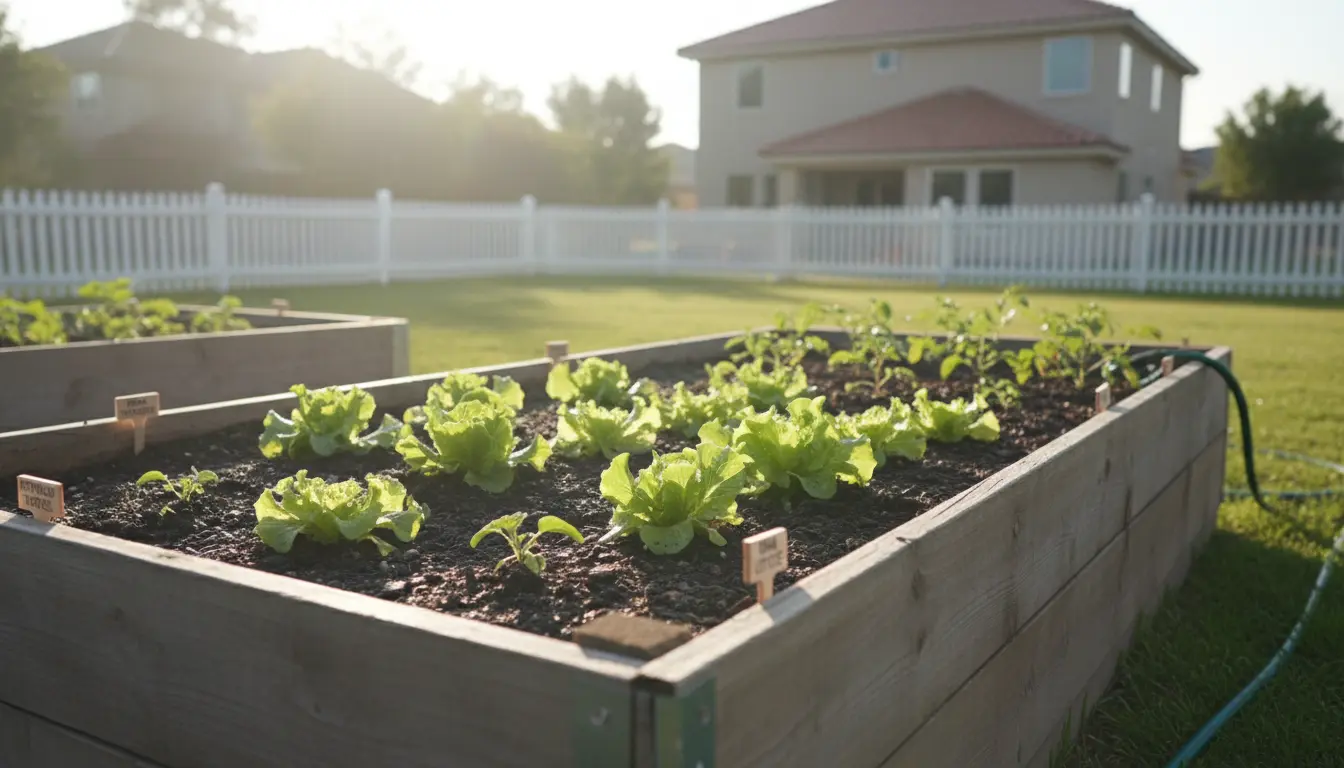
In spring, a family in a suburban backyard built two 4×8 raised beds and filled them with a 60/40 mix of compost and topsoil. They planted lettuce, radishes, bush beans, and three tomato seedlings.
They set up a soaker hose on a timer and mulched heavily. By mid-summer they harvested weekly salads and enough tomatoes for sauces. The beds needed only minimal fertilizing and a few pest checks each week.
Common mistakes to avoid when you start a vegetable garden
- Planting too much variety in year one—overwhelm leads to neglect.
- Skipping soil preparation—poor soil gives poor yields even with care.
- Watering inconsistently—this causes blossom drop and cracked fruit.
Basic seasonal checklist to start a vegetable garden
Spring: prepare beds, test soil, plant cold-tolerant crops. Summer: maintain water, harvest, and watch for pests. Fall: clean up, add compost, and plan next year.
Winter: order seeds and sharpen tools to reduce startup time in spring.
Final practical steps to start a vegetable garden
Start with a simple plan: pick location, prepare soil, choose easy crops, and set a weekly routine for 15–30 minutes of maintenance.
Expect to learn each season. Keep notes on what worked and adjust soil, varieties, and spacing accordingly.
With small, consistent steps you can start a vegetable garden that delivers fresh food and steady progress year over year.