
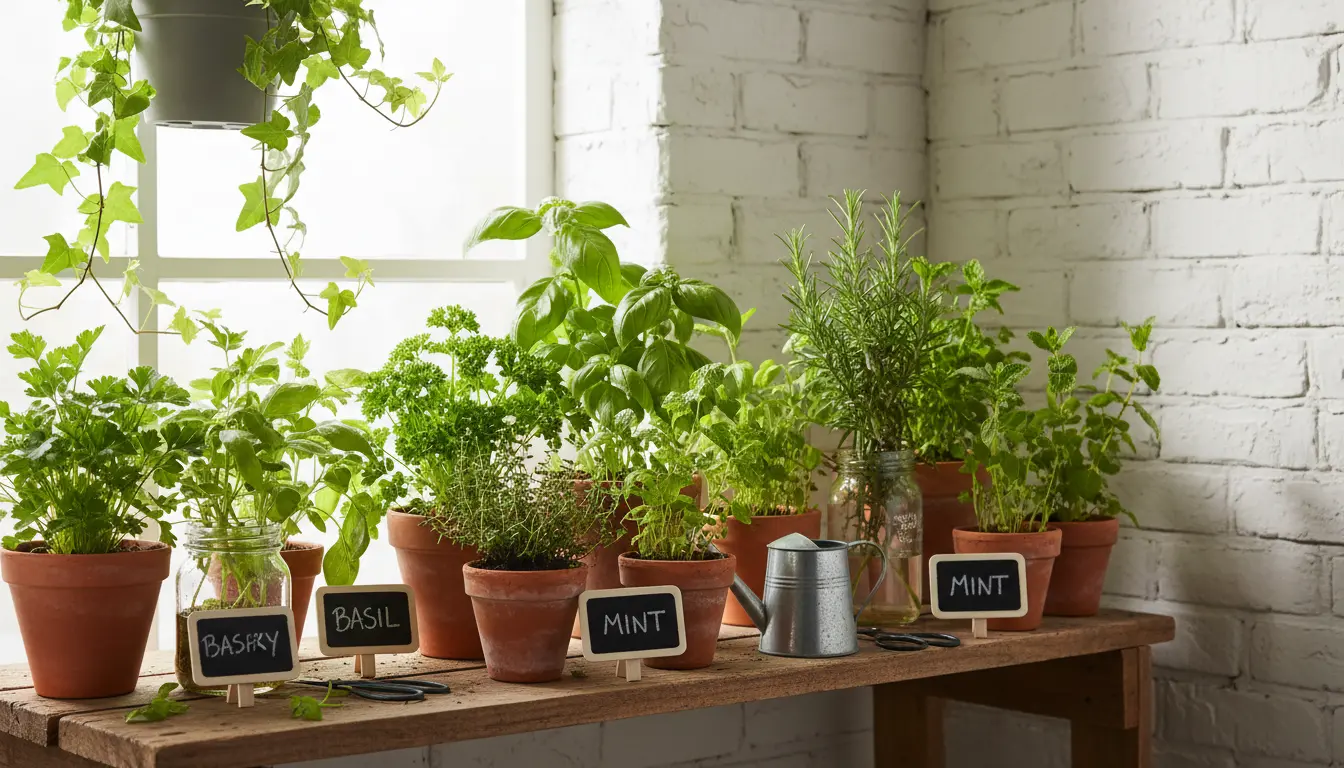
Growing herbs indoors is an efficient way to have fresh flavors year-round and brighten a small living space. This guide walks you through planning, setting up, and maintaining a small indoor herb garden with practical steps and real-world tips.
Why Choose an Indoor Herb Garden
An indoor herb garden saves money and reduces waste by letting you harvest only what you need. It also provides fresh ingredients for cooking and can improve air quality and mood.

Herbs are compact and forgiving, making them ideal for beginners or apartment dwellers with limited space.
Supplies for Your Indoor Herb Garden
Gathering the right supplies sets your indoor herb garden up for success. You don’t need specialty gear—focus on light, containers, soil, and proper drainage.
Lighting for an Indoor Herb Garden
Most culinary herbs need 6–8 hours of bright, indirect light daily. A sunny south- or west-facing window is often enough for basil, thyme, and parsley.

If your home lacks enough natural light, use a full-spectrum LED grow light. Place the light 6–12 inches above plants and run it for 10–12 hours on a timer.
Containers and Drainage
Use pots with drainage holes to prevent root rot. Self-watering containers can help beginners avoid under- or overwatering.
- Ceramic or plastic pots with saucers
- Seed trays or recycled containers with drainage
- Window box or a 3-plant planter for compact setups
Soil and Fertilizer
Choose a well-draining potting mix formulated for containers. Avoid garden soil that compacts and holds too much moisture.

Feed herbs lightly with a balanced liquid fertilizer every 4–6 weeks during the growing season. Too much nitrogen can reduce flavor intensity in some herbs.
Step-by-Step Setup for a Small Indoor Herb Garden
Follow these steps to set up a productive and low-maintenance indoor herb garden.
- Plan placement: Identify the brightest spot or prepare a grow light station.
- Choose herbs: Start with easy varieties like basil, mint, chives, parsley, and thyme.
- Select containers: Pick pots that match your space with good drainage.
- Fill with potting mix: Leave an inch of space at the rim for watering.
- Plant: Use transplants or start from seed. Space plants so air circulates.
- Water and light: Water until water drains, then set a consistent light schedule.
- Harvest regularly: Pinch tips to encourage bushier growth and better yields.
Care and Maintenance for an Indoor Herb Garden
Regular but light care keeps herbs productive. Focus on consistent watering, adequate light, and routine harvesting.
Watering Tips
Check soil moisture before watering. Stick your finger an inch into the soil—if it feels dry, water. Most herbs prefer slightly moist but not waterlogged soil.
Water in the morning when possible to reduce fungal issues and to mimic natural conditions.
Pruning and Harvesting
Harvest from the top and encourage new growth by pinching back flower buds. Removing flowers redirects energy back into leaves, which are what you use in the kitchen.
Prune regularly to keep plants compact and productive—aim to remove no more than one-third of the plant at a time.
Troubleshooting Common Problems in an Indoor Herb Garden
Indoor herbs can show stress from lighting, pests, or moisture issues. Spot problems early for quick fixes.
- Leggy stems: Move plants to brighter light or rotate pots weekly.
- Yellow leaves: Check drainage and avoid overwatering; adjust feeding frequency.
- Pests: Wipe leaves with mild soap solution and isolate affected plants.
Many common herbs like basil and mint release natural fragrances that can reduce indoor stress and make small spaces feel fresher. Growing herbs on a sunny windowsill can improve both your meals and your mood.
Small Case Study: Apartment Basil Success
Marie, a one-bedroom apartment resident, started with three basil seedlings on a south-facing sill. She used 4-inch pots with well-draining potting mix and a saucer.
Within six weeks of daily sun and weekly light feeding, her plants produced continuous harvests. She froze chopped basil in ice cube trays with olive oil to preserve flavor for winter cooking.
Key lessons: consistent light, moderate watering, and regular harvesting produced steady results in a compact space.
Quick Tips and Best Practices for Indoor Herb Gardens
- Group herbs with similar light and water needs together.
- Label pots with planting dates to track growth and harvest cycles.
- Rotate pots weekly to ensure even growth on all sides.
- Start with transplants if you want faster results; seeds are cheaper but slower.
Starting a small indoor herb garden is a practical project that rewards minimal daily effort with fresh flavors and a pleasant living space. With the right light, soil, and care routine, even tiny spaces can support a productive kitchen garden.