
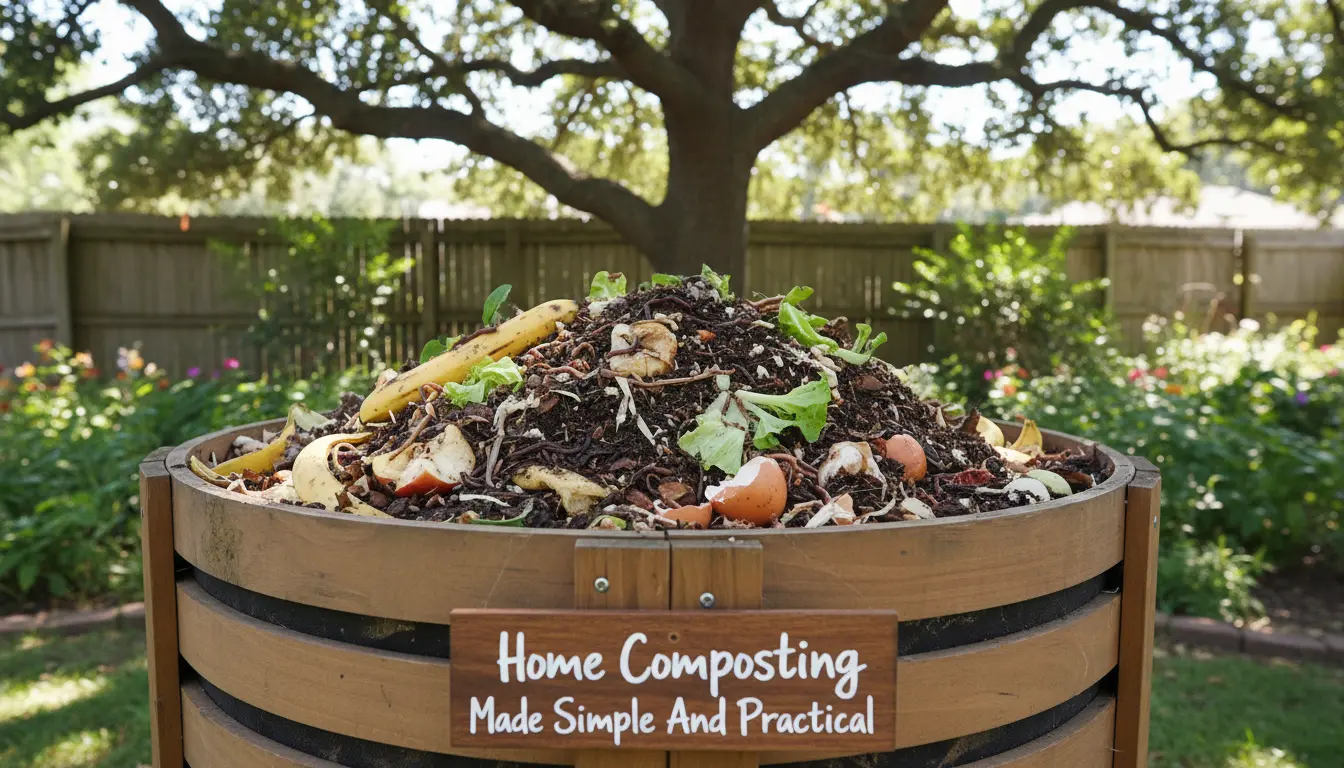
Why Home Composting Matters
Home composting turns kitchen and yard waste into nutrient-rich soil. It reduces landfill waste and improves garden health with minimal cost.
For beginners, composting can feel technical. This guide breaks the process into simple, actionable steps you can follow this weekend.
Home Composting Basics

Composting is aerobic decomposition of organic matter. In home systems you create the conditions microbes need: carbon, nitrogen, moisture, and air.
Common systems include a backyard bin, a tumbler, or a worm (vermicompost) setup. Choose one based on space, budget, and how fast you want finished compost.
Choose a Composting Method
- Simple bin: Low cost, low maintenance, good for gardeners with space.
- Tumbler: Faster turning and less effort, suited for small yards.
- Vermicompost (worms): Ideal for apartments and fast kitchen-waste processing.
What to Compost: Materials for Success
Balance “greens” (nitrogen-rich) and “browns” (carbon-rich) to speed decomposition. Aim for roughly a 2:1 or 3:1 ratio of browns to greens by volume.
Good Greens
- Fruit and vegetable scraps
- Coffee grounds and tea leaves
- Fresh grass clippings
Good Browns
- Dry leaves and straw
- Shredded cardboard and paper (non-glossy)
- Wood chips and sawdust in small amounts
Materials to Avoid
- Meat, dairy, and oily foods (attract pests)
- Diseased plants or persistent weeds
- Pet waste from carnivores
Step-by-Step Home Composting Process

Follow these steps to establish and maintain a functional compost pile or bin.
1. Location and Setup
Place your bin on soil for beneficial organisms to enter and for drainage. Choose partial shade to prevent drying out in hot climates.
2. Build Layers
Start with a 2–4 inch base of coarse material like sticks for airflow. Then add alternating layers of greens and browns.
3. Maintain Moisture and Aeration

Compost should be as damp as a wrung-out sponge. If dry, add water and more greens; if too wet, add browns and aerate.
Turn or mix the pile every 1–3 weeks for faster decomposition and to prevent odor.
4. Monitor Temperature
Active piles heat to 130–160°F (55–70°C). For small home piles, this may be lower. Heat indicates active decomposition and pathogen reduction.
5. Harvest Finished Compost
Compost is ready when dark, crumbly, and earthy-smelling—usually in 2–6 months depending on method. Sift and use in garden beds, potting mixes, or as mulch.
Practical Tips for Composting Success
- Chop materials into smaller pieces to speed breakdown.
- Keep a balanced mix: too many greens causes odor, too many browns slows the process.
- Cover fresh food scraps with dry leaves or shredded paper to deter pests.
- Use a kitchen scrap container with a tight lid for daily collection.
Adding a thin layer of finished compost or garden soil to a new pile introduces beneficial microbes and speeds up decomposition.
Small Real-World Case Study
Case: A small family of three in a suburban home started a 55-gallon bin and a food-scrap routine in spring. They balanced weekly greens (kitchen scraps) with shredded leaves and cardboard.
Result: In six months they diverted about 220 pounds of organic waste from the trash and produced roughly 3 cubic feet of finished compost. Garden yields improved with the added compost, and lawn watering needs decreased slightly due to better soil structure.
Troubleshooting Common Compost Problems
Problems are usually easy to fix with small adjustments.
Bad Odor
Cause: Too much green material or poor aeration. Fix: Add browns, turn the pile, and ensure drainage.
Slow Breakdown
Cause: Too dry, too much carbon, or large pieces. Fix: Add water, more greens, and chop materials finer.
Pests or Flies
Cause: Meat, dairy, or exposed food scraps. Fix: Remove offending items and cover new scraps with browns. Use sealed tumbler if pests persist.
Using Finished Compost
Apply compost as a top dressing, mix into potting soil, or use as a component in seed-starting mixes. A typical application is 1–3 inches of compost spread over garden beds once or twice a year.
Compost improves soil structure, water retention, and nutrient availability for plants.
Start Your Home Composting Today
Begin with a simple bin and a steady habit of saving kitchen scraps. Small, consistent steps produce results over months, reduce household waste, and improve your garden soil.
Composting is a practical skill anyone can learn. Start small, observe, and adjust—your soil (and local landfill) will thank you.