
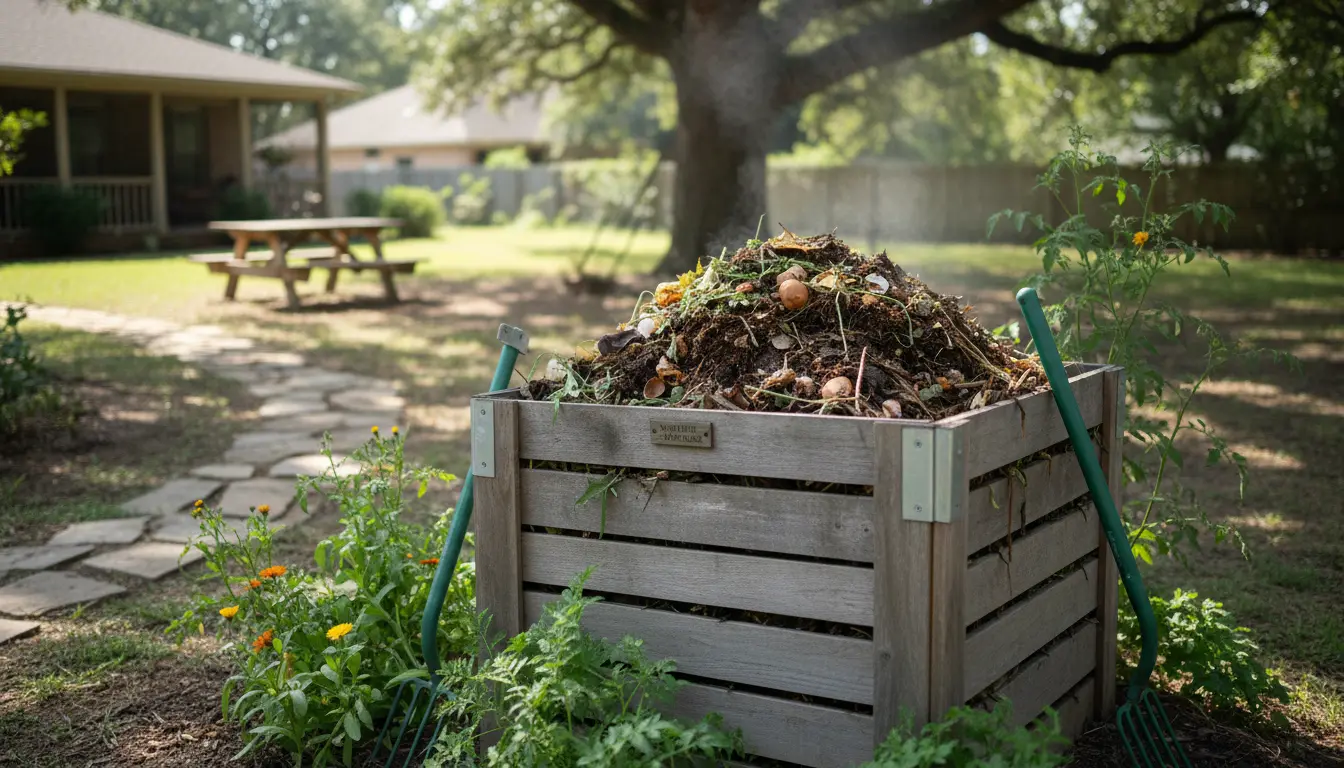
What Is Home Composting and Why Start
Home composting is the controlled breakdown of organic kitchen and garden waste into a dark, crumbly soil amendment. It reduces household waste, cuts disposal costs, and returns nutrients to soil.
Many beginners start composting to save money on fertilizer and improve garden health. The process is low-tech and works in small spaces or large yards.
Basic Principles of Home Composting

Successful composting depends on four things: carbon, nitrogen, moisture, and air. These elements support the microbes that break down organic matter.
- Carbon (browns): dry leaves, straw, cardboard
- Nitrogen (greens): vegetable scraps, fresh grass clippings
- Moisture: damp like a wrung-out sponge
- Air: regular turning to add oxygen
How to Start Home Composting
Follow these practical steps to set up a working compost system at home. The instructions fit backyard bins, tumblers, and balcony setups with small containers.
1. Choose a Compost System
Pick a method that fits your space and effort level. Options include a simple pile, a covered bin, or a rotating tumbler.
- Open pile: low cost, needs space and more turning.
- Bin or tumbler: neater, faster, better for small yards or patios.
- Indoor bokashi or worm bin: suitable for apartments and produces minimal odor.
2. Gather Materials and Start the Pile

Collect both browns and greens. Aim to layer them when starting a pile to jump-start decomposition.
Start with a 4–6 inch layer of coarse browns for drainage, then add greens, then more browns. Repeat until the container is filled.
3. Balance Greens and Browns
Use roughly a 2:1 ratio by volume of browns to greens for steady decomposition. Too many greens can cause odor; too many browns slow the process.

Examples:
- Add shredded newspaper or dry leaves if you have lots of vegetable scraps.
- Add kitchen peels and fresh grass to a pile heavy in brown cardboard.
4. Maintain Moisture and Aeration
Keep the pile damp but not soggy. In dry weather, water occasionally. Turn the pile every 1–2 weeks to introduce air and speed decomposition.
If using a tumbler, rotate it several times per week. For worm bins, avoid overwatering and provide proper bedding.
5. Troubleshoot Common Problems
If the pile smells bad, it is usually too wet or has too many greens. Add dry browns and turn it to fix odors.
If decomposition is slow, add greens or chop materials smaller to increase surface area. Cold piles may need more turning or insulation.
Harvesting and Using Finished Compost
Compost is ready when it is dark, crumbly, and has an earthy smell. This usually takes 2–6 months depending on method and conditions.
Use finished compost to:
- Mix into potting soil or garden beds (10–30% by volume).
- Topdress lawns and containers to boost nutrients.
- Make compost tea for foliar feeding or root watering.
One household can divert up to 30% of its waste from the trash by composting kitchen scraps and yard waste. That both reduces landfill methane and creates free soil amendment.
Small Real-World Case Study
Case study: Anna, a city resident with a balcony, used a 20-liter worm bin for 12 months. She added coffee grounds and vegetable scraps daily and shredded mail as bedding.
After six months, Anna harvested a few liters of rich compost and noticed her balcony herbs grew faster and looked healthier. She reduced trash output and used finished compost for potted basil and tomatoes.
Quick Tips and Tools for Home Composting
These small steps help keep composting simple and effective.
- Chop or shred large materials to speed breakdown.
- Keep a small countertop caddy with a lid to store scraps before transferring outside.
- Use a pitchfork or aerator tool to turn outdoor piles.
- Try a thermometer if you want to maintain hot composting (130–160°F for pathogen reduction).
What You Should Avoid Adding
Some items slow composting or attract pests. Avoid dairy, meat, oily foods, and diseased plants in typical backyard compost.
Protect your system from rodents by using closed bins and burying food scraps or using secure tumblers.
Final Checklist to Start Today
- Choose a bin or method that fits your space.
- Collect a mix of browns and greens.
- Layer materials and keep the pile moist and airy.
- Turn regularly and harvest when dark and crumbly.
Home composting is a practical, low-cost way to reduce waste and improve soil health. Start small, observe your pile, and adjust ratios and turning frequency to find what works for your home.