
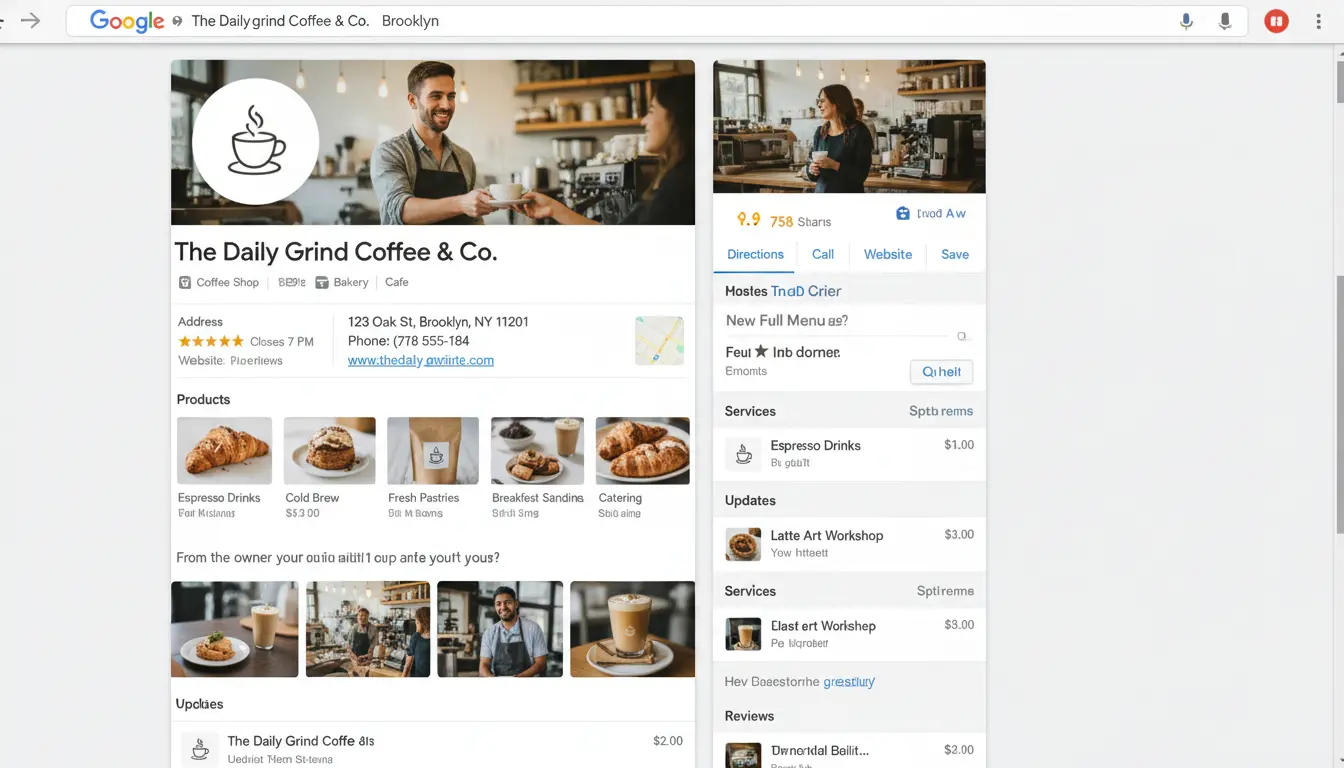
What Is Local SEO for Small Businesses?
Local SEO for small businesses means optimizing your online presence so local customers can find you. It focuses on search queries that have local intent, such as “coffee shop near me” or “plumber in Springfield.”
The goal is to appear in local search features like the Google Business Profile, local pack, and organic results for geographically relevant queries. This guide gives practical steps you can follow today.
Why Local SEO for Small Businesses Matters

Most local searches show strong purchase intent. When someone searches for a service nearby, they are often ready to visit or call. Improving local SEO increases foot traffic, phone calls, and online bookings.
Local SEO can be low cost and high impact for small businesses compared to broad national advertising. It helps you compete against larger brands using local signals and accuracy.
5 Quick Steps to Improve Local SEO for Small Businesses
Follow these five steps in order to build a reliable local presence. Each step is actionable and measurable.
1. Claim and Optimize Your Google Business Profile for Local SEO for Small Businesses

Claim your profile at Google Business Profile and complete every field. Add accurate business name, address, phone number, hours, description, and categories.
Upload high-quality photos of your storefront, products, and team. Encourage customers to leave reviews and respond to them promptly.
2. Ensure NAP Consistency for Local SEO for Small Businesses
NAP stands for Name, Address, Phone. Use the exact same format across your website, Google Business Profile, and directory listings.

Inconsistent NAP data confuses search engines and can harm rankings. Create a short master file with your official NAP and use it when submitting listings.
3. Add Local Content and On-Page Signals for Local SEO for Small Businesses
Create pages or blog posts that target local keywords and topics customers search for. Mention neighborhood names, nearby landmarks, and service areas naturally.
Include your NAP in the footer and add a clear contact page with an embedded Google Map to strengthen local signals.
4. Build Local Citations and Quality Backlinks for Local SEO for Small Businesses
Submit your business to reputable local directories and industry-specific sites. Prioritize quality over quantity.
Partner with local organizations, sponsors, or suppliers to earn backlinks. Local press or community pages can be strong signals for local relevance.
5. Use Structured Data and Reviews for Local SEO for Small Businesses
Add LocalBusiness schema markup to your website to give search engines structured information about your business. Include opening hours, address, and accepted payments where relevant.
Solicit and manage reviews on Google and industry sites. Reviews influence local pack placement and clickthrough rates.
Checklist for Local SEO for Small Businesses
Use this short checklist to audit your current situation and prioritize tasks.
- Claim Google Business Profile and verify ownership
- Confirm NAP consistency across all listings
- Publish local pages and FAQs targeting neighborhood queries
- Collect and respond to reviews regularly
- Add LocalBusiness schema to key pages
- Obtain local backlinks through partnerships and community outreach
Common Mistakes to Avoid in Local SEO for Small Businesses
Avoid these frequent errors that can reduce the effectiveness of your efforts. Correcting them often produces quick gains.
- Using different phone numbers or addresses in various listings
- Leaving Google Business Profile incomplete or unverified
- Publishing duplicate pages for the same location
- Ignoring negative reviews instead of responding professionally
Business listings with complete Google Business Profiles and multiple recent reviews are far more likely to appear in the local pack. Regularly updated profiles get more clicks and calls.
Measuring Success for Local SEO for Small Businesses
Track a few key metrics to see if your local SEO is working. Use Google Business Profile insights and Google Analytics for most data.
- Impressions and clicks from local search
- Phone calls and direction requests from your profile
- Website traffic to local pages and contact page views
- Number and sentiment of customer reviews
Small Real-World Example: Case Study
Example: A small bakery improved local visibility by optimizing its Google Business Profile and adding a “Local Orders” page on the site. They:
- Claimed and verified the profile and added meal photos
- Asked customers to leave reviews and replied to each review
- Published a page targeting “bakery near downtown” and added LocalBusiness schema
Result: In three months the bakery saw a 40% increase in direction requests and a 25% increase in website orders. The bakery’s listing moved into the local pack for several high-intent keywords.
Next Steps for Local SEO for Small Businesses
Start with your Google Business Profile and NAP consistency. Make small, consistent improvements and track the impact.
Focus on reviews, local content, and community links. Over time these signals compound and deliver steady local traffic and customers.
Local SEO for small businesses is practical and affordable. Implement the five steps above, measure results, and iterate based on data.