
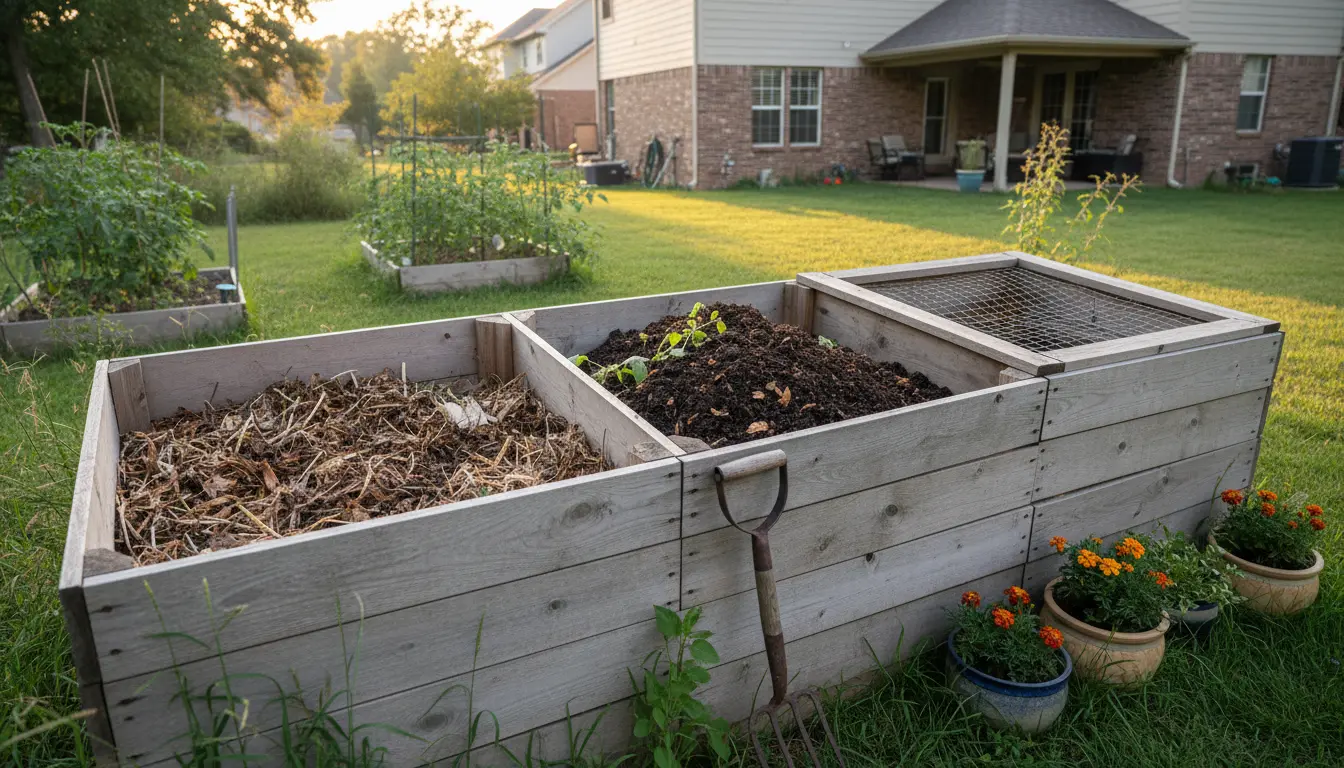
Why Choose Home Composting
Home composting turns kitchen and garden waste into nutrient-rich soil. It reduces trash, lowers emissions, and improves your garden’s health.
Starting is straightforward and requires only a few tools and some basic practice. This guide gives clear steps to set up, maintain, and troubleshoot a home composting system.
How to Start Home Composting

Begin by selecting a location that is convenient and has good drainage. A shaded or semi-shaded spot near the garden or garage works well.
Next, choose a bin type that fits your space and workload. Below are common options and what to expect from each.
Home Composting: Choosing a Bin
- Tumbler composters — Good for small spaces, faster turning, moderate cost.
- Open compost piles — Low-cost, flexible size, requires manual turning.
- Wooden or wire bins — Durable, good airflow, customizable.
Home Composting: What to Compost
Balance ‘greens’ (nitrogen-rich) with ‘browns’ (carbon-rich). This balance is the core of efficient composting.
- Greens: fruit and vegetable scraps, coffee grounds, fresh grass clippings.
- Browns: dry leaves, straw, shredded cardboard, paper.
- Avoid: meat, dairy, oils, diseased plants, and pet waste for most backyard systems.
Home Composting: Layering and Moisture

Start with a base layer of coarse browns for airflow, then alternate greens and browns. Aim for layers 2–4 inches thick.
Maintain a moisture level like a wrung-out sponge. Too dry slows decomposition; too wet causes odors. Turn or mix the pile to increase aeration.
Maintaining Your Home Composting System
Consistent maintenance speeds up composting and prevents issues. A simple routine can keep your bin healthy all year.
Routine Tasks for Home Composting
- Weekly: Add new scraps and a layer of browns, check moisture, and turn the pile if possible.
- Monthly: Inspect for pests or foul odors, adjust greens/browns ratio as needed.
- Seasonal: Insulate or reduce size in winter; increase browns in wet seasons.
Troubleshooting Home Composting Problems

Most problems come from imbalanced materials or poor aeration. Common signs point to clear fixes.
Common Issues and Fixes
- Bad smell: Add more browns and turn the pile to introduce air.
- Slow breakdown: Chop materials smaller, increase greens, and keep moist.
- Pests: Avoid meat and oily foods; use closed bins or bury scraps under browns.
Properly balanced compost can reach temperatures above 130°F and kill many weed seeds and pathogens within weeks.
Speeding Up Home Composting
If you want finished compost faster, focus on particle size, moisture, and aeration. Smaller pieces break down more quickly.
Turning the pile every 3–7 days can produce finished compost in a few months, while passive piles may take a year or more.
Methods to Accelerate Composting
- Shred or chop materials before adding them.
- Use a compost accelerator like finished compost or a small amount of soil to introduce microbes.
- Use a tumbler for quick, even mixing and better aeration.
Small Real-World Case Study
Example: A two-person household started home composting with a 65-gallon tumbler. They added kitchen scraps and shredded cardboard in a 1:2 green-to-brown ratio.
After four months of weekly turning and moisture checks, they produced dark, crumbly compost that improved tomato yields and reduced weekly trash by one bag. The system required about 15 minutes of maintenance per week.
Practical Tips and Examples
- Keep a countertop caddy with a lid to collect scraps and rinse it weekly to avoid odors.
- Use fallen leaves as a free source of browns in autumn — store them in a mesh bag for year-round use.
- Test your compost by tasting the soil smell: it should be earthy, not rotten or sour.
Home composting is an efficient way to recycle organic waste and enrich garden soil. With the right balance of materials, simple maintenance, and occasional troubleshooting, most households can produce useful compost year-round.
Start small, observe your pile, and adjust techniques to suit your climate and available materials. Over time you will develop a rhythm that fits your household and garden needs.