
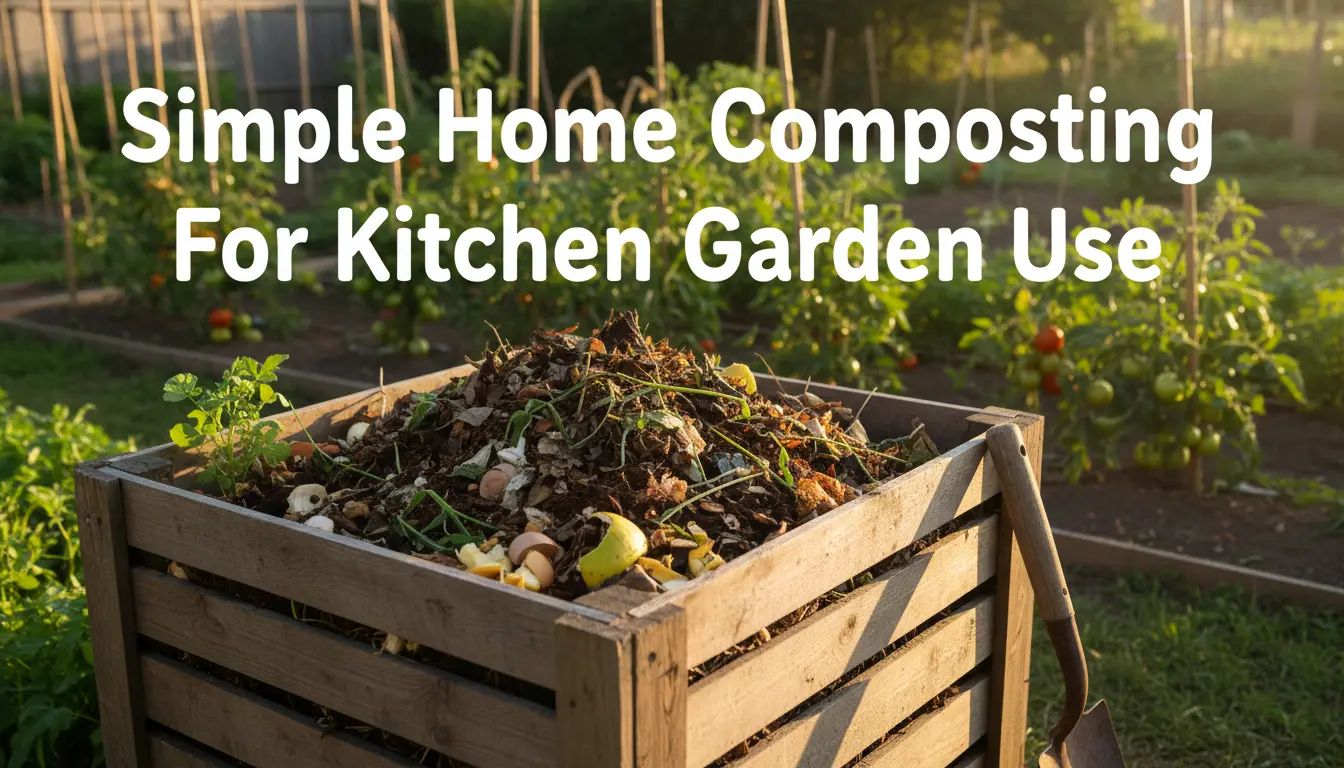
Home composting turns kitchen scraps and yard waste into rich soil that feeds plants and reduces trash. This guide gives practical steps you can use whether you have a backyard, balcony, or small kitchen.
Home Composting Basics
Compost is made from organic materials that break down naturally. The process needs a balance of carbon, nitrogen, air, and moisture to work efficiently.
Key materials for home composting
- Greens (nitrogen): fruit and vegetable scraps, fresh grass clippings, coffee grounds.
- Browns (carbon): dried leaves, cardboard, shredded paper, straw.
- Aeration: turning or using a bin that allows airflow.
- Moisture: compost should feel like a wrung-out sponge, not soggy.
Choosing a Composting Method for Home Composting

Pick a method that matches your space, time, and tolerance for maintenance. Common options include a simple pile, a tumbler, or a worm bin (vermicomposting).
- Backyard pile: low cost, flexible size, requires turning.
- Compost tumbler: cleaner, faster, more control over aeration.
- Worm bin: great for indoor use and small kitchens, produces worm castings quickly.
Selecting a location
Place your compost bin on soil or a well-drained surface. Partial shade helps maintain consistent moisture and temperature.
Step-by-Step: How to Start Home Composting
Follow these steps to build a healthy compost system that breaks down materials efficiently.
1. Gather materials

Collect both greens and browns before starting. A practical ratio is roughly 1 part greens to 3 parts browns by volume.
2. Build the pile or load the bin
Start with a layer of coarse browns to help airflow. Alternate thin layers of greens and browns to maintain balance.
3. Maintain moisture and airflow
Keep the pile damp but not waterlogged. Turn the pile every 1–2 weeks if you want faster decomposition. For worm bins, avoid turning; worms do the mixing.
4. Monitor temperature

A hot compost pile reaches between 40–60°C (104–140°F) and breaks down materials faster. If it cools, add more greens and turn to reheat the pile.
Troubleshooting Home Composting Problems
Common problems are easy to fix with small adjustments.
- Bad smell: too many greens or lack of aeration. Add browns and turn the pile.
- Pile too dry: add water and a few greens to rehydrate the mix.
- Pile too wet: add dry browns and improve drainage or aeration.
- Pests or rodents: avoid meat, dairy, oily foods, and bury fresh food under browns or compost in a closed bin.
A properly managed compost pile can reduce household waste by up to 30 percent and significantly lower methane emissions from landfills.
Tips and Best Practices for Home Composting
- Chop larger scraps to speed decomposition.
- Keep a small countertop container for daily scraps to avoid odors and flies.
- Use finished compost as a top dressing for gardens or mix with potting soil for container plants.
- Label bins and rotate use so some material can fully finish while new material is added.
What not to compost at home
Avoid meat, bones, dairy, diseased plants, and pet waste in typical home systems. These items attract pests or require special high-heat composting.
Small Real-World Example: Case Study
Case: Sarah, a city apartment gardener, started a worm bin under her kitchen sink. She collected fruit and vegetable scraps and added shredded cardboard as bedding.
Within three months, Sarah produced usable worm castings for her balcony pots. Her kitchen waste dropped noticeably, and plants showed improved growth after she mixed castings into potting mix.
Using Finished Compost from Home Composting
Finished compost is dark, crumbly, and smells earthy. Use it to improve soil structure, retain moisture, and feed plants slowly over time.
Common uses
- Top-dress lawns and garden beds.
- Mix with potting soil for container plants.
- Create seed-starting mixes by blending with sand or perlite for better drainage.
Final Checklist to Start Home Composting Today
- Choose a method: pile, tumbler, or worm bin.
- Gather a mix of greens and browns.
- Place bin in a suitable spot with partial shade and drainage.
- Maintain moisture and aeration, and monitor progress.
- Use finished compost to enrich your garden or plants.
Home composting is a practical way to reduce waste and improve soil health. Start small, follow basic balance and maintenance rules, and adjust as you learn what works best in your space.