
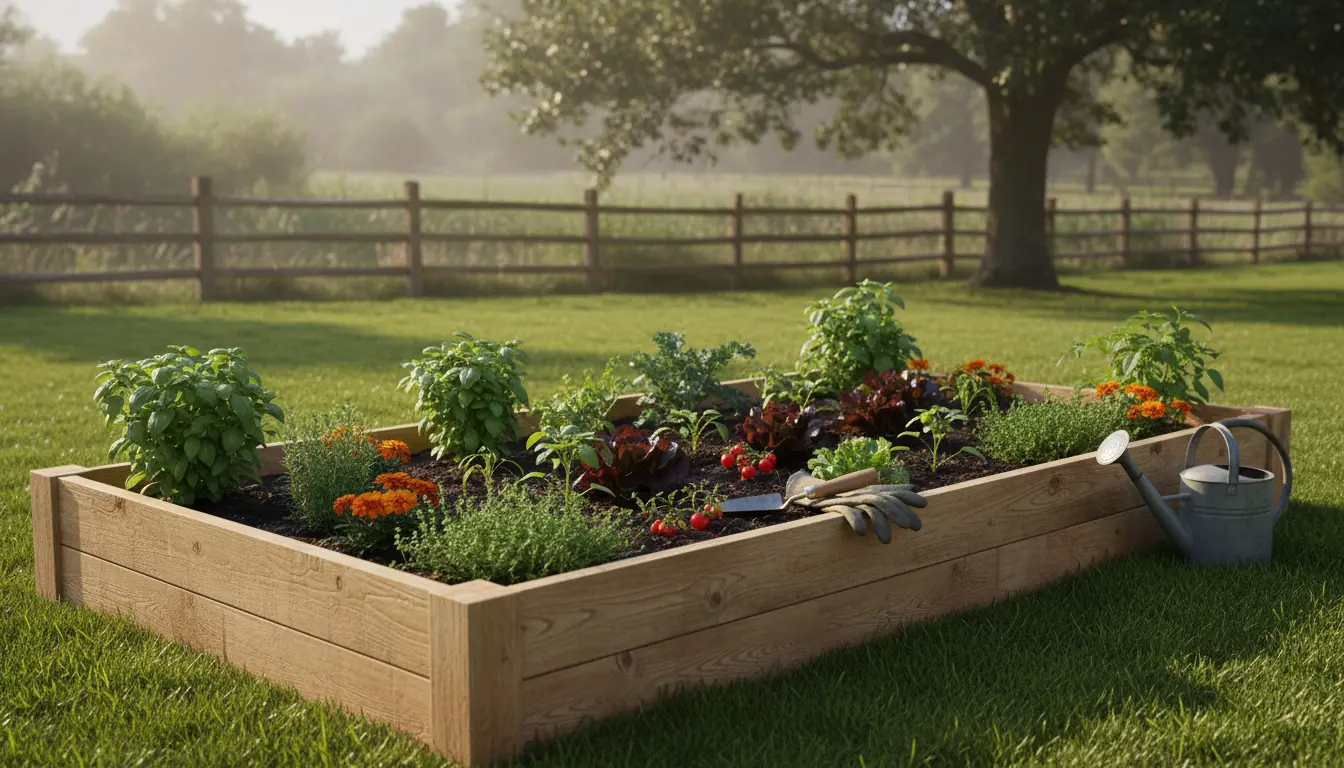
Plan How to Start a Small Vegetable Garden
Begin by deciding why you want a small vegetable garden. Do you want fresh herbs, salad greens, or enough vegetables to save money? A clear purpose guides plant selection and layout.
Measure available space and pick a simple footprint. Small gardens work well in raised beds, containers, or a compact in-ground plot.
Choose the Right Site for a Small Vegetable Garden

Vegetables need sunlight. Choose a site that gets at least 6 hours of direct sun daily for most crops. Morning sun with afternoon shade works for some leafy greens.
Check access to water and protection from strong wind. If the site is rocky or compacted, consider raised beds or containers.
Soil and Containers for a Small Vegetable Garden
Good soil is the single most important factor. For in-ground gardens, test soil pH and texture or buy a basic soil test kit.

For raised beds or containers, use a mix of quality topsoil, compost, and a loamy soil conditioner. Aim for loose, well-draining soil that holds moisture.
Select Plants for a Small Vegetable Garden
Choose crops that fit your space, climate, and appetite. Prioritize high-yield, compact, or fast-growing varieties for small gardens.
- Quick harvests: Lettuce, radishes, spinach.
- Compact producers: Bush beans, determinate tomatoes, patio peppers.
- Herbs for constant use: Basil, parsley, chives.
Succession Planting and Space Saving
Use succession planting to get continuous harvests. After an early crop like radishes finishes, plant a warm-season crop in the same space.

Try vertical supports for peas, cucumbers, or vining tomatoes to multiply usable area.
Prepare and Plant in a Small Vegetable Garden
Prepare beds by adding a 2–3 inch layer of compost and mixing it into the top 6–8 inches of soil. Rake smooth and level before planting.
Follow spacing directions on seed packets or plant tags, but feel free to plant a bit closer in small gardens. Harvest young and often to reduce crowding.
Watering and Fertilizing a Small Vegetable Garden
Establish a consistent watering schedule. Most vegetables need 1–1.5 inches of water per week, delivered deeply and less frequently.
Use mulch to retain moisture and suppress weeds. Apply a balanced organic fertilizer or side-dress with compost during the growing season as needed.
Manage Pests and Diseases in a Small Vegetable Garden
Prevention is best: rotate crops, use disease-resistant varieties, and keep the garden tidy. Handpick larger pests and use row covers for seedlings.
For small gardens, targeted organic controls like insecticidal soap, neem oil, or diatomaceous earth often work well and limit collateral damage.
Harvesting and Extending the Season
Harvest regularly to encourage more production. Pick leafy greens young and collect fruits like tomatoes when fully colored and slightly soft.
Extend your season with cold frames, cloches, or a small hoop tunnel to grow earlier in spring and later into fall.
In a small raised bed (4 x 8 feet), you can grow enough salad greens weekly for a family of four using intensive planting and succession crops.
Simple Checklist to Start a Small Vegetable Garden
- Pick a sunny site with water access.
- Decide on raised beds, containers, or in-ground plots.
- Improve soil with compost and test pH if possible.
- Choose compact, high-yield varieties and plan succession planting.
- Set a regular watering and weeding routine.
- Use organic pest controls and rotate crops annually.
Real-World Example: Sarah’s Raised Bed Case Study
Sarah converted a 10 x 4 foot sunny strip beside her driveway into two 4 x 4 raised beds. She filled them with a 50/50 mix of compost and loamy topsoil.
Year one she planted lettuces, bush tomatoes, basil, and bush beans. She used vertical trellises for beans and harvested lettuce every week. By staggering plantings, she had continuous salad greens from May to October.
Her yields: enough salad greens for two people weekly, 15–20 tomatoes per plant, and a steady supply of beans. She spent about 30 minutes a day on watering, harvesting, and quick pest checks.
Troubleshooting Common Small Garden Problems
If plants are yellowing, test soil for nutrients and pH. If growth is stunted, check compaction and root space, especially in containers.
For heavy pest pressure, use netting or row covers and attract beneficial insects by planting flowers like marigolds or calendula nearby.
Final Tips to Start a Small Vegetable Garden Successfully
Start small and expand as you gain confidence. Track what you plant, when you plant it, and the yields to refine your plan each season.
Enjoy the process: small gardens give fast feedback, and careful planning will reward you with fresh vegetables and lower grocery bills.