
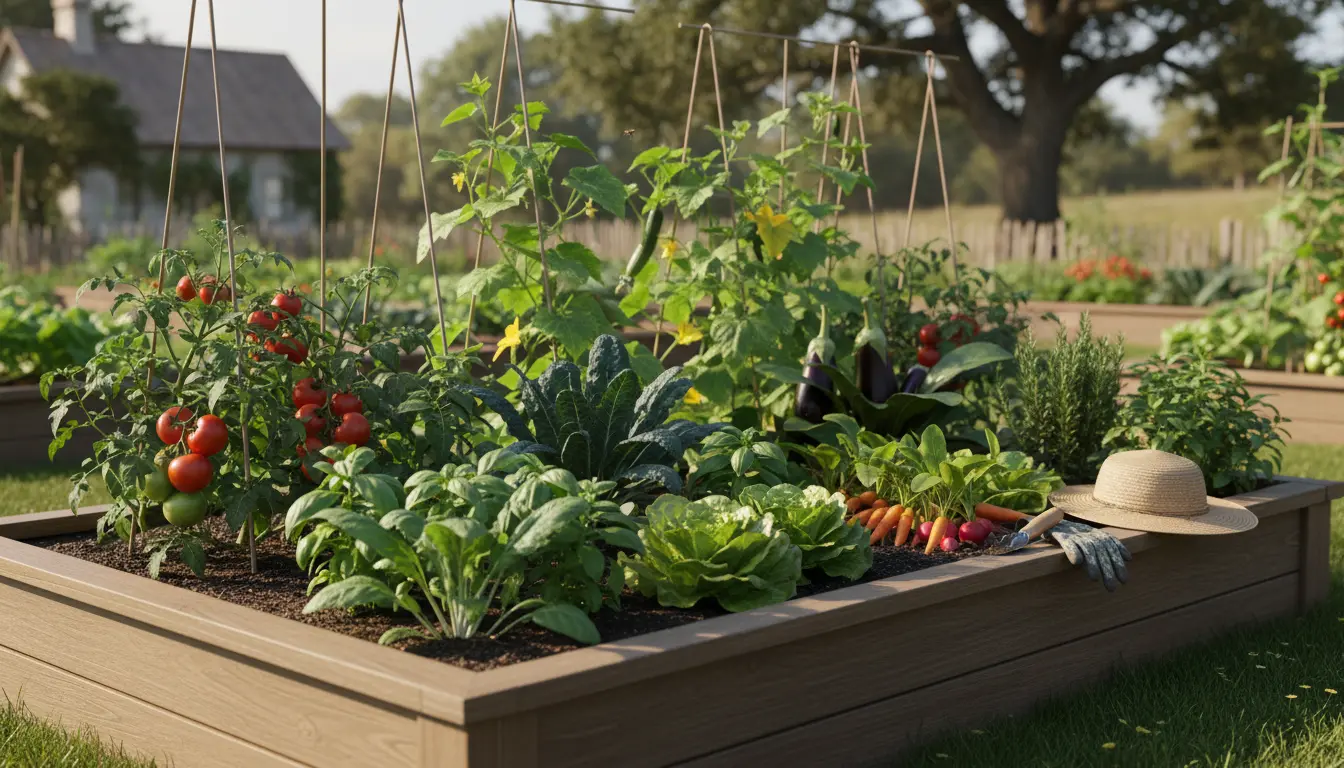
Starting a vegetable garden is a manageable project for most homeowners and renters. This guide breaks the process into clear steps so you can plan, plant, and maintain a productive garden without unnecessary complexity.
Choose the Right Site to Start a Vegetable Garden
Sunlight is the primary factor when selecting a site. Most vegetables need at least six hours of direct sun daily, with tomatoes and peppers preferring eight or more.

Check drainage and access to water. Avoid low spots that hold water and choose an area you can reach easily for regular watering and harvesting.
Site checklist
- 6–8 hours of direct sun
- Good surface drainage
- Nearby water source
- Easy access for maintenance
Decide on Garden Type and Size
Raised beds, in-ground rows, and container gardens each have pros and cons. Raised beds warm faster in spring and provide good control over soil quality.
For beginners, a 4×8 foot raised bed or three to four large containers can supply a family with fresh vegetables and remain easy to manage.
Recommended beginner setups
- One 4×8 foot raised bed for compact vegetables and herbs
- Three 20–30 gallon containers for tomatoes, peppers, and eggplant
- A small in-ground plot 10×10 feet if you have space and good soil
Prepare Soil and Test for Success

Healthy soil is the foundation of a productive vegetable garden. Start by testing soil pH and nutrients with a home kit or local extension service.
Most vegetables prefer a slightly acidic to neutral pH (6.0–7.0). Improve soil structure with compost and coarse organic matter like aged manure or leaf mold.
Soil improvement steps
- Remove large debris and weeds.
- Spread 2–3 inches of compost over the planting area.
- Mix compost into the top 6–12 inches of soil.
- Adjust pH if recommended by a test: lime to raise pH, sulfur to lower it.
Pick Easy Vegetables to Start
Choose crops that are forgiving and provide reliable yields. For beginners, try lettuce, radishes, bush beans, zucchini, and cherry tomatoes.

Stagger plantings to extend harvests and reduce workload. For example, sow lettuce every two weeks for a continuous supply.
Planting schedule example
- Spring: peas, lettuce, radishes
- Late spring: tomatoes, peppers, basil
- Summer: beans, zucchini, cucumbers
- Fall: kale, broccoli, carrots
Watering and Fertilizing Basics
Water deeply and less often to encourage strong root systems. Aim for about 1 inch of water per week, adjusting for heat and soil type.
Fertilize based on crop needs and soil test results. A balanced organic fertilizer or compost tea can support growth without overfeeding.
Watering tips
- Water in the morning to reduce evaporation and disease risk.
- Use soaker hoses or drip irrigation to deliver water to roots.
- Mulch with straw or wood chips to retain moisture and suppress weeds.
Pest and Disease Management
Preventive practices are more effective than reactive treatments. Rotate crops yearly to reduce pest buildup and avoid planting related crops in the same spot season after season.
Inspect plants weekly for signs of pests or disease. Remove affected leaves early and use physical controls like row covers for young plants.
Simple pest control methods
- Handpick larger pests like caterpillars and beetles.
- Encourage beneficial insects with flowering herbs and companion plants.
- Use targeted organic treatments when necessary, following label instructions.
Harvesting and Ongoing Care
Harvest vegetables at peak maturity for the best flavor and to encourage continued production. Regular picking of beans, cucumbers, and tomatoes extends the productive period.
End-of-season tasks include removing spent plants, adding compost, and covering beds to protect soil structure over winter.
Small Case Study: One Season Success
Sarah, a new gardener with a 4×8 raised bed, began planting in May and followed a simple plan: tomatoes, lettuce, bush beans, and basil. She added compost before planting and used mulch and drip irrigation.
By September Sarah harvested over 60 pounds of produce: about 10 pounds of tomatoes, 20 pounds of beans, 5 pounds of lettuce, and the rest from squash and peppers. Regular harvesting and weekly checks kept disease and pests under control.
Quick Checklist to Start a Vegetable Garden
- Choose a sunny site with good drainage.
- Decide on raised beds, containers, or in-ground rows.
- Test and amend soil with compost.
- Start with easy vegetables and stagger plantings.
- Water deeply, mulch, and monitor pests weekly.
- Harvest regularly and add compost at season end.
Starting a vegetable garden is a learning process that rewards planning and simple, consistent care. With these steps, even a small space can produce meaningful amounts of fresh food and build confidence for larger projects in future seasons.