
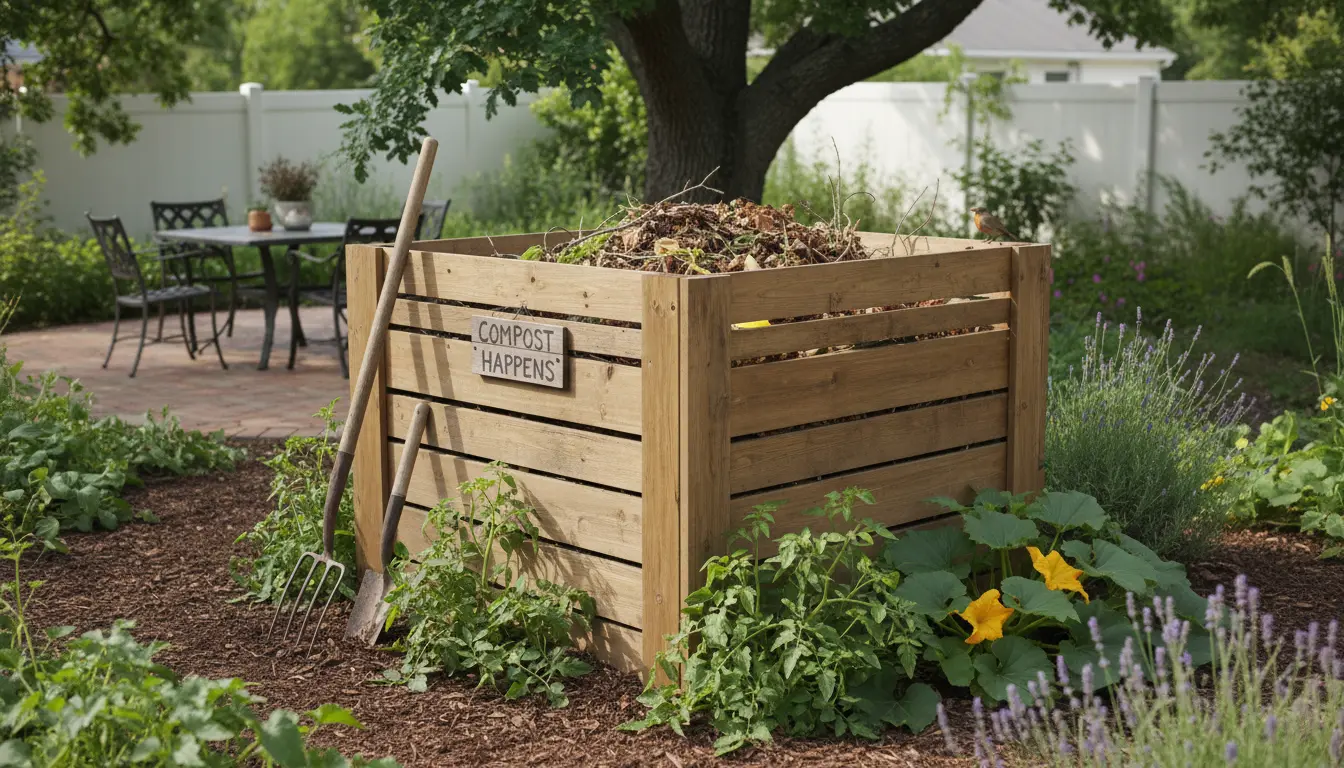
Why Home Composting Matters
Home composting turns kitchen and yard waste into a useful soil amendment. It reduces landfill waste, lowers methane emissions, and improves garden soil health.
For beginners, composting is a practical way to recycle organic matter and save on store-bought soil products. This guide gives clear, actionable steps to start composting at home.
What You Need for Home Composting

Start small with basic materials and a simple container. You do not need fancy equipment to make effective compost.
- Container: a bin, pile, or worm bin depending on space
- Browns: dry leaves, paper, cardboard for carbon
- Greens: vegetable scraps, coffee grounds for nitrogen
- Water and occasional turning to maintain conditions
Choosing a Compost System for Home Composting
Select a method that fits your living situation. Many beginners prefer a simple backyard bin or a small indoor worm bin for apartments.
- Backyard bin: Good for yards, higher volume composting
- Tumbler: Faster turning and reduced pests
- Worm bin (vermicompost): Ideal indoors or small balconies
Basic Home Composting Steps
Follow these core steps to get a healthy compost pile. Keep actions simple and consistent to avoid common problems.
1. Build the Right Mix

Aim for a balanced carbon to nitrogen ratio. A common practical target is roughly 3 parts browns to 1 part greens by volume.
Examples of browns include dry leaves and shredded cardboard. Greens include fruit and vegetable scraps and fresh grass clippings.
2. Layer and Moisten
Start with a layer of coarse material for airflow, then alternate greens and browns. Lightly moisten each layer; compost should feel like a wrung-out sponge.

Avoid making it soggy, which invites odors and slows decomposition.
3. Turn or Aerate
Turning introduces oxygen that speeds up decomposition. For a hot pile, turn every 1-2 weeks. For smaller or worm systems, occasional mixing or aeration is enough.
If using a tumbler, rotate it according to manufacturer guidance to keep materials mixed and aerated.
4. Monitor Temperature and Smell
A healthy compost pile warms as microbes break down materials. A hot center indicates active decomposition, but heat is not required for quality compost.
Neutral, earthy smell is normal. Foul odors usually indicate too much moisture or too many greens; add dry browns and turn the pile.
Troubleshooting Common Home Composting Problems
Beginners often encounter a few predictable issues. Simple fixes usually restore balance quickly.
- Bad odor: Add dry browns and turn to aerate.
- Slow breakdown: Increase surface area by shredding materials and ensure moisture and airflow.
- Pests: Avoid meat, dairy, and oily foods. Use a closed bin or bury food scraps inside the pile.
- Dry pile: Add water and a few green scraps; cover to retain moisture.
Composting one ton of food waste can save about 0.5 to 1.0 metric tons of CO2 equivalent compared with landfilling. Home composting contributes to this reduction while creating valuable soil amendment.
How to Use Finished Compost
Finished compost is dark, crumbly, and smells earthy. Use it to enrich potting mixes, topdress lawns, or amend garden beds.
Apply a 1 to 3 inch layer as a mulch or mix 10 to 30 percent compost into garden beds for ongoing soil improvement.
Quick Checklist for New Home Composters
- Choose a bin or method that fits your space
- Collect greens and browns separately to balance the mix
- Keep the pile moist but not wet
- Turn or aerate regularly for faster results
- Avoid meat, dairy, and oily foods to limit pests
Simple Real-World Example
Case study: A small urban household started a 50-liter worm bin in their kitchen. Over three months they processed about 15 kg of food scraps and produced roughly 9 liters of vermicompost.
The family used the vermicompost in balcony planters. Their tomato plants showed fuller growth and produced 20 percent more fruit that season. The bin also reduced their weekly kitchen waste by about 30 percent.
Practical Tips to Keep Composting Simple
Make composting a routine: keep a small countertop container for scraps and empty it into your main bin every few days. Use shredded paper or cardboard to add browns conveniently.
Label a compost bucket or bag if you separate materials for municipal pickup. Clear habits reduce mistakes and make the process sustainable over time.
Final Steps to Start Home Composting Today
Pick a system, gather a basic supply of browns and greens, and commit to small, regular maintenance tasks. Composting is forgiving: small adjustments fix most problems.
With a little attention, home composting will reduce waste, improve soil, and connect you to the natural recycling process in a practical way.