
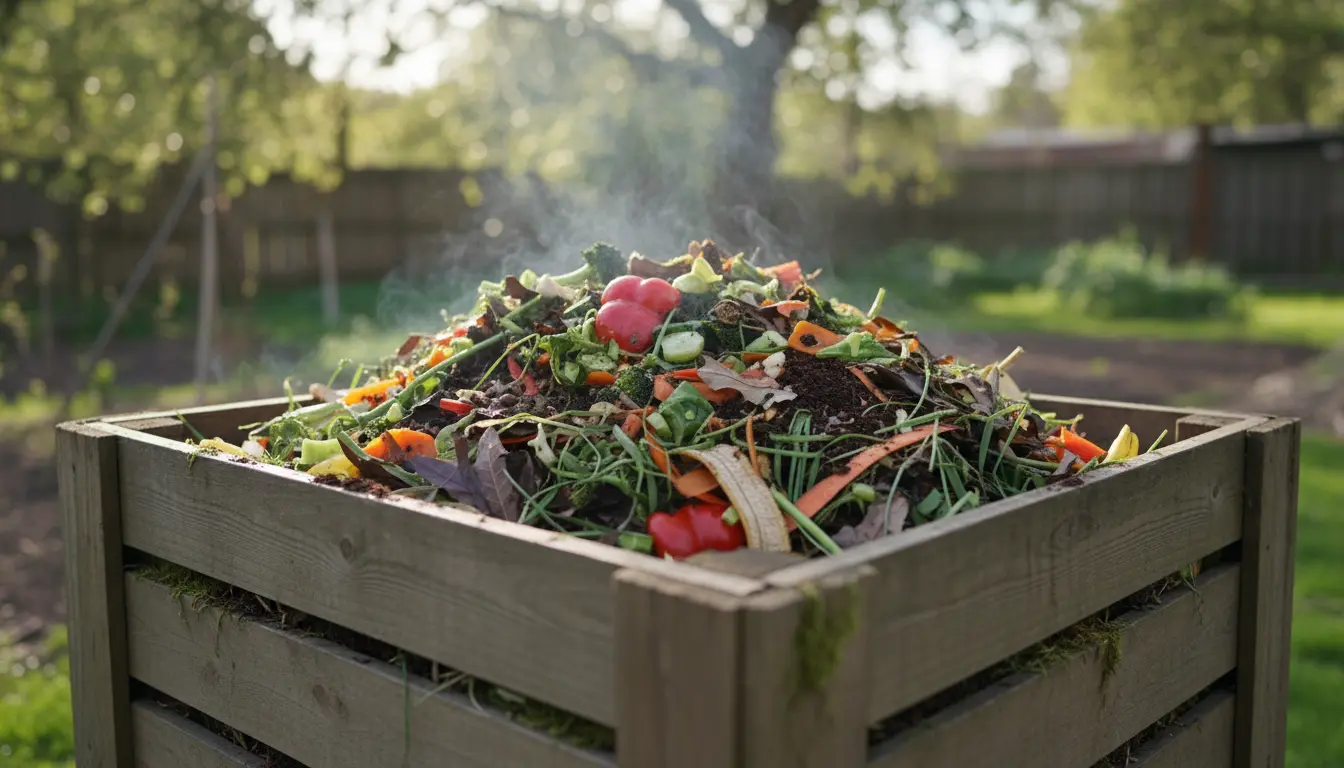
Why composting at home matters
Composting at home turns kitchen and yard waste into a valuable soil amendment. It reduces landfill waste, lowers methane emissions, and improves garden soil structure.
For households, composting is a low-cost way to recycle nutrients and save on store-bought fertilizers. This guide provides step-by-step, practical instructions to get started.
How to start composting at home

Starting to compost at home requires three basics: a container or pile, a balance of materials, and regular maintenance. You can choose from simple methods like a tumbling bin or an open pile.
Follow these core steps to set up a working system in a small yard or on a balcony.
Choosing a compost bin for composting at home
Select a bin that fits your space and volume of waste. Options include tumblers, plastic bins with holes, wooden bins, and wire cages.
- Tumbler: Easier turning, faster decomposition, good for small yards.
- Static bin: Cheaper and simple; needs a pitchfork or shovel to turn.
- Open pile or wire cage: Works for larger properties and bulky yard waste.
Where to place your compost at home

Place the bin on bare soil to allow worms and microbes to enter. Choose a partially shaded, accessible spot that is convenient for daily kitchen deposits.
Good airflow and drainage help prevent odors and soggy conditions. Avoid enclosed spaces near your house foundation.
What to add to your compost at home
Compost needs a mixture of carbon-rich “browns” and nitrogen-rich “greens.” Aim for roughly a 3:1 ratio by volume of browns to greens for steady decomposition.
- Browns (carbon): Dry leaves, straw, shredded paper, cardboard.
- Greens (nitrogen): Vegetable scraps, coffee grounds, fresh grass clippings.
- Avoid: Meat, dairy, oily foods, and diseased plants to minimize pests and odor.

Chop or shred larger items to speed breakdown. Layering browns and greens helps maintain balance and airflow.
Moisture and turning for composting at home
Compost should feel like a wrung-out sponge. Add water during dry spells and add more browns if it becomes too wet.
Turning the pile every 1–2 weeks introduces oxygen and accelerates decomposition. In a tumbler, rotate more frequently for consistent results.
Troubleshooting composting at home
Common problems are simple to fix. Odors usually mean too much green material or poor airflow. Add dry browns and turn the pile.
Soggy compost indicates poor drainage; add coarse browns like straw or wood chips. Slow decomposition often means the pile is too small, too dry, or lacks nitrogen.
- No worms? Add finished compost or leaf litter to introduce organisms.
- Pests near the bin? Avoid adding meat and cover food scraps with browns.
Harvesting finished compost at home
Compost is ready when it is dark, crumbly, and smells earthy. Depending on your method, this can take 2–6 months for active systems, or up to a year for slower piles.
Sift out large items to return to the pile. Use finished compost as a top dressing, soil amendment, or in potting mixes.
Composting at home can reduce household waste by up to 30 percent. Even small apartment composting systems divert food scraps from landfill and help create nutrient-rich soil.
Case study: Small home composting success
Stephanie, a city apartment gardener, started a 60-liter tumbling composter on her balcony. She added kitchen scraps and shredded paper with small amounts of yard clippings.
After three months of regular turning and adjusting moisture, she produced 20 liters of finished compost. Her balcony planters showed improved plant health and she reduced weekly trash by one-third.
Key factors in her success were consistent turning, chopping scraps, and maintaining a browns-to-greens balance.
Practical tips to keep composting at home working
- Keep a small counter bucket with a tight lid for kitchen scraps to make daily collection easy.
- Freeze meat scraps or bones until disposal if you temporarily must add them to municipal systems — do not add them to home compost.
- Use a kitchen compost pail liner of newspaper to reduce cleaning and odors.
- Record what you add and how often you turn the pile to learn what works for your climate and materials.
Final steps for starting composting at home
Choose an appropriate bin, gather a steady mix of browns and greens, and commit to simple weekly checks. Small, consistent actions yield usable compost and less waste.
Composting at home is flexible — adapt methods to your space, climate, and household needs. Start small, observe results, and scale up as you gain confidence.