
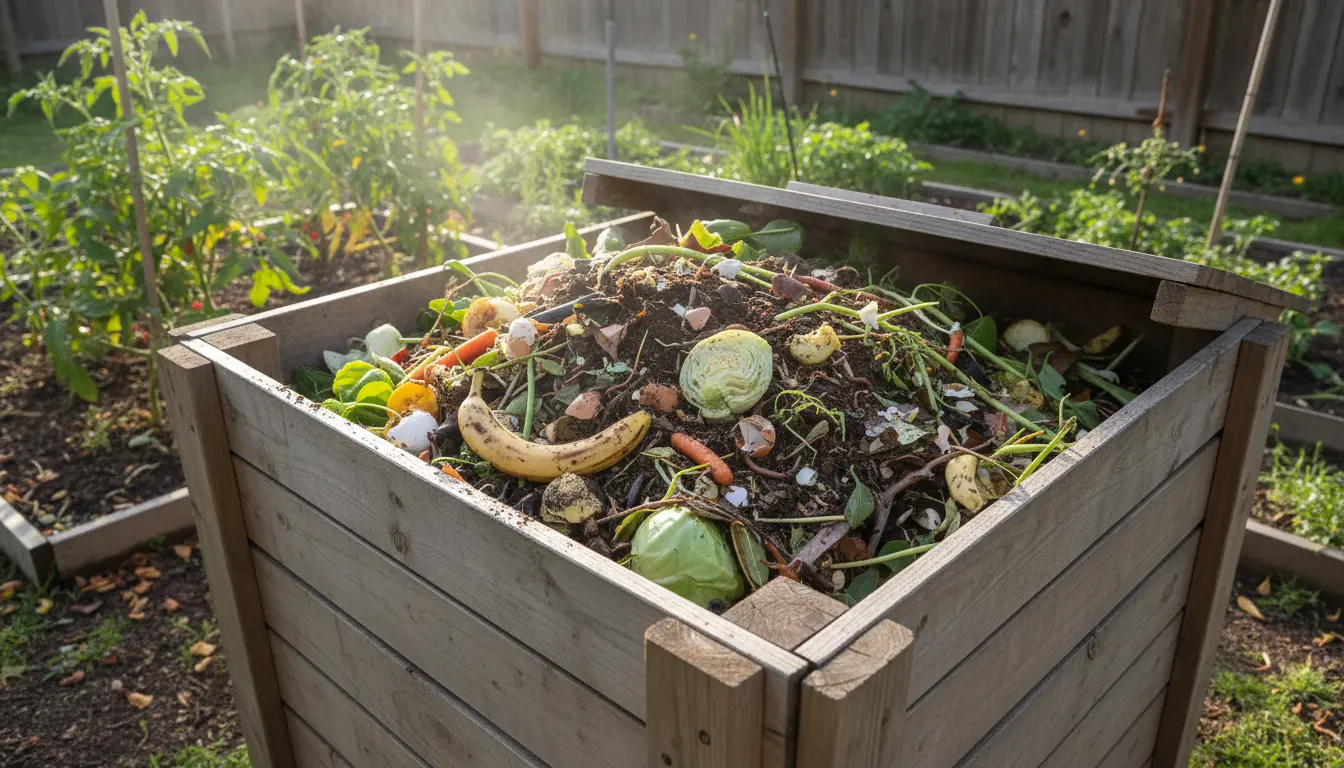
Why Home Composting Matters
Home composting turns kitchen scraps and yard waste into a useful soil amendment. It reduces household waste and improves garden soil without chemical fertilizers.
This guide explains simple systems, materials, and routine tasks for successful home composting for beginners.
Choose a Home Composting Method
Selecting the right method depends on space, time, and how fast you want finished compost. Common options are easy to set up and maintain.
Cold Compost Pile
A cold compost pile is a simple heap in the yard. It takes longer but needs minimal work and is forgiving for beginners.
Tumbler Composting
Compost tumblers speed up decomposition and make turning simple. They are tidy and good for small yards or patios.
Vermicomposting (Worm Bin)
Worm bins use composting worms to process kitchen scraps quickly. They fit indoors and work well for apartment living.
What You Can and Cannot Compost
Knowing what to add keeps your compost healthy. Balance carbon-rich browns with nitrogen-rich greens to maintain activity and reduce odors.
- Greens (high nitrogen): fruit and vegetable scraps, coffee grounds, fresh grass clippings.
- Browns (high carbon): dry leaves, straw, shredded paper, cardboard (non-glossy).
- Do not add: meat, dairy, oily foods, pet waste, diseased plants, or glossy paper.
How to Start a Compost Pile
Starting a compost pile involves layering materials and maintaining moisture and aeration. Follow these simple steps to begin home composting.
- Pick a dry, shaded spot near a water source.
- Start with a base layer of coarse browns like small branches for airflow.
- Add alternating layers of greens and browns about 2–4 inches thick.
- Keep the pile moist like a wrung-out sponge; add water if too dry.
- Turn the pile every 2–4 weeks to add oxygen and speed decomposition.
Maintaining Your Compost
Regular checks prevent common problems. Simple actions help keep the process steady and predictable.
- Smell check: a healthy pile smells earthy. If it smells sour, add dry browns and turn more often.
- Moisture: if dry, add water and greens; if soggy, add browns and increase turning.
- Temperature: active piles warm up. A cold pile may need more greens or turning.
Troubleshooting Tips for Home Composting
Short, practical fixes help keep your compost on track. Most issues are due to imbalance or poor aeration.
- Attracting pests: avoid meat and dairy, use a closed bin or bury fresh scraps in the center.
- Slow decomposition: chop materials smaller, add nitrogen-rich greens, and turn more often.
- Foul smells: add dry browns, turn to aerate, and check moisture level.
Compost can cut household waste by up to 30 percent. Finished compost improves soil structure and can reduce the need for irrigation.
When Is Compost Ready to Use?
Finished compost is dark, crumbly, and smells earthy. Particle size depends on your system and how often you turn it.
You can use finished compost as a top dressing, mix it into potting soil, or blend it into garden beds at planting time.
Real-World Example: Small-Scale Success
Case Study: A two-person household in a suburban yard started with a 60-liter tumbler. They saved kitchen scraps for six months and added yard waste.
Results: After four months of regular turning and maintaining a 2:1 ratio of browns to greens, they produced about 120 liters of compost. They used it to top-dress potted plants and their vegetable patch, reducing store-bought soil purchases by 40 percent that season.
Practical Tips for Beginners
Start simple and scale up. You do not need fancy equipment to get started with home composting.
- Chop large items to speed breakdown.
- Keep a sealed bucket for kitchen scraps to control odor until you transfer them to the bin.
- Use shredded paper or cardboard as emergency brown material.
- Label bins and keep a basic log of turns and additions to track progress.
Benefits Beyond Waste Reduction
Composting improves soil health, promotes microbial activity, and can store carbon in the ground. It also saves money on waste disposal and fertilizers.
For gardeners, home composting increases water retention in soil and supports healthier plants with fewer disease problems.
Final Checklist to Start Home Composting
Use this checklist to begin a reliable home composting routine today.
- Choose a method: pile, tumbler, or worm bin.
- Collect a steady supply of greens and browns.
- Set up the bin in a convenient location.
- Monitor moisture and aeration weekly.
- Harvest finished compost and use it in the garden.
Home composting for beginners is practical and achievable. Start small, keep a balance of materials, and adjust as you learn. Over time, you will build a steady supply of high-quality compost and lower your household waste footprint.