
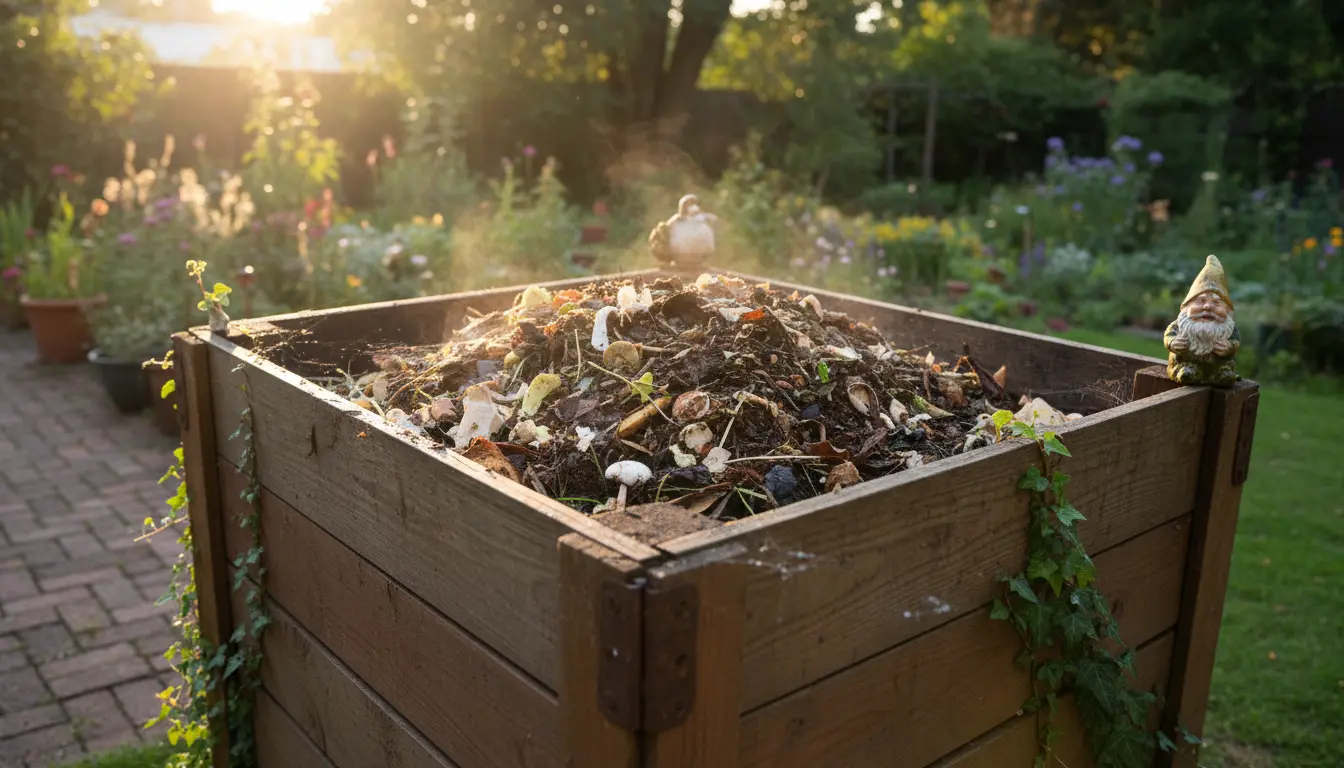
Home composting turns kitchen and yard waste into rich soil you can use in gardens and potted plants. This guide explains clear steps, what to add, and how to keep a compost system healthy. Follow these simple instructions to start composting at home this week.
Why Home Composting Matters
Composting reduces trash, lowers methane emissions from landfills, and improves soil structure. It returns nutrients to plants and helps conserve water by improving soil moisture retention.
Home Composting for Beginners: Basic Principles
Composting relies on four elements: carbon, nitrogen, oxygen, and moisture. Balance these elements and microbes will break down organic matter into compost.
- Carbon-rich materials (browns): dry leaves, straw, cardboard, paper.
- Nitrogen-rich materials (greens): fruit and vegetable scraps, coffee grounds, grass clippings.
- Oxygen: provide airflow by turning the pile or using a bin with holes.
- Moisture: keep the pile damp like a wrung-out sponge.
How to Start Your First Compost Pile
Choose a dry, shady spot near a water source. You can compost in a backyard pile, a tumbler, or a simple bin.
- Set a base: lay coarse materials like twigs for drainage.
- Add layers: alternate 2-4 inches of browns and 1-2 inches of greens.
- Keep it moist: water lightly if the pile dries out.
- Turn occasionally: every 1–2 weeks speeds decomposition.
What You Can and Cannot Compost
Knowing what to add keeps the pile healthy and reduces odor problems. Use a mix of kitchen scraps and yard waste for best results.
- Acceptable: fruit and vegetable scraps, coffee grounds, tea bags, eggshells, yard trimmings, shredded paper, cardboard.
- Avoid: meat, dairy, oily foods, diseased plants, pet feces, and invasive weeds like bindweed.
Managing Smells and Pests
Bad smells usually mean too much nitrogen or poor airflow. Add browns, turn the pile, and check moisture. For pests, bury food scraps in the center of the pile and use a closed bin if necessary.
Speeding Up Compost: Hot vs Cold Methods
Cold composting is low effort but slower. Hot composting requires more management but produces finished compost faster and kills weed seeds.
- Cold composting: add materials as you have them and wait months to a year.
- Hot composting: aim for internal temperatures of 130–160°F (55–70°C) by building larger piles (at least 3x3x3 feet), balancing greens and browns, and turning frequently.
Troubleshooting Common Problems
Here are quick fixes for common issues beginners face.
- Pile smells ammonia: add more browns and turn the pile.
- Pile is dry and slow: add water and more greens.
- Too many flies: bury fresh food scraps and cover bin openings.
- Pile freezes in winter: insulated bins or indoor composting options like bokashi can help.
Composting one pound of food waste saves about 0.05 kg of methane emissions compared to landfill disposal. Small household efforts add up across communities.
Using Finished Compost
Finished compost is dark, crumbly, and smells earthy. Use it to top-dress lawns, mix into garden beds, or pot plants. A general rule is mixing one part compost with three parts soil for planting.
Signs Compost Is Ready
Look for uniform dark color, crumbly texture, and no recognizable food scraps. If it has these signs, it is ready to use in the garden or as potting mix amendment.
Small Real-World Example
Case study: A two-person household started a 3x3x3 foot backyard bin. They saved fruit and veg scraps in a counter caddy and added yard waste weekly. By balancing browns and greens and turning the pile every 10–14 days, they had usable compost in 4 months. They reported less trash and healthier potted herbs as a result.
Simple Equipment and Alternatives
You do not need fancy tools to compost. A few basics make the process easier for beginners.
- Bin: plastic or wooden bin with ventilation, or a tumbler for faster results.
- Pitchfork or aerator tool for turning.
- Counter caddy with a lid for collecting scraps.
- Bokashi system or worm bin for apartment composting alternatives.
Final Practical Tips for Home Composting for Beginners
Start small and learn by doing. Keep a balance of browns and greens, maintain moisture, and turn the pile to add oxygen. Track your progress and adjust the mix when problems arise.
Composting at home is a low-cost way to improve soil health and reduce waste. With basic attention and a few simple tools, most households can create useful compost within a few months.