
Why Start Vegetable Gardening as a Beginner
Vegetable gardening is a practical way to get fresh produce, save money, and enjoy outdoor activity. Beginners can succeed with modest space and simple planning.
Choose the Right Site for Your Vegetable Garden
Vegetable gardening depends on sunlight. Pick a location that gets at least six hours of direct sun per day for most vegetables.
Also consider access to water and proximity to your house. Close locations make daily care and harvesting easier.
Soil and Drainage for a Healthy Vegetable Garden
Good soil is the foundation of vegetable gardening. Test soil texture and drainage by digging a small hole and filling it with water to see how quickly it drains.
If soil is heavy clay or very sandy, amend it with organic matter like compost to improve structure and fertility.
Plan Your Garden Layout
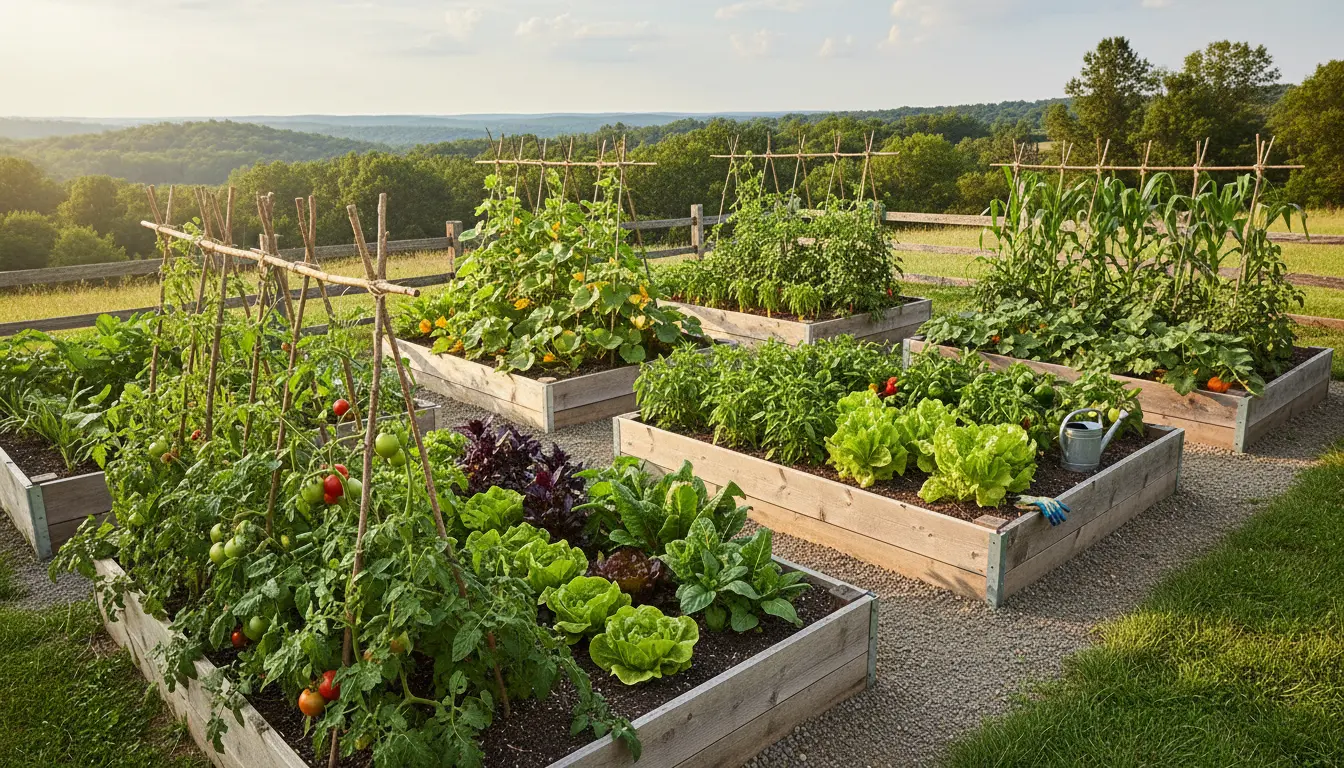
Plan beds, rows, or containers based on available space. Raised beds and containers are excellent for beginners because they simplify soil control and weeding.
Keep paths for easy access and use companion planting to maximize yields in small spaces.
Popular Layout Options for Beginner Vegetable Gardening
- Single raised bed (4×8 feet) for a compact, manageable garden
- Multiple small containers for balconies or patios
- Traditional rows for larger yards
Choose Beginner-Friendly Vegetables
Start with easy crops that are forgiving and fast to harvest. Good beginner choices include lettuce, radishes, tomatoes, bush beans, and zucchini.
Choose varieties labeled ‘easy’ or ‘disease resistant’ to reduce problems in your first season.
Seeds vs. Transplants
Seeds are cheaper and offer more variety, but transplants give a head start for crops like tomatoes and peppers. For quick wins, buy transplants from a local nursery.
Prepare Soil and Planting Beds
Clear weeds and loosen soil to a depth of 8–12 inches for most vegetable beds. Mix in 2–3 inches of compost to feed plants and improve moisture retention.
Test soil pH if possible; most vegetables prefer pH 6.0–7.0. Amend with lime or sulfur only if test results indicate a need.
Planting and Spacing for Healthy Growth
Follow seed packet or plant tag spacing instructions. Crowded plants compete for nutrients and increase disease risk.
Use succession planting for continuous harvests, especially with fast crops like lettuce and radishes.
Watering and Mulching Tips
Water deeply and infrequently to encourage strong root systems. Most vegetables need about 1–1.5 inches of water per week, including rainfall.
Mulch with straw, wood chips, or shredded leaves to conserve moisture, suppress weeds, and keep soil temperature stable.
Pest and Disease Management for Beginner Vegetable Gardening
Start with preventative measures: rotate crops, remove plant debris, and choose resistant varieties. Inspect plants weekly for signs of pests or disease.
Use physical controls first—handpick pests, use row covers, or install barriers. Reserve organic sprays like neem oil or insecticidal soap for persistent problems.
Natural Solutions and Companion Plants
- Plant marigolds to deter some pests
- Grow basil near tomatoes to support flavor and possibly reduce insect pressure
- Introduce beneficial insects by planting wildflower strips or herbs
Harvesting and Storing Your Vegetables
Harvest vegetables at peak ripeness for best flavor and nutrition. Frequent harvesting often encourages more production, especially for beans and squash.
Learn simple storage methods: cool, dry root cellaring for carrots and beets, refrigeration for leafy greens, and blanch-and-freeze for surplus produce.
Small Real-World Example: Anna’s First Raised Bed
Anna, a beginner gardener in a city apartment, built a single 4×4 raised bed on her balcony. She used a mix of store-bought topsoil and homemade compost.
She planted cherry tomatoes, lettuce, bush beans, and basil. By watering twice weekly and mulching, she harvested fresh salad greens within six weeks and tomatoes all summer. The raised bed reduced weeds and improved her success as a beginner.
Simple Maintenance Schedule for Beginner Vegetable Gardening
Set a weekly routine: inspect plants, water deeply if needed, and remove any obvious pests. Monthly tasks include adding compost and checking soil moisture levels.
Keep a garden journal noting planting dates, varieties, and problems to improve next season’s planning.
Final Tips to Grow a Successful Vegetable Garden
- Start small to avoid overwhelm—expand next season as you learn.
- Focus on a few crops you like to eat and that grow well locally.
- Ask local gardeners or extension services for advice specific to your region.
With basic planning, good soil, and regular care, beginner vegetable gardening is accessible and rewarding. Follow these steps and adapt them to your space, and you’ll be harvesting homegrown vegetables in your first season.