
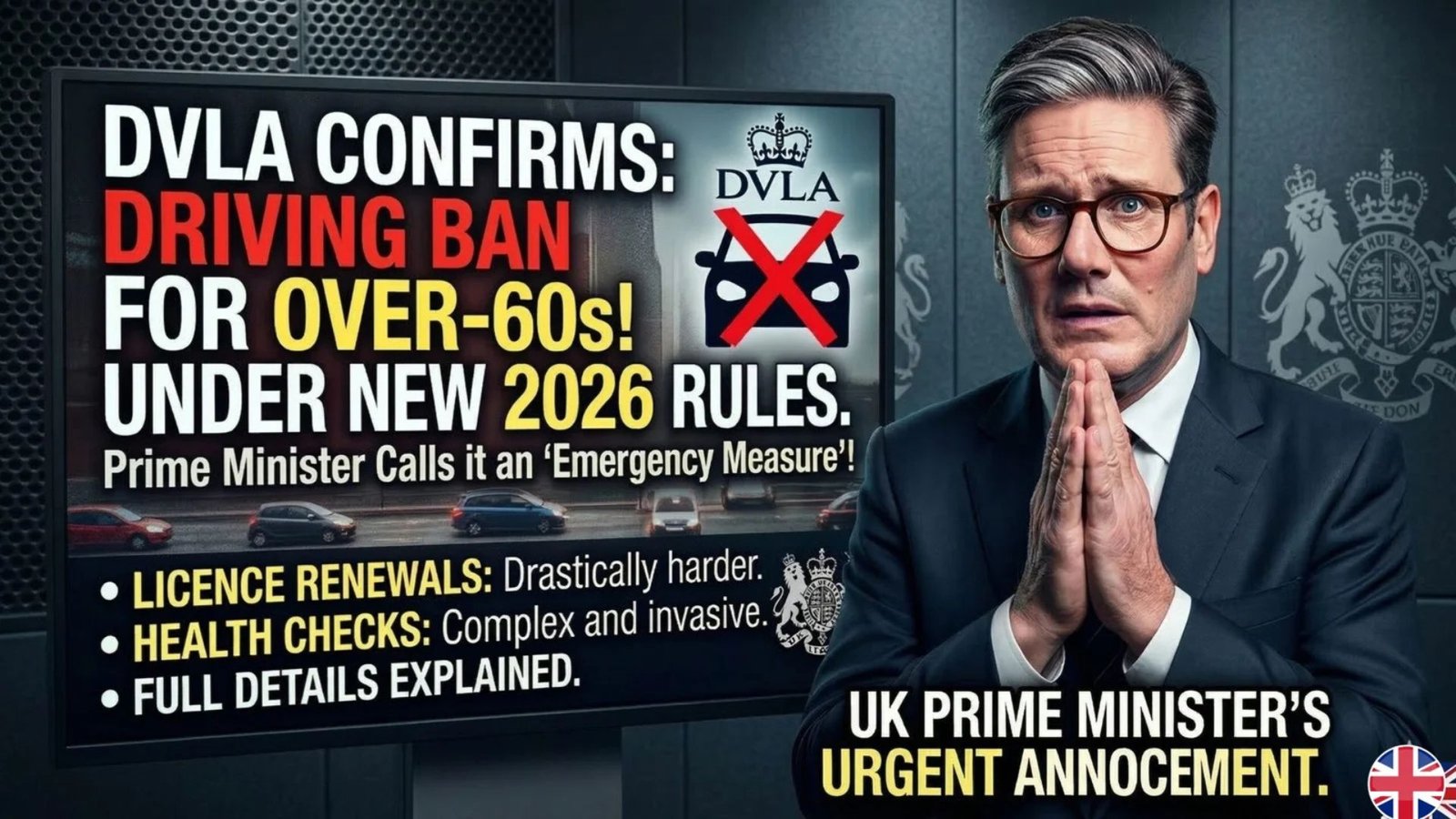
Many older drivers in the UK, especially those over 60, have seen worrying headlines about new rules in 2026 that could stop them from driving. Some stories even talk about a “driving ban” confirmed by the DVLA (Driver and Vehicle Licensing Agency). But the truth is different. There is no automatic ban on driving just because someone is over 60. Driving rules focus on health, eyesight, and safety, not age alone. Let’s break this down in simple terms.
What the Rumors Are Saying About 2026 Changes
Online articles and social media posts often claim that from 2026, drivers over 60 will face strict new limits, like mandatory tests or losing their licence automatically. Some mention a “ban” starting in early 2026, with tighter checks on health and vision. These stories spread quickly and cause stress for many experienced drivers.
However, official sources like the GOV.UK website and Parliament reports show no such blanket ban exists. The DVLA has not announced any rule to disqualify people based only on being over 60. Most changes under discussion are about improving road safety for everyone, especially as the population gets older.
Current DVLA Driving Licence Rules by Age
In the UK, driving licences work differently depending on your age:
- Under 70: Most drivers get a photocard licence valid for 10 years. You renew it every 10 years to update your photo and details. No special health checks are needed unless you have a medical condition.
- At age 70: Your licence expires (if it was the normal 10-year one). You must renew it with the DVLA. This renewal is free and usually done online or by post. You fill out a form (often D46P sent by DVLA) where you declare your health and confirm you can read a number plate from 20 metres away for eyesight.
- After 70: You renew every 3 years. Each time, you self-declare that you are fit to drive. No automatic test is required right now, but you must tell the DVLA about any health issues that could affect driving.
Drivers in their 60s follow the same rules as younger adults. There is no special restriction at 60. Many people in their 60s are among the safest drivers because of experience and careful habits.
Possible Updates Coming in 2026
The government is always looking at ways to make roads safer. Some ideas discussed include:
- Stronger focus on eyesight for drivers over 70.
- Possible mandatory eye checks (like visiting an optician) during renewals.
- Better digital systems to share medical info between doctors and DVLA.
- Stricter rules on reporting health conditions.
These are mostly proposals or under review. For example, groups like opticians have suggested formal eye tests for renewals after 70. But as of now, the self-declaration system stays in place. No final law bans driving at 60 or even 70. The goal is to keep safe drivers on the road longer, not to remove licences unfairly.
If any big changes happen in 2026, they would be announced officially on GOV.UK. Always check there instead of believing social media claims.
Important Medical Conditions You Must Report
You have a legal duty to tell the DVLA if you have a health problem that might make driving unsafe. Here are some common examples explained simply:
- Diabetes (especially if treated with insulin) — Can cause low blood sugar.
- Glaucoma or major vision loss — Affects how well you see.
- Heart problems (like some irregular heartbeats) — Might cause sudden issues.
- Neurological conditions (such as Parkinson’s or early dementia) — Can affect movement or thinking.
- Sleep apnoea — Makes you very tired or fall asleep suddenly.
If you don’t report these, you could face a fine up to £1,000 or more serious trouble if an accident happens. The DVLA might limit your licence (for example, no night driving) or ask for a doctor’s report.
Comparison of Licence Renewal Rules
Here’s a simple table to show how renewals work:
| Age Group | Renewal Frequency | What You Need to Do | Cost | Special Notes |
|---|---|---|---|---|
| Under 70 | Every 10 years | Update photo and address | Free (online) | Same as younger drivers |
| At 70 | Once, then every 3 years | Self-declare health and eyesight | Free | DVLA sends reminder form |
| Over 70 | Every 3 years | Renew with health declaration | Free | Possible future eye test discussions |
| Any age (with medical issue) | Shorter periods | Report condition, possible doctor checks | Free | Licence may be restricted or reviewed |
Tips for Older Drivers to Stay Safe and Legal
- Get your eyes checked regularly (every 1-2 years is a good idea).
- Talk to your doctor if you notice changes in health.
- Consider a voluntary driving assessment from groups like RoSPA or IAM RoadSmart. These give helpful tips and can even lower insurance costs.
- Avoid scams — The DVLA never asks for money by text or threatens a ban without checks.
- If you have worries, visit GOV.UK or speak to your optician/GP.
Conclusion
The idea of a “driving ban for over-60s in 2026” is mostly misinformation. No such rule exists or has been confirmed by the DVLA. Driving is allowed as long as you are medically fit and meet basic standards like good eyesight. Rules at 70 involve renewals every 3 years with self-checks on health, and any 2026 updates are likely to focus on better safety checks, not age-based bans.
This helps keep roads safe while supporting independence for older people. Mobility is important for staying active and connected. If you’re over 60 and healthy, you can keep driving with confidence. Always rely on official GOV.UK information for the latest facts. Stay safe on the roads!