
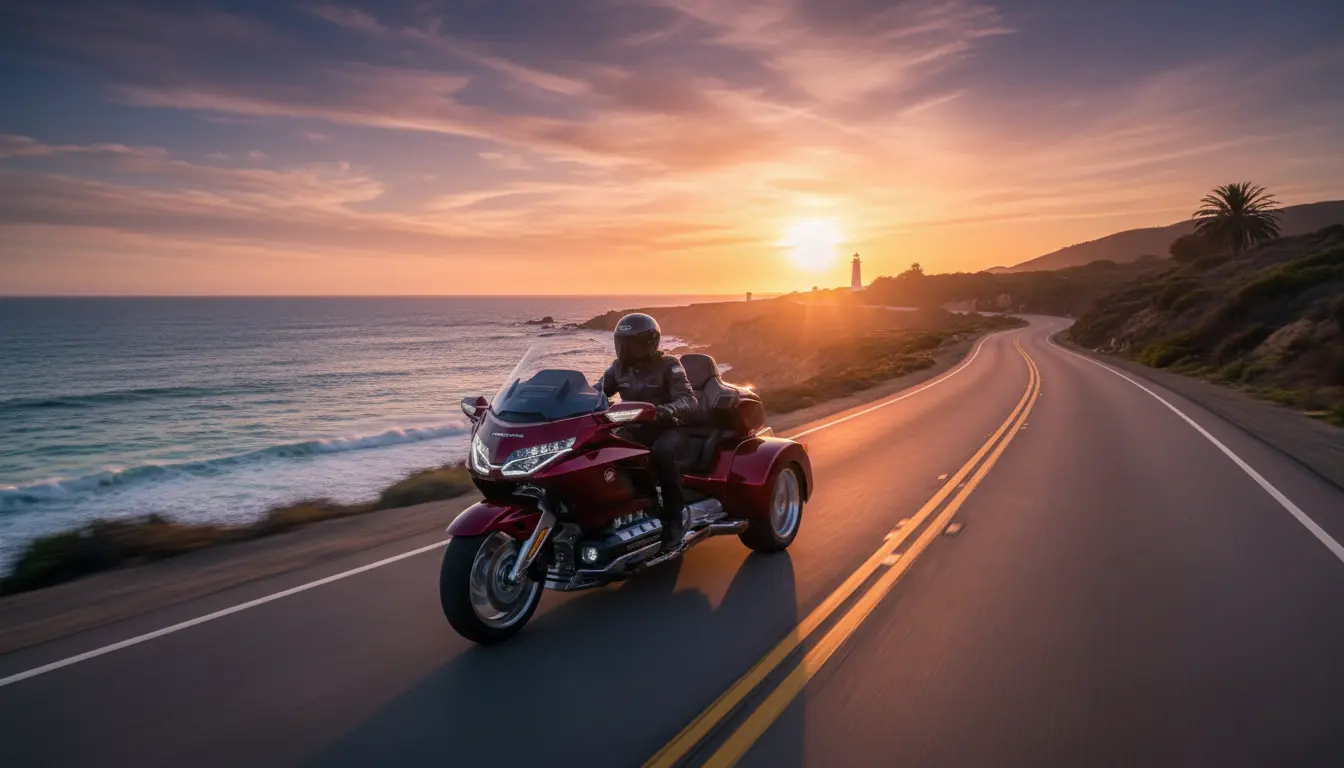
Overview of the 2026 Honda Gold Wing Trike
The 2026 Honda Gold Wing Trike adapts Honda’s flagship touring motorcycle into a three-wheeled platform for stability and long-distance comfort. This model keeps the Gold Wing’s core strengths—powerful engine, refined suspension, and integrated electronics—while adding rear stability for relaxed touring.
Key specifications and what to expect
Honda keeps incremental upgrades focused on reliability and rider convenience. Expect a flat-six based powertrain tuned for torque, advanced rider aids, and a purpose-built trike conversion that preserves luggage and passenger comfort.
- Engine: Horizontally opposed flat-six, smooth torque curve and low vibration.
- Transmission: DCT option or manual transmission, depending on trim.
- Chassis: Reinforced frame with trike-specific rear axle and suspension.
- Electronics: Ride modes, integrated navigation, Apple CarPlay/Android Auto on selected trims.
- Luggage: Hard saddlebags and top trunk with lockable capacity and internal organization.
Engine and power: 2026 Honda Gold Wing Trike performance

The trike retains the Gold Wing’s low-end torque that is essential for loaded touring. Power delivery is smooth and predictable, which helps when merging and climbing hills with two-up weight and luggage.
For riders choosing DCT, gear shifts are seamless which reduces fatigue on long runs. The manual option remains for those who prefer direct control.
Practical performance details
Torque-focused tuning means less need for downshifting in touring scenarios. Fuel consumption will be slightly higher than the two-wheel Gold Wing, but the efficiency is reasonable for a heavyweight trike.
Comfort and ergonomics for long rides

Comfort is a defining feature of the Gold Wing Trike. The seating position is upright and well-padded, with a wide passenger seat and integrated backrest on many trims.
Wind protection remains strong due to the large adjustable windshield. Controls are laid out for low fatigue and easy access to infotainment and ride settings.
Comfort features to look for
- Heated seats and grips on higher trims for cold-weather touring.
- Adjustable lumbar support and wide footboards for both rider and passenger.
- Full fairing and windscreen with multiple height settings.
Handling and stability: why choose a trike conversion
The trike conversion adds rear axle stability that simplifies slow-speed maneuvers and parking. This is useful for riders who want the Gold Wing touring package but prefer not to manage a heavy two-wheeler balance at stops.

Cornering feel is different from the two-wheel model. The Gold Wing Trike is stable through sweeping turns but requires different inputs and speed management when compared to a motorcycle.
Tips for riding a trike safely
- Practice slow-speed turns to learn the trike’s roll and steering characteristics.
- Adjust cornering speed earlier; the trike has a wider turning radius than a bike.
- Check tire pressures and rear suspension preload with luggage and passenger weight.
Electronics and touring tech
Honda outfits the Gold Wing Trike with navigation, audio, and safety tech tuned for touring. Advanced rider aids like ABS, traction control, and multiple ride modes improve confidence on varied roads.
Infotainment systems are typically touchscreen-based with smartphone integration. Audio quality is designed for open-road conditions and helmet use.
Maintenance and ownership considerations
Maintenance intervals follow Gold Wing tradition with regular oil and valve checks recommended. The trike conversion adds components like a rear differential and additional suspension parts that need periodic inspection.
Insurance and storage considerations may differ slightly from a two-wheel Gold Wing. Factor in higher purchase price and potentially higher maintenance costs for the converted axle and drivetrain parts.
Checklist for prospective buyers
- Inspect conversion warranty details and dealer servicing options.
- Test-ride with luggage and passenger weight if possible.
- Verify included features across trims—DCT, heated gear, and audio vary by model.
Real-world example: weekend coast ride case study
Rider example: A two-person, 600-mile weekend loop with full luggage demonstrates the Gold Wing Trike’s strengths. Average speed remained steady on highways while the trike’s comfort features reduced rider fatigue.
Key outcomes: The DCT model allowed relaxed riding and smoother traffic transitions. Luggage capacity and passenger comfort enabled minimal stops and consistent daily riding hours.
The Honda Gold Wing name dates back to 1975 and has evolved into a touring benchmark. Trike conversions have grown in popularity among long-distance riders seeking extra stability without losing touring capability.
Who should consider the 2026 Honda Gold Wing Trike?
Choose the Gold Wing Trike if you value long-distance comfort, luggage capacity, and low-speed stability. It’s well-suited for riders who tour with a passenger and gear, or those who prefer a more stable platform for mounting and dismounting.
Riders who prioritize sport handling and the lean of a traditional motorcycle will find the trike trade-offs less appealing. Evaluate priorities and test-ride to confirm the fit.
Final practical recommendations
Review trim comparisons and test-ride both DCT and manual versions to determine your preference. Inspect the dealer’s trike conversion warranty and ask for a demonstration of maintenance points related to the rear axle.
Overall, the 2026 Honda Gold Wing Trike presents a practical, comfortable touring package. It preserves the Gold Wing’s core touring DNA while expanding accessibility and stability for a wider range of riders.