
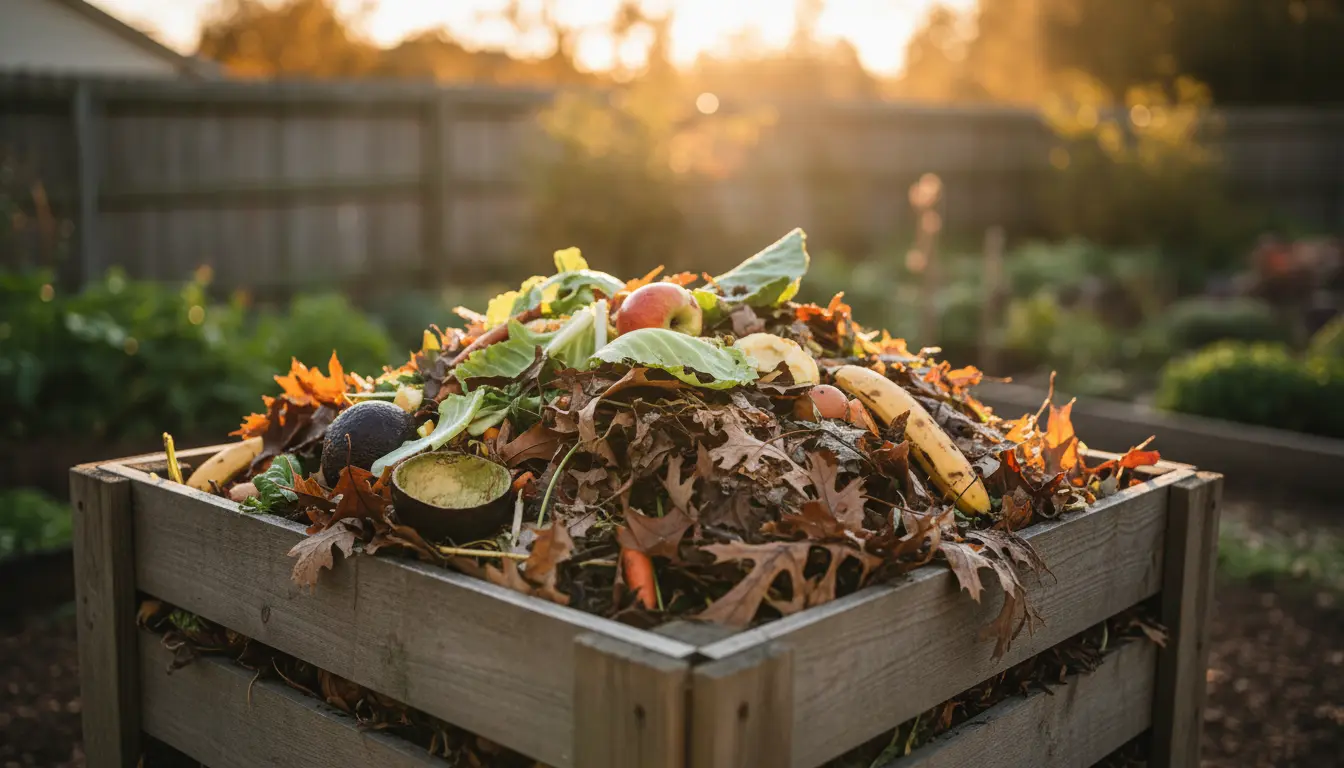
Composting for Beginners: What Is Composting?
Composting is the controlled breakdown of organic materials into a nutrient-rich soil amendment. It reduces household waste and improves garden soil structure and fertility.
This guide explains how to start composting at home, which materials to use, how to balance the pile, and how to troubleshoot common problems.
Benefits of Composting for Beginners

Composting keeps food scraps and yard waste out of landfills, cutting methane emissions from anaerobic decomposition. It also returns nutrients to the soil and helps retain moisture in garden beds.
For beginners, composting is a low-cost, low-tech way to reduce waste and support healthier plants.
Choose a Composting Method
There are several methods suitable for beginners. Choose one based on space, time, and how much organic waste you produce.
- Backyard pile or bin: Best for yards with space and moderate waste.
- Tumbler bin: Faster turning and cleaner handling, good for small yards.
- Bokashi: Fermentation method for indoor use that handles meat and dairy.
- Vermicomposting: Uses worms to break down kitchen scraps indoors or in shaded areas.
Composting for Beginners: Materials to Use

Compost needs a mix of carbon-rich “browns” and nitrogen-rich “greens.” The right balance speeds decomposition and reduces odors.
- Greens (Nitrogen): vegetable scraps, fruit peels, coffee grounds, fresh grass clippings.
- Browns (Carbon): dry leaves, shredded paper, cardboard, straw, wood chips.
- Avoid: meat, dairy, oily foods, diseased plants, pet waste (unless using bokashi or specific systems).
Target Ratio and Layering
For beginners, aim for roughly a 2:1 or 3:1 ratio of browns to greens by volume. Too many greens cause a slimy, smelly pile; too many browns slow decomposition.
Layer materials as you add them: a layer of browns, then a thinner layer of greens. Add water as needed—compost should feel like a wrung-out sponge.
How to Start a Compost Pile

Pick a location with partial shade and good drainage, near a water source if possible. Place the bin or pile on soil, not concrete, to allow worms and microbes to enter.
Start with a base of coarse material like small branches or straw to improve airflow. Add alternating layers of greens and browns, and keep the pile moist but not soggy.
Turning and Aeration
Turning introduces oxygen, which speeds composting and reduces odors. Beginners should turn the pile every 1–2 weeks for faster results.
If using a tumbler, turn it according to manufacturer guidance—typically every few days or weekly.
Composting for Beginners: Troubleshooting Common Problems
Some issues are common and easy to fix. Here are quick checks and solutions.
- Bad smell: Add more browns and turn the pile to introduce air.
- Pile too dry: Add water and more greens; monitor moisture with your hand.
- Pile too wet or compacted: Add coarse browns like straw or wood chips and turn it.
- Slow decomposition: Increase surface area by chopping materials and improve nitrogen input with fresh greens.
How to Know When Compost Is Ready
Mature compost is dark, crumbly, and smells earthy. Depending on method and conditions, compost can be ready in 2 months to a year.
Screen or sift the compost to remove larger pieces, which can be returned to the pile to finish breaking down.
Using Finished Compost
Use finished compost as a top dressing, soil amendment, or potting mix ingredient. It improves soil structure, water retention, and nutrient availability.
Apply a 1–2 inch layer to garden beds or mix into planting holes for shrubs and trees. For container plants, substitute 10–30% of potting mix with compost.
Composting diverts up to 30% of household waste by weight. A typical household can reduce trash volume and create valuable compost from kitchen and yard scraps.
Simple Maintenance Checklist for Beginners
- Weekly: Add kitchen scraps and a layer of browns; check moisture.
- Every 1–2 weeks: Turn the pile or rotate the tumbler to add oxygen.
- Monthly: Monitor temperature (optional) and adjust balance of greens and browns.
- Seasonally: Harvest finished compost and add new material to restart the pile.
Real-World Example: Small Urban Compost Case Study
Case: A two-person apartment household used a compact indoor worm bin (vermicompost) and a community garden drop-off for yard waste. They diverted roughly 5–7 pounds of kitchen scraps per week.
After six months, they produced enough compost to feed container herbs and tomatoes, reduced their trash volume noticeably, and reported less grocery waste because they tracked scraps. The worm bin required weekly feeding and occasional bedding adjustments.
Final Tips for Success in Composting for Beginners
Start small. Choose a method that matches your living situation and scale up if you enjoy the process. Keep a simple balance of browns and greens, and monitor moisture and airflow.
Composting is forgiving. Most problems have straightforward fixes, and the benefits to soil, plants, and the environment make it worth the small time investment.
If you’re ready, set up your bin this weekend, collect kitchen scraps in a small container, and begin building your first layers of compost.