
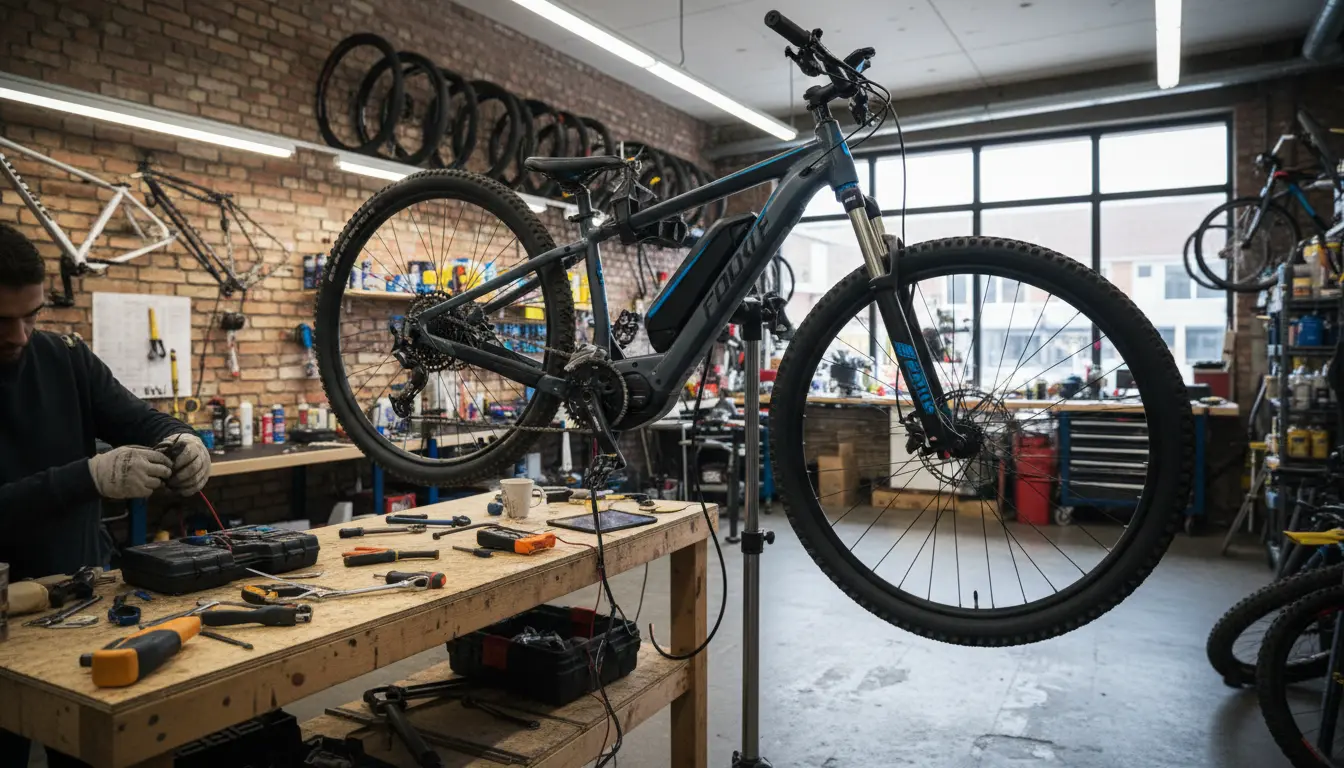
Why electric bike maintenance matters
Regular electric bike maintenance keeps your e-bike safe, efficient, and reliable. Small checks prevent costly repairs and extend battery and motor life.
This guide gives practical steps you can apply weekly and monthly. It focuses on common issues riders face and how to prevent them.
Daily and weekly electric bike maintenance checklist

Follow a short routine to catch problems early. A 5-minute check before each ride reduces the risk of breakdowns and improves safety.
- Visual inspection for obvious damage or loose parts.
- Check tire pressure and quick look for punctures.
- Test brakes for crisp feel and proper stopping.
- Ensure battery is charged and securely mounted.
- Verify lights and electrical connections work.
Battery care for electric bikes
Battery health is central to electric bike maintenance. Proper charging and storage extend battery life and preserve range.
- Charge after each ride if the battery is below 50 percent.
- Avoid draining the battery to zero regularly.
- Store the battery indoors at moderate temperature (around 10–20°C or 50–68°F).
- Use the manufacturer charger and avoid cheap third-party units.
Tires and brakes check
Tires and brakes affect safety more than any other component. Check them weekly if you ride daily, or before long rides.
- Inflate tires to the recommended PSI printed on the sidewall.
- Inspect tire tread and sidewalls for cuts or embedded debris.
- Test brakes at low speed before traffic; listen for rubbing or grinding sounds.
- Adjust brake pads or cables if braking feels soft or uneven.
Cleaning and lubrication for electric bike maintenance

Keep the drivetrain and connectors clean, but avoid high-pressure washing near the motor or battery. Water ingress is a common cause of faults.
- Wipe the frame with a damp cloth and mild soap.
- Use a soft brush to remove grit from the chain and cassette.
- Apply chain lubricant sparingly; wipe off excess after 2 minutes.
- Protect electrical connectors with dielectric grease if recommended by the maker.
When to seek professional electric bike maintenance
Some tasks require a trained technician. If you notice electrical faults, unusual motor noise, or persistent power loss, get professional help.
- Motor or controller errors shown on the display.
- Battery swelling, overheating, or rapid capacity loss.
- Complex drivetrain tuning for mid-drive motors.
- Frame cracks or severe impact damage after a crash.
Periodic checks and long-term care
Plan deeper maintenance every 3–6 months depending on use. These checks take longer but prevent gradual wear from becoming a failure.
- Torque bolts to manufacturer specifications, especially stem, handlebars, and motor mounts.
- Inspect wheel trueness and spoke tension; true wheels as needed.
- Check pedal threads and crank bolts; tighten if loose.
- Have battery capacity tested after one to two years to assess health.
Simple tools to keep with you
Carrying a few basic tools can get you back on the road quickly. Pack lightweight tools to save weight.
- Mini pump or CO2 inflator and a spare tube or patch kit.
- Multitool with Allen keys, chain tool, and a small screwdriver.
- Portable charger for the display or lights if removable.
Real-world example: commuter case study
Anna commutes 12 miles each way on an electric commuter bike. She followed a simple maintenance routine: daily visual checks, charging nightly to 60–80 percent, and weekly chain cleaning.
After 18 months she reported a stable range and no motor issues. She avoided two potential failures: a slow puncture detected and patched before it caused a flat, and a loose brake pad tightened after the weekly check.
Her small weekly time investment saved a costly tow and reduced downtime to zero.
Quick troubleshooting tips for electric bike maintenance
Use this quick guide for common issues you can fix yourself.
- No power: check battery charge, connection, and fuse. Reseat the battery and connectors.
- Intermittent power loss: inspect wiring for chafing or loose plugs near the motor or display.
- Strange motor noise: stop riding and check for debris near the chainring or motor housing.
- Poor range: reduce assisted level, check tire pressure, and test battery capacity.
Summary and maintenance plan
Create a simple plan and stick to it. A recommended schedule:
- Daily: quick visual and brake check.
- Weekly: tire pressure, chain wipe, and battery mount check.
- Monthly: detailed cleaning and bolt torque check.
- Every 6–12 months: professional inspection and battery health test.
Consistent care keeps your electric bike reliable and safe. Use this guide to build routines that fit your riding schedule and extend the life of your e-bike.