
Why Home Composting for Beginners Matters
Home composting turns kitchen scraps and yard waste into rich material that improves soil and reduces trash. For beginners, composting is a low-cost way to recycle nutrients and cut household waste.
This guide gives clear steps and practical tips so you can start composting today with confidence.
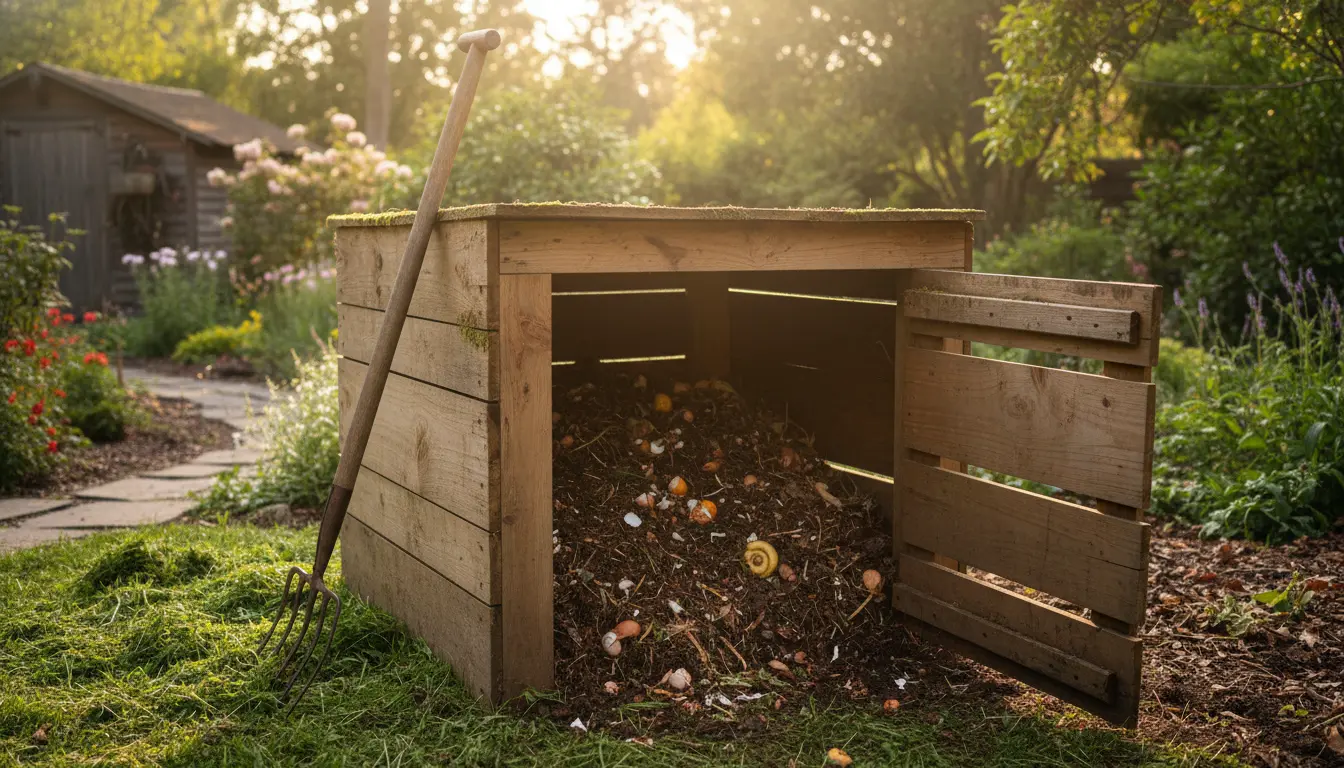
Choose the Right Compost Bin for Home Composting

Selecting a compost bin affects how much work you need to do. Options include open piles, tumblers, and enclosed bins.
- Open pile: Cheapest and simple, but can attract pests if not managed.
- Tumbler: Easier to turn and faster to compost, ideal for small yards.
- Enclosed bin: Keeps pests out and retains heat, good for neighborhoods.
Place the bin in a partly shaded spot with good drainage. Make sure it is easy to reach so you will use it regularly.
Basic Materials: Greens and Browns for Composting
Compost needs a balance of nitrogen-rich “greens” and carbon-rich “browns.” Understanding what to add will speed decomposition and avoid odors.
- Greens (nitrogen): fruit and vegetable scraps, coffee grounds, fresh grass clippings.
- Browns (carbon): dried leaves, shredded paper, straw, cardboard.

A good starting ratio is about 2–3 parts browns to 1 part greens by volume. Adjust if the pile is too wet or smelly.
What Not to Add to Your Home Compost
Avoid meat, dairy, oily foods, and pet waste. These items attract pests and can create harmful pathogens in a backyard system.
Also avoid diseased plants and invasive weeds that might survive the composting process.
How to Build and Maintain a Compost Pile
Follow a few simple steps to keep your compost active and healthy. The routine is easy once you get into it.
- Start with a layer of coarse material for drainage (twigs or straw).
- Add alternating layers of greens and browns, keeping the pile moist but not soggy.
- Turn or aerate the pile regularly to add oxygen—every 1–2 weeks for fast composting.
Maintain moisture like a wrung-out sponge. Too dry and decomposition slows; too wet and you get odors.
Simple Troubleshooting for Beginners
- Smell: Add more browns and turn the pile to introduce air.
- Slow breakdown: Chop materials smaller and keep the pile moist.
- Pests: Use an enclosed bin and avoid adding meat or oily foods.
How Long Until Compost Is Ready?
Compost time varies by method and management. With active turning and a good balance, usable compost can form in 2–3 months.
In a passive pile without turning, expect 6–12 months. Finished compost is dark, crumbly, and has an earthy smell.
Composting can reduce household waste by up to 30 percent. Food scraps and yard waste are the largest portion of municipal trash in many countries.
Uses for Finished Compost
Finished compost improves soil structure, retains moisture, and supplies slow-release nutrients. Use it in vegetable beds, flower pots, and lawn top-dressing.
- Mix 1 part compost with 2–3 parts soil for potting mixes.
- Spread a 1–2 inch layer as mulch around plants.
- Work compost into garden beds before planting to improve fertility.
Practical Tips for Consistent Home Composting
Small routines make composting practical. Keep a compact kitchen caddy for scraps and empty it regularly into your outdoor bin.
- Freeze meatless scraps if you cannot add them daily (do not add meat to compost).
- Shred large items like cardboard and stems to speed decomposition.
- Monitor temperature if you have a large pile; 55–65°C (131–149°F) speeds breakdown and kills seeds.
Tools That Help
A pitchfork or compost aerator, a garden thermometer, and a simple bin rake make maintenance faster and more effective.
Small Case Study: A Family’s First Season of Composting
A family of four started composting in spring using a 200-liter tumbler. They emptied a small kitchen caddy twice a week and balanced greens with shredded cardboard.
After three months of regular turning, they had dark, crumbly compost. They mixed it into a raised vegetable bed and reported stronger tomato growth the next season.
The effort reduced their weekly trash by one bag and saved money on commercial soil amendments.
Final Checklist for Home Composting Beginners
- Choose the right bin for your space and needs.
- Balance greens and browns and keep materials small.
- Maintain moisture and aerate regularly.
- Use finished compost to enrich soil and reduce waste.
Home composting is a practical, low-cost habit that benefits gardens and reduces landfill waste. Start small, follow the basic rules, and adjust based on your results.