
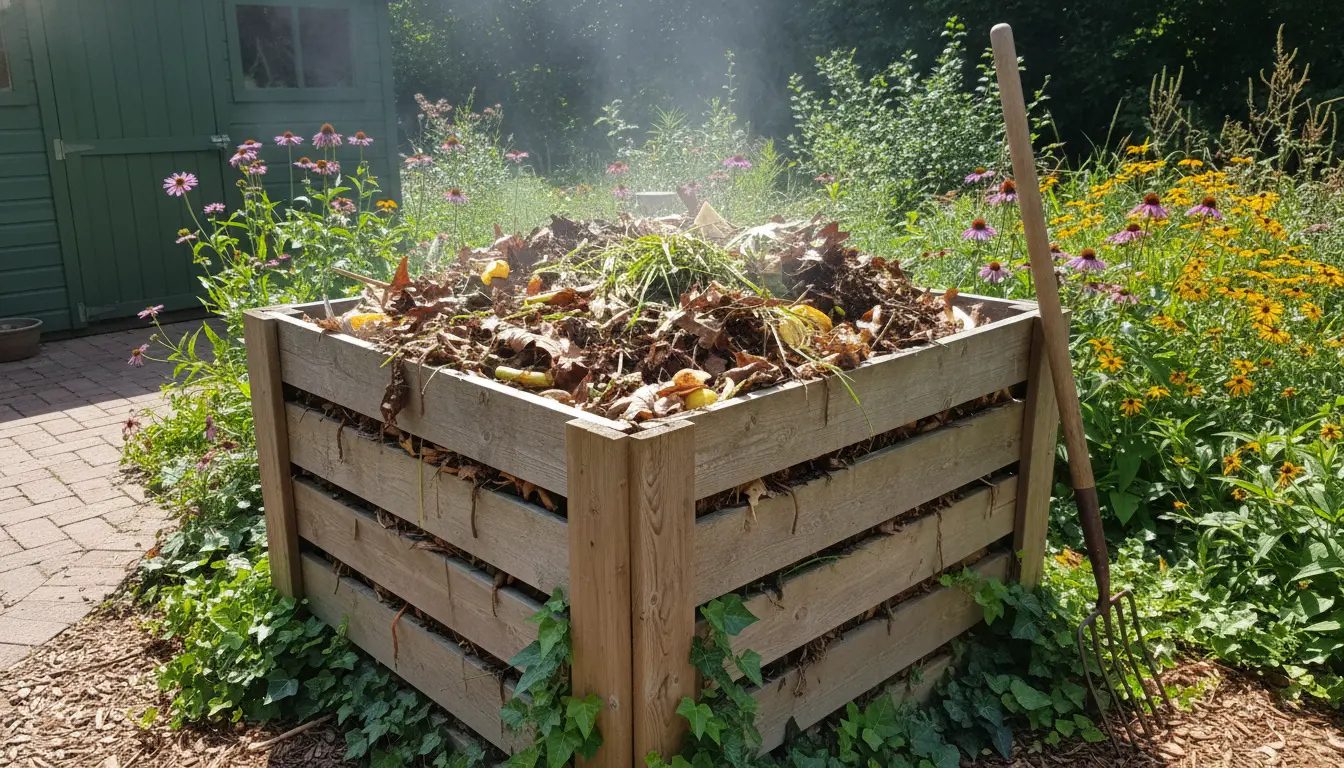
Home composting turns kitchen scraps and yard waste into rich soil you can use in gardens or potted plants. This guide gives clear, practical steps for setting up and maintaining a small-scale compost system at home.
Why Choose Home Composting for Beginners
Home composting reduces household waste and creates nutrient-rich compost for plants. It is affordable, straightforward, and scalable from small bins to backyard piles.
Benefits of Home Composting
- Reduces garbage and landfill contribution.
- Improves soil structure and plant health.
- Saves money on fertilizers and soil amendments.
What You Need to Start Home Composting

Begin with a simple bin and the right mix of materials. You do not need fancy equipment to get good results.
Essential Tools for Home Composting
- A compost bin or container (plastic, wooden, or wire mesh).
- A garden fork or shovel for turning.
- A kitchen scrap container for collecting food waste.
- Optional: a thermometer to monitor internal temperature.
Materials to Use in Home Composting
Compost needs a balance of nitrogen-rich and carbon-rich materials. Aim to mix both types.
- Greens (nitrogen): fruit and vegetable scraps, coffee grounds, fresh grass clippings.
- Browns (carbon): dried leaves, shredded cardboard, paper, straw, wood chips.
- Avoid: meat, dairy, fats, diseased plants, and pet waste in small home systems.
How to Build a Compost Pile or Bin
Layering and airflow are key to active decomposition. Start small and keep it manageable.
- Place the bin on soil or a well-draining surface to allow worms and microbes to enter.
- Start with a 3–4 inch layer of coarse browns to aid drainage.
- Add greens and then a covering layer of browns. Keep layers thin and even.
- Maintain a roughly 2:1 ratio of browns to greens by volume for balance.
Maintenance: Turning, Moisture, and Temperature

Regular care keeps the compost active and reduces odors. Small changes make a big difference.
Turning and Aeration
Turn the pile every 1–2 weeks to introduce oxygen. For small bins, use a garden fork or a turning tool.
Moisture Control
Compost should feel like a wrung-out sponge — moist but not soggy. Add water if dry and more browns if too wet.
Temperature Monitoring

Active compost heats to 120–160°F (49–71°C) in the center for hot composting. Cold composting works slowly at ambient temperatures and still produces good compost.
Household food scraps and yard waste make up more than 30% of municipal solid waste in many countries. Composting those materials at home can significantly cut your household waste output.
Common Problems and Solutions for Home Composting
Run into issues? Most problems are easy to fix with simple adjustments.
- Bad smell: Add more browns and turn the pile to increase aeration.
- Slow breakdown: Chop materials smaller and maintain moisture and aeration.
- Pests: Avoid adding meat or greasy foods and use a closed bin or wire mesh barrier.
Simple Weekly Routine for Home Composting
A consistent schedule keeps composting easy and effective. Use this short routine to stay on track.
- Daily: Add kitchen scraps to your indoor container; empty into the outdoor bin every few days.
- Weekly: Turn the compost once and check moisture.
- Monthly: Add coarse browns if the pile looks compacted and check for pests.
Small Real-World Case Study: Neighborhood Compost at a Townhouse
Example: A townhouse in a temperate climate started a 60-gallon compost bin. The household used a mix of kitchen scraps, shredded paper, and yard trimmings.
Within four months they had usable compost. They turned the bin every two weeks and kept the pile moist. The finished compost improved their balcony vegetable planters and reduced garbage pickup by one bag per week.
Using Finished Compost
Compost is ready when it is dark, crumbly, and earthy-smelling. Use it to amend garden soil or as a top dressing for potted plants.
- Mix 1 part compost to 3 parts topsoil for planting beds.
- Use a thin layer on top of potted plants to improve water retention and nutrients.
Quick Tips for Success in Home Composting
- Chop larger items to speed decomposition.
- Balance greens and browns rather than strictly measuring ratios.
- Keep the bin accessible to make adding scraps habitual.
- Start small and expand as you gain confidence.
Home composting is a practical way to reduce waste and create a useful soil amendment. With basic supplies, a short maintenance routine, and a bit of attention to balance and moisture, beginners can produce quality compost in months.