
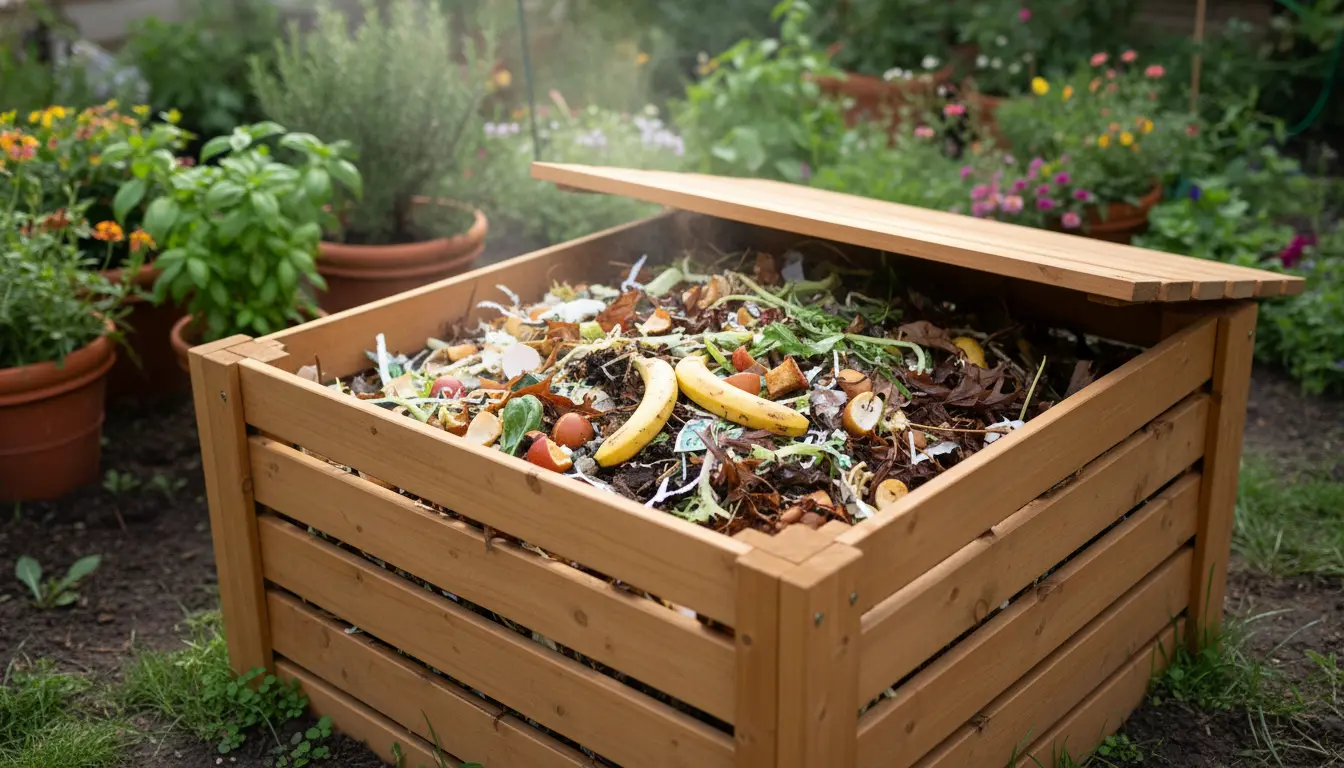
Home Composting for Beginners: Why It Matters
Home composting turns kitchen and yard waste into a useful soil amendment. It reduces household trash, lowers methane from landfills, and improves soil health for plants.
This guide gives practical steps for beginners to set up, maintain, and troubleshoot a small compost system at home.
Home Composting for Beginners: Getting Started

Choose a location that is convenient and has good drainage. A spot near the kitchen or garden makes it easier to add scraps regularly.
You only need a container and two basic ingredient groups: greens (nitrogen) and browns (carbon). Balance these and keep the pile moist but not soggy.
Home Composting for Beginners: Basic Tools and Materials
- Compost bin or tumbler, or a simple wire enclosure
- Kitchen pail for scraps (with a lid)
- Garden fork or aerator for turning the pile
- Shredded paper, dry leaves, and yard clippings
Choosing a Compost Method for Home Composting for Beginners
Pick a method that fits your space and schedule. Cold composting is low effort but slower; hot composting requires more work but produces finished compost faster.
Compost Methods Compared
- Cold composting: Layer scraps and leaves; wait 6–12 months. Minimal turning.
- Hot composting: Maintain a larger pile (at least 1 m3), turn regularly, and reach higher temperatures to speed up decomposition (weeks to months).
- Bin or tumbler: Controlled environment, keeps pests out and looks tidy for small yards.
What to Compost and What to Avoid in Home Composting for Beginners

Know what materials support healthy compost. Proper inputs prevent odors and pests.
Good Items to Compost
- Greens: fruit and vegetable scraps, coffee grounds, fresh grass clippings
- Browns: dry leaves, straw, shredded cardboard, paper
- Small amounts of yard trimmings and plant prunings
Items to Avoid
- Meat, fish, dairy, and oily foods (attract pests)
- Diseased plants or invasive weeds with seeds
- Pet waste from carnivores (risk of pathogens)
Maintaining Your Compost: Practical Steps
Maintenance keeps the pile active and prevents problems. Follow three simple checks: moisture, aeration, and balance.
Daily and Weekly Tasks
- Add kitchen scraps as you produce them; cover with browns to control smell.
- Turn the pile every 1–2 weeks if hot composting. Less often for cold piles.
- Check moisture: it should feel like a wrung-out sponge. Add water or dry material as needed.
Troubleshooting Home Composting for Beginners
Common issues are easy to fix. Odors usually mean too much moisture or too many greens. Pests mean exposed food; cover scraps and use a closed bin.
Quick Fixes
- Smell: Add dry browns and turn the pile to introduce air.
- Slow breakdown: Chop materials smaller, add nitrogen-rich greens, and turn more often.
- Fruit flies: Keep a closed container for wet scraps or bury them inside the pile.
Small Case Study: Apartment Family Composting
A family of four living in a city apartment started a small vermicompost (worm bin) on their balcony. They kept a sealed counter pail for food scraps and added them to the worm bin twice a week.
After six months they diverted most kitchen waste from trash, produced rich worm castings for balcony plants, and cut weekly garbage by about 40 percent. Their success came from routine collection, proper balance of bedding (shredded paper and dry leaves), and consistent moisture control.
Finishing and Using Your Compost
Finished compost is dark, crumbly, and earthy-smelling. Sift to remove large pieces and use it as a soil amendment or mulch around plants.
Mix compost into potting soil, top-dress lawns and garden beds, or make a compost tea for liquid feeding.
Final Tips for Home Composting for Beginners
- Start small and expand as you gain confidence.
- Keep a simple routine: collect, cover, and turn when needed.
- Learn by observing: smell, color, and temperature tell you how the pile is doing.
Home composting is a practical, low-cost way to manage organic waste and improve soil health. With basic tools and a little routine, beginners can produce useful compost and reduce household trash.