
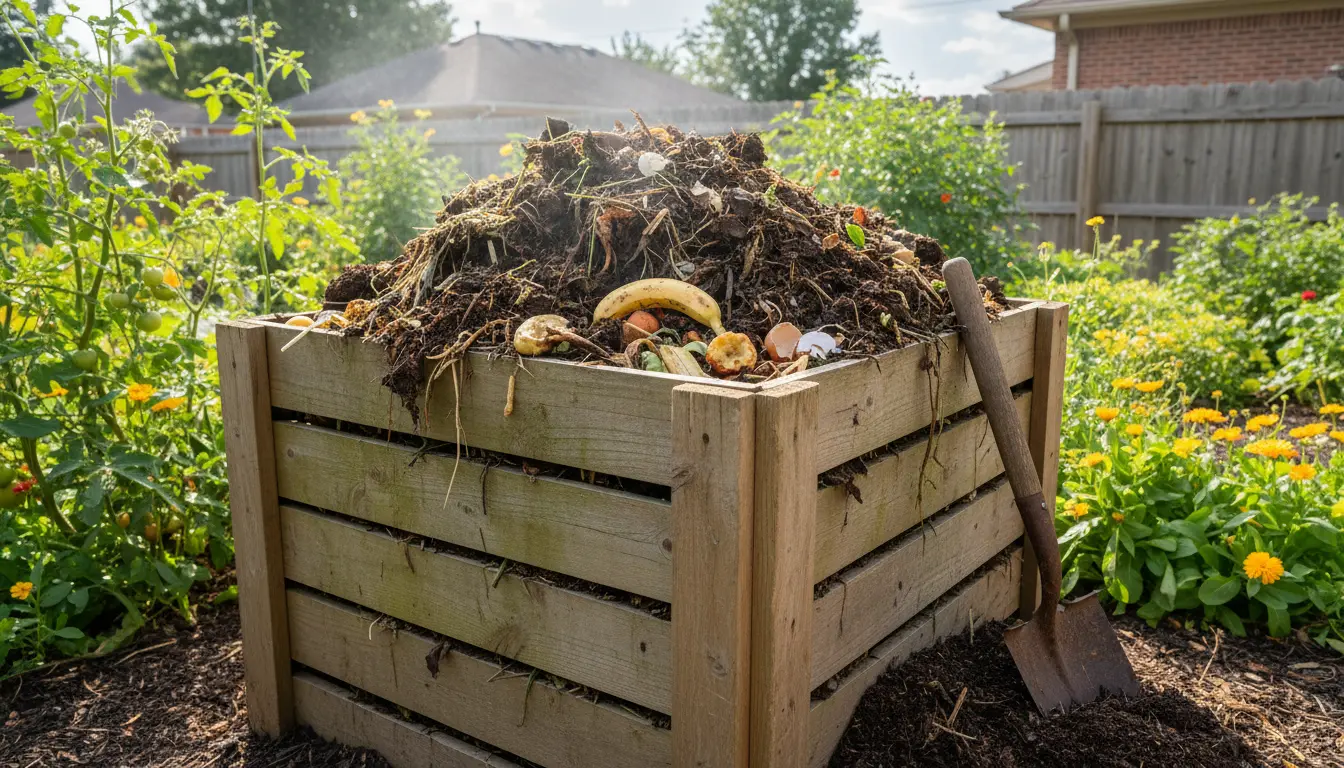
Home Composting for Beginners: Getting Started
Home composting turns kitchen scraps and yard waste into nutrient-rich soil. This guide gives clear, practical steps so beginners can start composting with confidence.
Why Choose Home Composting for Beginners
Composting reduces household waste and improves garden soil naturally. It also saves money on fertilizers and reduces methane from landfills.
Choose a Method and Location

Pick a composting method that fits your space and commitment level. Common options include backyard bins, tumblers, and vermicomposting (worm bins).
Place the bin on bare soil if possible to allow beneficial organisms to access the pile. Choose a level, shaded spot with good drainage.
Home Composting for Beginners: Methods Overview
- Bin system: Simple and low-cost; good for yards.
- Tumbler: Faster composting and easier turning; costlier but tidy.
- Vermicompost: Uses worms to break down food scraps indoors or outdoors; great for apartment gardeners.
What to Compost and What to Avoid
Balancing carbon-rich “browns” and nitrogen-rich “greens” is key. Aim for roughly a 3:1 ratio by volume of browns to greens for steady decomposition.
Home Composting for Beginners: Typical Materials
- Browns: Dry leaves, straw, shredded paper, cardboard.
- Greens: Fruit and vegetable scraps, coffee grounds, fresh grass clippings.
- Avoid: Meat, dairy, oily foods, diseased plants, and pet waste from carnivores.
Building and Maintaining the Pile

Start with a layer of coarse material for airflow, then alternate greens and browns. Keep pieces small to speed up decomposition.
Moisture is important: the pile should feel like a wrung-out sponge. Add water if dry and add dry browns if too wet.
Turning and Monitoring
Turn the pile every 1–2 weeks to introduce oxygen and mix materials. Tumblers simplify this step with a simple rotation.

Monitor temperature: a warm pile (110–140°F / 43–60°C) indicates active decomposition in the first few months. Worm bins should be kept at moderate temperatures and turned less often.
Troubleshooting Common Problems
Problems are usually signs of balance or maintenance issues and can be corrected quickly.
- Smelly pile: Add more browns, mix, and reduce wet inputs.
- Pests: Avoid adding meat or oily foods and use a closed bin or fine mesh.
- Slow decomposition: Chop materials smaller, increase greens, and ensure adequate moisture and turning.
Compost can increase soil water retention by up to 20 percent, reducing the need for frequent watering.
Harvesting and Using Finished Compost
Finished compost is dark, crumbly, and earthy-smelling. Sift to remove large pieces if you want a fine texture for seed starting.
Use compost as a soil amendment, surface mulch, or potting mix ingredient. Apply a thin layer to garden beds or mix into planting holes.
Home Composting for Beginners: Practical Application
Start small: a single bin or worm box is enough for a small family. Increase capacity as you build confidence and material volume.
Small Real-World Example
Case study: A two-person household started a 50-gallon compost bin in their backyard. They saved kitchen scraps for six months and balanced them with yard leaves. After three months of turning once a week and keeping the pile moist, they harvested usable compost and reduced their trash output by 30 percent. The compost improved their vegetable bed yields the following season.
Safety and Local Considerations
Check local regulations for backyard composting; some areas limit composting methods or organic waste types. Avoid composting invasive plants without high heat treatment.
Use gloves when handling unfinished compost and wash hands after contact. Finished compost is safe to use around edible plants once fully decomposed.
Quick Start Checklist for Home Composting for Beginners
- Choose a method: bin, tumbler, or worm box.
- Select a location with shade and drainage.
- Collect greens and browns; maintain roughly 3:1 browns to greens.
- Keep the pile moist and turn regularly.
- Troubleshoot smells or pests by adjusting balance and coverage.
- Harvest finished compost and use in the garden.
Home composting is a manageable, cost-effective way to reduce waste and improve soil health. With a simple setup and routine checks, beginners can produce valuable compost within a few months.