
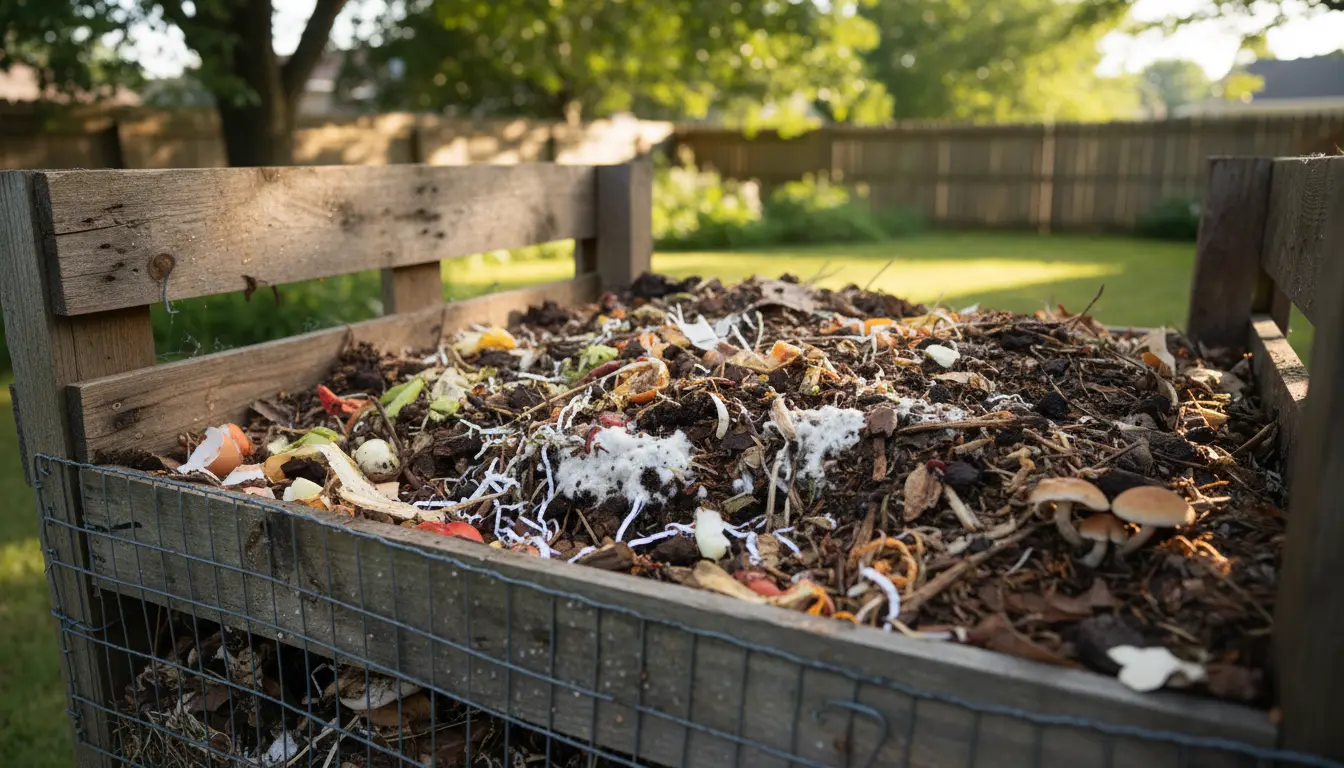
Why Home Composting for Beginners Makes Sense
Home composting turns food scraps and yard waste into a valuable soil amendment. It reduces household waste, cuts methane emissions from landfills, and improves garden soil structure.
For beginners, composting is an accessible sustainability step that requires minimal tools and little time when set up correctly.
Basic Principles of Home Composting for Beginners

Composting relies on carbon, nitrogen, moisture, oxygen, and heat. Balancing these elements creates the conditions for microbes to break down organic matter.
Beginners can remember the simple rule: mix browns (carbon) and greens (nitrogen), keep it moist, and aerate periodically.
What to Add: Browns and Greens
Use a mix of materials to maintain balance. Browns supply carbon and greens supply nitrogen.
- Greens: fruit and vegetable scraps, coffee grounds, fresh grass clippings.
- Browns: dry leaves, straw, shredded paper, cardboard pieces.
What Not to Add

Avoid meat, dairy, diseased plants, and pet waste in most home systems. These items can attract pests or introduce pathogens.
Small bones, large branches, and oily foods should also be kept out or handled in specialized systems.
How to Start Home Composting for Beginners: Step-by-Step
Choose a method that fits your space and lifestyle. Common options include a simple compost pile, a tumbling bin, or a worm composting (vermicomposting) setup.
1. Pick a Location and Container

Select a level spot with good drainage and partial shade. Containers can be purchased or DIY from pallets or wire mesh.
Tumbling bins speed up mixing, while open piles are cheapest. Indoor countertop bins can feed a worm bin or bokashi system.
2. Build Your First Layer
Start with a 4–6 inch layer of coarse browns like straw or small branches to help airflow. Add alternating layers of greens and browns to build the pile.
A common ratio is roughly 3 parts browns to 1 part greens by volume to prevent odors and excess moisture.
3. Maintain Moisture and Aeration
The pile should feel like a wrung-out sponge: moist but not soggy. Water dry piles and cover wet piles to regulate moisture.
Turn the pile every 1–2 weeks with a pitchfork or use a tumbler to mix contents and introduce oxygen. Regular turning speeds composting and reduces odors.
Troubleshooting Home Composting for Beginners
Problems are usually solved by adjusting moisture, carbon-to-nitrogen balance, or aeration. Diagnose issues quickly with these checks.
Smelly Pile
Bad smells usually mean too many greens or poor aeration. Add more browns, turn the pile, and check drainage.
Pile Too Dry or Too Slow
If decomposition is slow, the pile may be dry, too cold, or lacking nitrogen. Add water, fresh greens, and turn to reheat the pile.
Pests or Flies
Secure the bin, bury fresh food scraps inside the pile, and avoid meat or oily foods. A closed tumbler or worm bin reduces pest risks.
Compost Use and Curing
Finished compost is dark, crumbly, and earthy-smelling. Allow compost to cure for a few weeks after the active breakdown phase to stabilize nutrients.
Use finished compost as a soil amendment, topdressing, or potting mix ingredient. Work it into vegetable beds or sprinkle around trees and shrubs.
Did You Know?
Food scraps and yard waste make up nearly 30% of household trash. Composting those materials at home can reduce landfill contributions and create valuable soil in weeks to months.
Small Real-World Example: Apartment Worm Composting Case Study
Maria lives in a two-bedroom apartment and started vermicomposting with a 2-bin system in her balcony closet. She used red wiggler worms and a small kitchen caddy for scraps.
Within 6 months she diverted about 35% of her weekly waste from the trash. Her tomato plants produced fuller foliage and healthier fruit after adding 1–2 inches of worm castings to potting mix.
Tips for Long-Term Success with Home Composting for Beginners
- Keep a small countertop scrap bucket to collect greens and prevent kitchen odors.
- Shred or chop large items to speed breakdown.
- Record pile size, turning frequency, and materials to learn what works locally.
- Use mesh or screening to remove unfinished chunks before applying finished compost.
Final Checklist for Home Composting for Beginners
- Choose a method: bin, tumbler, or worms.
- Start with alternating layers of browns and greens.
- Maintain moisture and aeration; turn every 1–2 weeks.
- Troubleshoot smells, pests, and slow decomposition quickly.
- Use finished compost to improve soil health and plant growth.
With a small investment of time and a few basic supplies, home composting for beginners is a practical way to reduce waste and build healthier soil. Start small, observe the process, and adjust based on your local climate and materials.