
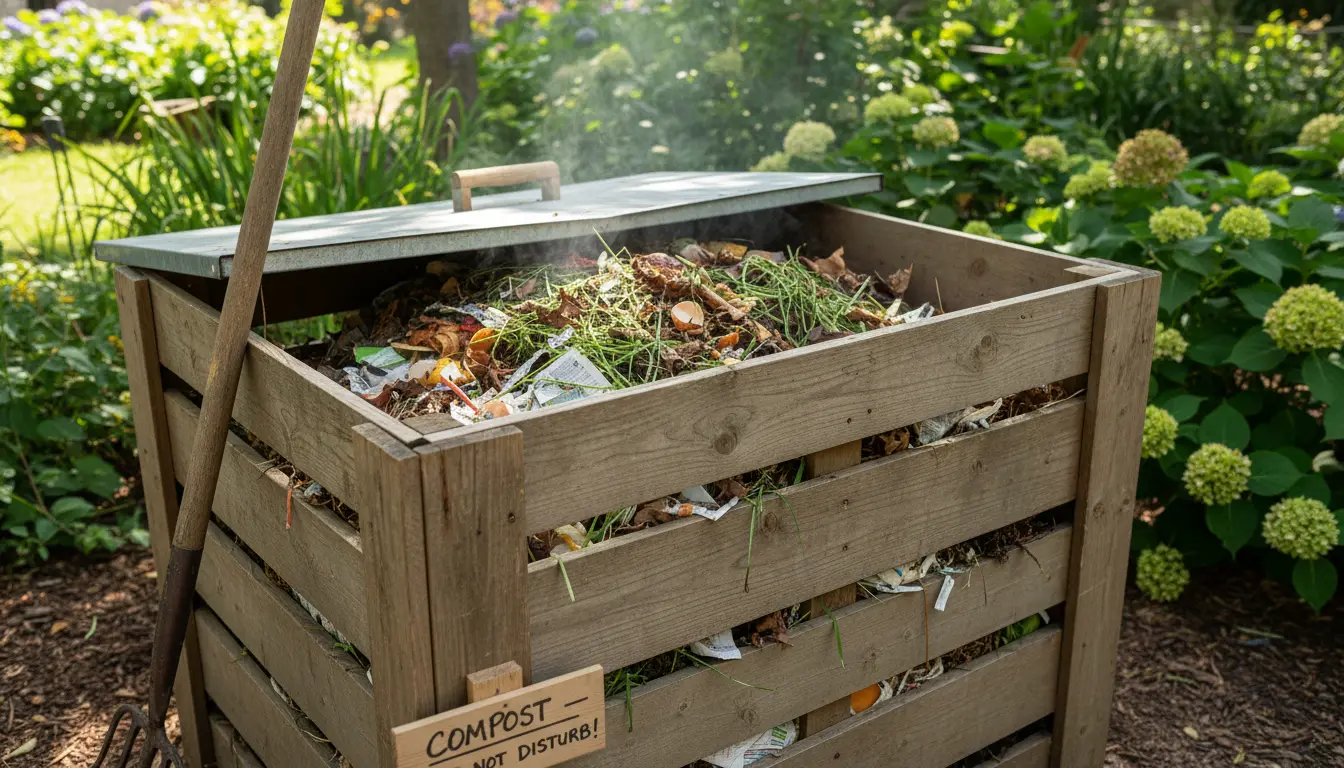
Why Home Composting Matters
Home composting turns kitchen and yard waste into a useful soil amendment. It reduces landfill waste, lowers household emissions, and improves garden soil health.
For many households, composting is a straightforward way to save money on soil amendments and close the loop on organic waste. This guide gives clear, step-by-step instructions for successful home composting.
Getting Started with Home Composting

Start by deciding the type of composting that fits your space and lifestyle. Options include a backyard bin, tumbler, vermicomposting (worms), or a small indoor bokashi system.
Follow these basic steps to set up a reliable system:
- Choose a container and location.
- Collect kitchen scraps and yard waste.
- Balance greens and browns.
- Maintain moisture and aeration.
Choose a Bin for Home Composting
Select a container based on space and volume. Open piles work well in large yards; tumblers suit smaller spaces and speed up mixing.

Bins should allow drainage and airflow. For starters, a simple plastic or wooden bin with holes is sufficient.
Balance Greens and Browns
Compost needs a mix of nitrogen-rich “greens” and carbon-rich “browns.” A good ratio encourages microbial activity without odors.
Common greens: vegetable scraps, coffee grounds, fresh grass clippings. Common browns: dry leaves, shredded paper, straw, cardboard.
- Aim for roughly a 1:2 or 1:3 volume ratio of greens to browns.
- If the pile is too wet and smelly, add more browns.
- If decomposition is slow, add more greens and a little water.
Manage Moisture and Aeration

Moisture should be similar to a wrung-out sponge — damp but not dripping. Too dry and microbes slow down; too wet and anaerobic odors develop.
Turn or mix the pile every 1–2 weeks to add oxygen and speed up decomposition. Tumblers make turning easier for small households.
What to Compost and What Not to Compost
Knowing what to put in your compost speeds results and avoids pests or pathogens. Use this quick list to guide you.
Good Items for Home Composting
- Fruit and vegetable scraps (no large amounts of citrus for small systems)
- Coffee grounds and paper filters
- Tea bags (remove staples)
- Eggshells, crushed
- Yard waste: leaves, grass clippings, small twigs
- Shredded cardboard and paper
Items to Avoid in Home Composting
- Meat, dairy, and oily foods (attract pests)
- Diseased plants or plants treated with persistent pesticides
- Weeds that have gone to seed
- Pet waste from meat-eating animals
Troubleshooting Common Home Composting Problems
Most issues are fixable by adjusting one of the basic variables: carbon/nitrogen balance, moisture, or airflow.
- Bad smell: Add dry browns and turn the pile to introduce air.
- Pests: Avoid meat and cover food scraps with a layer of browns.
- Slow decomposition: Chop materials smaller, add greens, and keep moisture adequate.
- Pile too wet: Mix in straw, shredded paper, or dry leaves and increase turning.
Small Case Study: Family of Four
A family of four in a suburban home switched to a backyard tumbler and simple sorting routine. They collected kitchen scraps in a countertop bin daily and emptied it into the tumbler every other day.
After six months they reported producing enough finished compost for two raised beds, reducing their household trash by about 25 percent. Regular turning and a steady supply of brown materials were key to success.
Simple Weekly Routine for Home Composting
Consistency makes composting easy. Use this weekly checklist to maintain steady progress.
- Empty kitchen caddy into compost bin 2–3 times a week.
- Add a handful of shredded paper or leaves when you add wet scraps.
- Turn or tumble the pile once per week.
- Check moisture and add water or browns as needed.
Using Finished Compost
Finished compost is dark, crumbly, and smells earthy. It should no longer resemble the original materials.
Use compost as a top dressing, mix it into potting soil, or incorporate it into garden beds to improve structure and nutrient content.
Final Tips for Successful Home Composting
- Start small and expand as you learn what works.
- Keep materials in small pieces to speed decomposition.
- Label bins and keep a small stash of browns handy year-round.
- If space is limited, consider vermicomposting for efficient indoor processing.
Home composting is a practical way to reduce waste and nourish your garden. With basic setup and regular simple maintenance, most households can produce useful compost within months.