
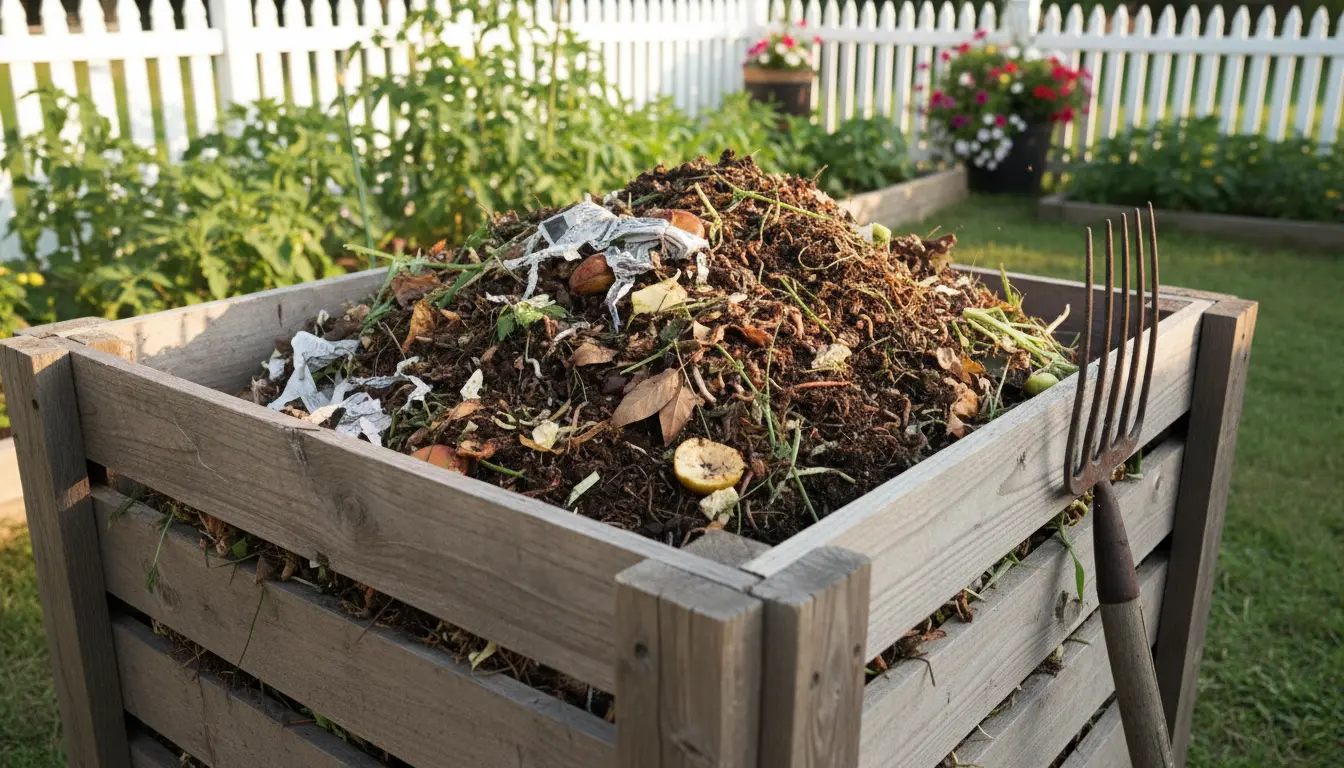
Start Smart with Home Composting for Beginners
Composting at home turns kitchen and yard waste into a valuable soil amendment. This guide gives clear, actionable steps for beginners so you can start composting with confidence.
Why Home Composting for Beginners Matters
Composting reduces landfill waste and returns nutrients to soil. For beginners, it is an affordable way to improve garden health and cut household garbage volume.

Even small households can divert significant organic waste and see measurable benefits in garden productivity.
Choosing a Compost System for Home Composting for Beginners
Pick a system that fits your space, budget, and patience level. Common options include tumblers, stationary bins, and simple compost piles.
- Tumbler: Faster decomposition, easier turning, good for small yards.
- Stationary bin: Affordable and low-maintenance, needs manual turning.
- Open pile: Works for large yards, less control over pests and moisture.
How to Start Home Composting for Beginners
Getting started is mainly about balance and basic maintenance. Follow a few rules to avoid odor and pest problems.
Balance Greens and Browns

Compost requires carbon-rich ‘browns’ and nitrogen-rich ‘greens.’ Aim for a rough ratio of 3 parts browns to 1 part greens by volume.
- Greens: Vegetable scraps, fresh grass clippings, coffee grounds.
- Browns: Dry leaves, shredded paper, straw, cardboard.
Layering and Aeration
Layer materials to encourage airflow and microbial activity. Start with coarse browns at the bottom to improve drainage.
Turn the pile every 1–2 weeks to introduce oxygen. Tumblers make this step easier for beginners.
Moisture and Temperature Control
Keep the pile as damp as a wrung-out sponge. Too dry slows decomposition; too wet causes odors.
Temperature indicates activity: 120–160°F (50–70°C) means the pile is working well. Small backyard piles may stay cooler but still produce good compost.
Common Materials to Compost and Avoid
Knowing what to add saves time and prevents problems. Use this quick reference:
- Compostable: Fruit and vegetable scraps, eggshells, coffee grounds, tea bags (no plastic), yard trimmings.
- Avoid: Meat, dairy, oils, diseased plants, pet waste, treated wood, glossy paper.
Troubleshooting for Home Composting for Beginners
Problems are usually easy to fix once you diagnose them. Use these checks before changing your system.
- Bad odors: Add more browns and turn the pile to increase aeration.
- Slow breakdown: Chop materials smaller, increase moisture slightly, and add a nitrogen source.
- Pests: Bury food scraps, avoid meat and dairy, use a secure bin or tumbler.
Compost can improve soil water retention by up to 20 percent and reduce the need for chemical fertilizers. Even one inch of compost spread over a garden bed adds meaningful organic matter.
How to Tell When Compost Is Ready
Finished compost is dark, crumbly, and smells earthy. Most backyard systems take 3–12 months depending on materials and maintenance.
Screen compost if you want a fine texture; larger chunks can go back into a new pile to continue decomposing.
Using Finished Compost
Mix finished compost into garden beds, use as a top dressing for lawns, or blend into potting mixes. Apply 1–2 inches annually to vegetable beds for best results.
Compost feeds soil life, improving long-term fertility and structure without burning plants.
Small Real-World Case Study
The Martinez family began home composting in a suburban backyard using a 60-gallon tumbler. They started with kitchen scraps and dry leaves collected in fall.
After four months of regular turning and balanced layers, they produced enough compost to enrich two raised vegetable beds. Their tomato yield increased noticeably, and they reduced weekly trash by roughly 30 percent.
Practical Tips for Home Composting for Beginners
- Keep a small countertop bin with a lid to collect scraps—empty it daily into your outdoor bin.
- Chop large pieces to speed decomposition.
- Save dry leaves in fall to use as browns throughout the year.
- If odor appears, add shredded paper or garden carbon and turn the pile.
Final Checklist to Start Composting Today
- Choose a bin or spot for a pile.
- Gather a mix of greens and browns.
- Maintain moisture and aeration.
- Monitor and adjust as needed.
Home composting for beginners is accessible and rewarding. With basic setup and regular, simple maintenance, you can turn household waste into a resource that benefits your garden and the environment.