
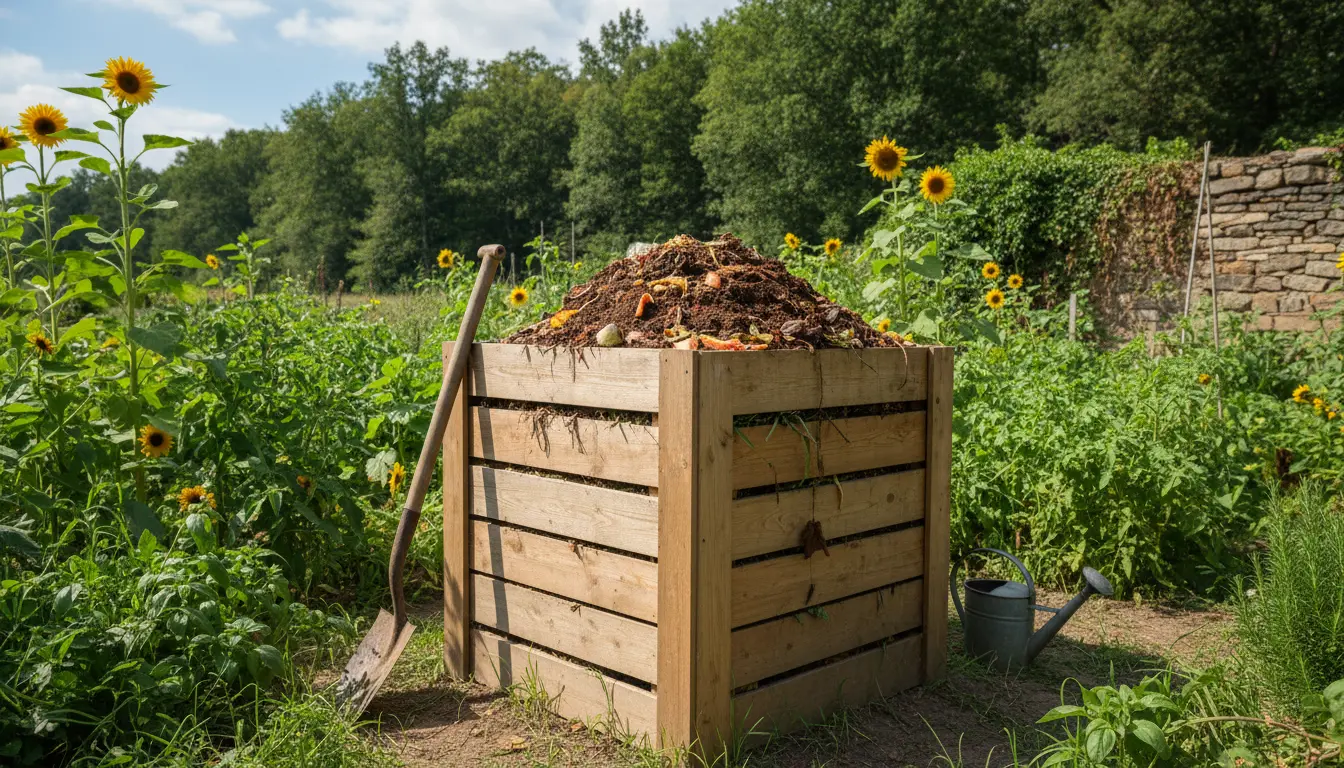
Home composting turns kitchen scraps and yard waste into nutrient-rich soil. This guide explains simple, practical steps to start and maintain a compost bin at home, whether you have a backyard or a small balcony.
Home Composting Basics
Home composting uses microorganisms to break down organic material into compost. The process needs a balance of carbon and nitrogen, moisture, and oxygen to work well.
What Is Home Composting

Composting is aerobic decomposition of organic matter. You add layers of materials, keep the pile moist but not soaked, and turn it occasionally to introduce air.
Benefits of Home Composting
- Reduces household waste going to landfill.
- Creates free soil amendment for gardens and pots.
- Improves soil structure, water retention, and plant health.
What to Compost in Home Composting
Knowing what materials work best speeds composting and prevents odors. Think in terms of browns (carbon) and greens (nitrogen).
Acceptable Materials
- Greens: vegetable scraps, coffee grounds, tea bags, fresh grass clippings.
- Browns: dried leaves, shredded paper, cardboard, straw, wood chips.
- Small amounts of garden prunings and spent flowers.
Materials to Avoid
- Meat, dairy, and oily foods (attract pests and create odors).
- Diseased plants or invasive weeds with seeds.
- Pet waste from carnivores.
Compost Systems for Home Composting
Choose a system that fits your space and needs. Each option has pros and cons depending on volume, time, and effort.
Common Home Composting Systems
- Open bin: simple and low-cost for backyard gardeners.
- Tumbler: faster turning and cleaner handling, good for small yards.
- Vermicomposting: uses worms for indoor or balcony composting; ideal for small kitchens.
- Trench composting: burying scraps directly in the garden beds, minimal maintenance.
How to Start a Home Composting Bin

Setting up is straightforward. Follow a step-by-step routine to establish a healthy compost pile that matures within months.
Step-by-Step Setup
- Select a location with partial shade and good drainage.
- Start with a 6–8 inch layer of coarse material like twigs to aid airflow.
- Add alternating layers of greens and browns; aim for roughly 2–3 parts browns to 1 part greens by volume.
- Keep the pile moist like a wrung-out sponge; water if it dries out.
- Turn the pile every 1–2 weeks to introduce oxygen.
Managing Moisture and Aeration
Moisture and air control are the two most important variables. Too wet, and the pile becomes anaerobic and smelly; too dry, and decomposition slows down.
- Drain excess water and add dry browns if the pile is soggy.
- Cover during heavy rain or use a well-ventilated bin to balance moisture.
- Use a garden fork or turner to create air channels if the pile compacts.
Troubleshooting Home Composting
Problems are usually easy to fix once you identify the cause. Smells, pests, and slow breakdown are the most common issues.
Common Problems and Fixes
- Foul odor: add more browns, turn the pile, and reduce wet food scraps.
- Fruit flies: cover fresh food scraps with a layer of browns and keep the top covered.
- Slow decomposition: chop materials smaller, increase nitrogen (greens), and ensure adequate moisture.

Adding a handful of finished compost or garden soil to a new pile introduces beneficial microbes and speeds up the breakdown process.
Case Study: Small Balcony Home Composting
Anna, an apartment resident, started vermicomposting in a 20-liter plastic bin. She used red wiggler worms and kitchen scraps, adding shredded paper as bedding.
After three months she harvested dark, crumbly compost to top her potted herbs. Her system reduced weekly trash volume and improved plant growth.
Tips and Best Practices for Home Composting
- Chop or shred larger items to speed decomposition.
- Keep a small indoor collection container with a lid for kitchen scraps to limit trips outside.
- Monitor temperature: active piles heat up; cool piles may need turning or more greens.
- Use finished compost as a top dressing, potting mix amendment, or soil conditioner.
Final Steps and Ongoing Maintenance
Once your compost looks dark and crumbly and smells earthy, it is ready to use. Sift out large pieces to return to the bin for further breakdown.
Maintain regular additions and occasional turning to keep a steady supply of compost. Even small, consistent efforts make a noticeable difference over time.
Home composting is a low-cost, practical method to close the loop on organic waste and improve soil health. Start small, observe the process, and adjust based on what your pile needs.