
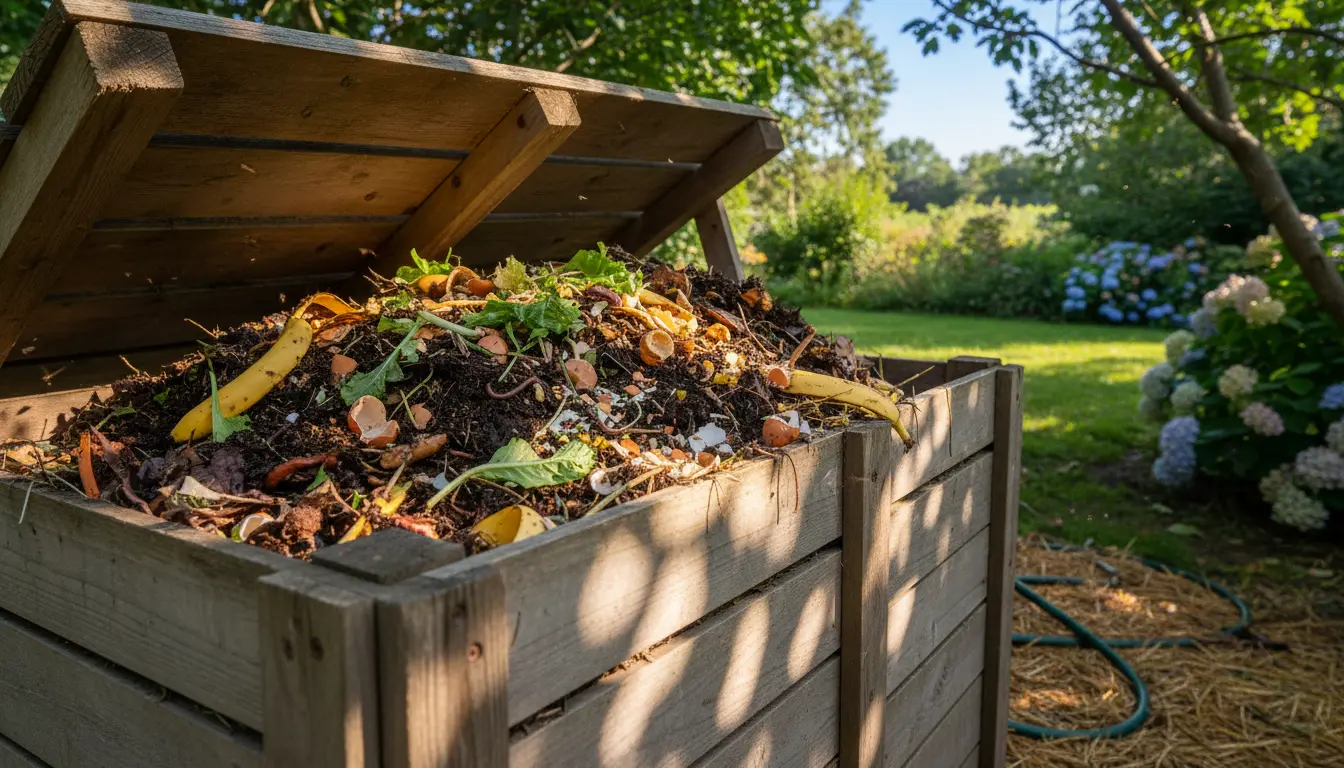
Why compost at home
Composting turns kitchen and garden waste into valuable soil amendment. It reduces landfill waste, improves soil structure, and feeds plants naturally.
This guide walks you through simple, practical steps to start and maintain a home compost system.
Home Composting Guide: Choose a method

Select a composting method that fits your space and lifestyle. Common options work well for most households.
- Cold bin: Low-effort, slower decomposition, good for yards.
- Hot bin: Faster breakdown, requires more management and turning.
- Vermicomposting: Uses worms, ideal for apartments and small indoor setups.
- Bokashi: Fermentation method for kitchens, useful where outdoor composting is limited.
Home Composting Guide: What to compost
Balance carbon-rich (browns) and nitrogen-rich (greens) materials. Aim for roughly a 3:1 ratio of browns to greens by volume.
- Greens (nitrogen): Vegetable scraps, fruit peels, coffee grounds, fresh grass clippings.
- Browns (carbon): Dry leaves, straw, shredded paper, cardboard.
- Avoid: Meat, dairy, oils, diseased plants, pet waste from carnivores.
Quick examples of mixes
For a small batch: 3 parts shredded leaves to 1 part fruit and vegetable scraps. For kitchen-only: combine scraps with shredded paper and occasional yard waste.
Setting up your compost bin

Place the bin on soil where possible to allow worms and microbes to enter. Provide partial shade to prevent drying out in hot climates.
Layer materials to start: a base of coarse browns, then alternate greens and browns. Keep layers thin so air can circulate.
Home Composting Guide: Maintain and troubleshoot
Regular maintenance keeps decomposition on track. Check moisture, aeration, and temperature.
- Moisture: Compost should be as damp as a wrung-out sponge. Add water if dry, add browns if too wet.
- Aeration: Turn piles every 1–2 weeks for hot composting. For cold bins, turning less often is fine.
- Temperature: Hot systems reach 50–65°C (122–149°F) but are not required. Warmth speeds up the process.
Common problems and fixes
- Bad odor: Usually too wet or too many greens. Add browns, turn, and ensure airflow.
- Pests: Avoid meat/dairy, secure the bin, bury kitchen scraps under browns.
- Slow decomposition: Increase greens or moisture, chop materials finer, or add a compost activator like finished compost.
How to know when compost is ready

Finished compost is dark, crumbly, and smells earthy. It usually takes 2–12 months depending on method and conditions.
Use a sieve or screen to separate large unfinished pieces to return to a new batch.
Adding crushed eggshells enriches compost with calcium and helps prevent blossom end rot in tomatoes.
Using finished compost
Apply compost as a mulch, mix into potting soil, or use as a top dressing for lawns and garden beds. Aim for 1–3 inches of compost applied yearly for garden beds.
Compost improves water retention in sandy soils and drainage in clay soils, so it benefits nearly any garden type.
Home Composting Guide: Small real-world case study
Case study: Emily, a city apartment gardener, began vermicomposting in a 20-liter worm bin. She collected kitchen scraps and shredded office paper, feeding the worms 3 times a week.
Within four months she produced enough castings to refresh three balcony planters, reducing her organic trash by half and boosting tomato yields by 20% the next season.
Tips to succeed with home composting
- Chop or shred materials for faster breakdown.
- Keep a small covered kitchen caddy to collect scraps and reduce odor.
- Record what you add and when to learn what mix works best for your climate.
- Be patient: even slow composting returns value over time.
Next steps to get started
Choose a method that fits your space, collect basic supplies (bin, pitchfork or turning tool, thermometer optional), and start with a balanced mix of browns and greens.
Join local composting groups or check municipal resources for workshops and bin discounts. Practical experience and small adjustments will refine your process.
With consistent, simple care you can turn household waste into a valuable resource for your plants and reduce your environmental footprint. Start small, monitor conditions, and adjust as you learn.