
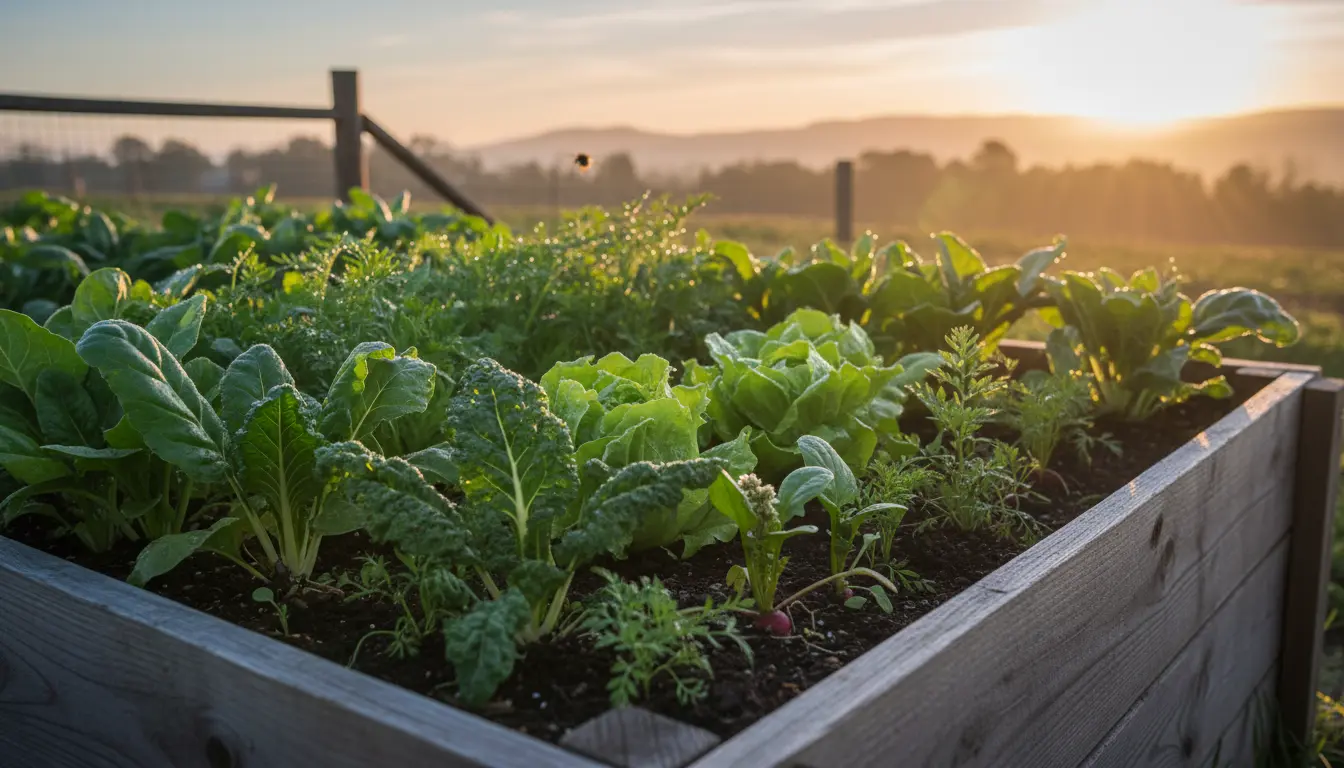
Starting a small vegetable garden is a practical way to grow fresh food, save money, and enjoy outdoor activity. This guide walks through planning, planting, and simple maintenance so you get steady harvests from a compact space.
Plan Your Small Vegetable Garden
Assess light, space, and access to water before you buy seeds or soil. Most vegetables need 6–8 hours of sunlight, so locate the garden where light is best.

Decide on a layout: containers, raised beds, or a ground plot. Choose based on mobility, soil control, and ease of maintenance.
Choose a Site for a Small Vegetable Garden
- Sunny spot with good drainage
- Close to a water source
- Easy access for weeding and harvesting
Prepare Soil and Beds for a Small Vegetable Garden
Healthy soil is the foundation of productive plants. For small gardens, raised beds or containers give better soil control and reduce compaction.
Test or evaluate your soil. Add compost and organic matter to improve texture, drainage, and nutrients.
Soil Mix and Amendments
- Base mix: equal parts compost, topsoil, and well-aged manure or coconut coir
- Adjust pH if needed (most vegetables prefer pH 6.0–7.0)
- Use slow-release organic fertilizer at planting time
Select Plants for a Small Vegetable Garden

Choose high-yield, space-efficient varieties that match your climate and tastes. Focus on a mix of fast growers and longer-season crops for continual harvests.
Good beginner choices include lettuce, radishes, cherry tomatoes, beans, herbs, and peppers. Consider dwarf or bush varieties for small spaces.
Companion Planting Tips
- Plant basil near tomatoes to repel pests and improve flavor
- Pair onions or garlic with carrots to deter carrot flies
- Interplant fast-growing lettuce among slower tomato plants to maximize space
Planting and Watering in a Small Vegetable Garden
Follow seed packet or plant tag directions for spacing and depth. Crowding reduces airflow and increases disease risk, even in small gardens.

Water consistently; small gardens dry out faster. Use drip irrigation or soaker hoses for efficient watering and to keep foliage dry.
Watering Schedule
- Check soil moisture daily in hot weather
- Water deeply once or twice a week rather than shallow daily watering
- Mulch to retain moisture and reduce weeds
Maintenance: Weeding, Pruning, and Pest Control
Regular maintenance keeps a small vegetable garden productive with minimal effort. Spend short, frequent sessions weeding and checking plants for issues.
Use organic controls first: handpicking pests, insecticidal soap, and row covers. Encourage beneficial insects by planting flowers and herbs nearby.
Common Problems and Quick Fixes
- Yellow leaves: check watering and nutrient levels
- Powdery mildew: improve airflow, remove affected leaves
- Slugs: use traps or coffee grounds around vulnerable plants
Harvesting and Rotating Crops in a Small Vegetable Garden
Harvest regularly to encourage more production. Pick greens early in the morning for best flavor and shelf life.
Rotate families of vegetables each season to reduce soil-borne disease and nutrient depletion. Move nightshades, brassicas, and legumes to different beds in successive seasons.
Simple Crop Rotation Plan
- Year 1: Tomatoes and peppers (nightshades)
- Year 2: Beans and peas (legumes)
- Year 3: Leafy greens and brassicas
Small Vegetable Garden Case Study
Maria converted a 10 ft by 6 ft patio area into three 4 ft by 2 ft raised beds. She filled beds with a 50/50 mix of compost and topsoil, and planted cherry tomatoes, bush beans, lettuce, and basil.
By using vertical stakes for tomatoes and succession planting lettuce every 2–3 weeks, she harvested enough greens and tomatoes to reduce store purchases by half during the season. A simple hose-end timer saved her time with consistent watering.
Quick Checklist to Start a Small Vegetable Garden
- Choose sunny site and measure available space
- Decide bed type: container, raised bed, or plot
- Prepare soil with compost and test pH
- Select space-efficient plant varieties
- Set up drip irrigation or plan a watering routine
- Mulch, monitor pests, and rotate crops annually
Starting small makes gardening manageable and rewarding. Follow these steps, adapt to your local climate, and track what works so each season gets easier and more productive.