
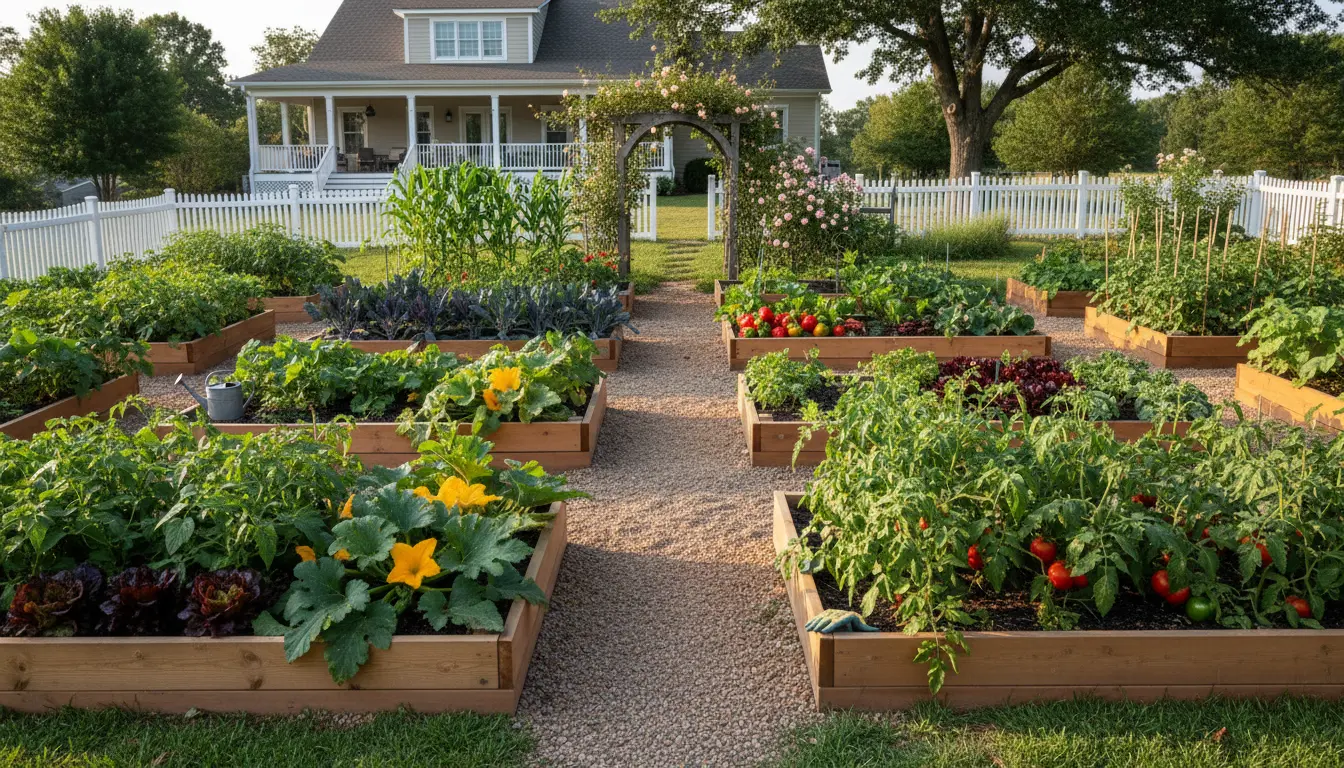
Starting a vegetable garden can be rewarding and cost-effective. This guide gives clear, practical steps to help you start a vegetable garden that produces food reliably.
Plan Before You Start a Vegetable Garden
Good results begin with planning. Assess your space, sunlight, and water access before digging or buying supplies.
Location and sunlight when you start a vegetable garden

Most vegetables need 6–8 hours of direct sunlight. Observe your yard at different times of day to pick the sunniest spot.
Consider proximity to water and ease of access. A garden near the house is easier to maintain and harvest from.
Site checklist
- Full sun for most crops (6+ hours daily)
- Good drainage; avoid low soggy spots
- Near a water source (hose or rain barrel)
- Accessible for planting, weeding, and harvesting
Prepare Soil and Beds to Start a Vegetable Garden
Soil quality drives plant health. Invest time in testing and improving soil before planting.
Soil testing and improvement

Use a basic soil test to check pH and nutrient levels. Local extension offices often offer affordable tests and recommendations.
Amend soil with compost to improve structure and nutrients. For clay soils add compost and coarse sand; for sandy soils add organic matter to improve water retention.
Raised beds vs in-ground planting
Raised beds warm faster in spring, drain well, and are easier to manage. They are a good choice for small yards or poor ground.

In-ground beds work when soil is deep and healthy. Choose the option that fits your space, budget, and physical needs.
Choose Plants and Timing to Start a Vegetable Garden
Selecting the right crops and planting at the right time increases success. Start with easier vegetables if you are new to gardening.
Beginner-friendly vegetables
- Lettuce and salad greens: fast and forgiving
- Radishes: very quick harvests (3–4 weeks)
- Tomatoes: reliable if staked and watered
- Beans and peas: productive and low maintenance
Timing and succession planting
Know your last frost date and plan accordingly. Cool-season crops like spinach and peas go in earlier; warm-season crops like tomatoes after frost risk passes.
Use succession planting to keep a steady supply: sow small amounts of lettuce or radishes every 2–3 weeks instead of all at once.
Watering, Mulching, and Maintenance for a Vegetable Garden
Consistent care is the difference between a garden that thrives and one that struggles. Focus on regular watering, mulching, and quick pest control.
Watering basics
Water deeply and less often to encourage strong roots. Aim for about 1–1.5 inches of water per week, adjusted for rainfall and soil type.
Use drip irrigation or soaker hoses to reduce evaporation and limit leaf wetness that can spread disease.
Mulching and weed control
Apply 2–3 inches of organic mulch (straw, shredded leaves, or wood chips) to conserve moisture and suppress weeds.
Pull weeds when small to prevent seed set. Mulch reduces the weed problem dramatically if applied correctly.
Pest and disease management
- Inspect plants weekly for signs of pests or disease
- Use row covers for early-season insect protection
- Encourage beneficial insects with flowering herbs and flowers
- Remove and compost diseased plant material; avoid composting severe disease without heat treatment
Square-foot gardening can increase yield per square foot by organizing crops more densely and reducing wasted space.
Small Real-World Example: Urban Raised Bed Success
Case: A 10×12 foot urban backyard converted three 4×4 raised beds in early spring. The gardener used a mix of store-bought compost and backyard compost to fill beds.
They planted lettuce, radishes, cherry tomatoes, and bush beans. With drip irrigation and weekly checks, the beds produced continuous salad greens and enough tomatoes for fresh eating and a small batch of canned sauce.
Lessons learned: start small, prioritize soil, and schedule weekly maintenance. Yields improved in year two after adding more compost and rotating locations for beans.
Practical Checklist to Start a Vegetable Garden
- Choose site with 6+ hours sun and near water
- Decide raised beds or in-ground
- Test soil and add compost as needed
- Select 3–6 easy crops to start
- Set up irrigation or plan hand-watering schedule
- Mulch beds and monitor pests weekly
Starting a vegetable garden is a step-by-step process: plan the space, prepare the soil, pick the right plants, and maintain regularly. With modest time investment and consistent care, most gardeners can produce fresh vegetables even in small spaces.
Begin this season with one or two raised beds or a small in-ground patch. Keep notes on planting dates and harvests so you can improve next year.