
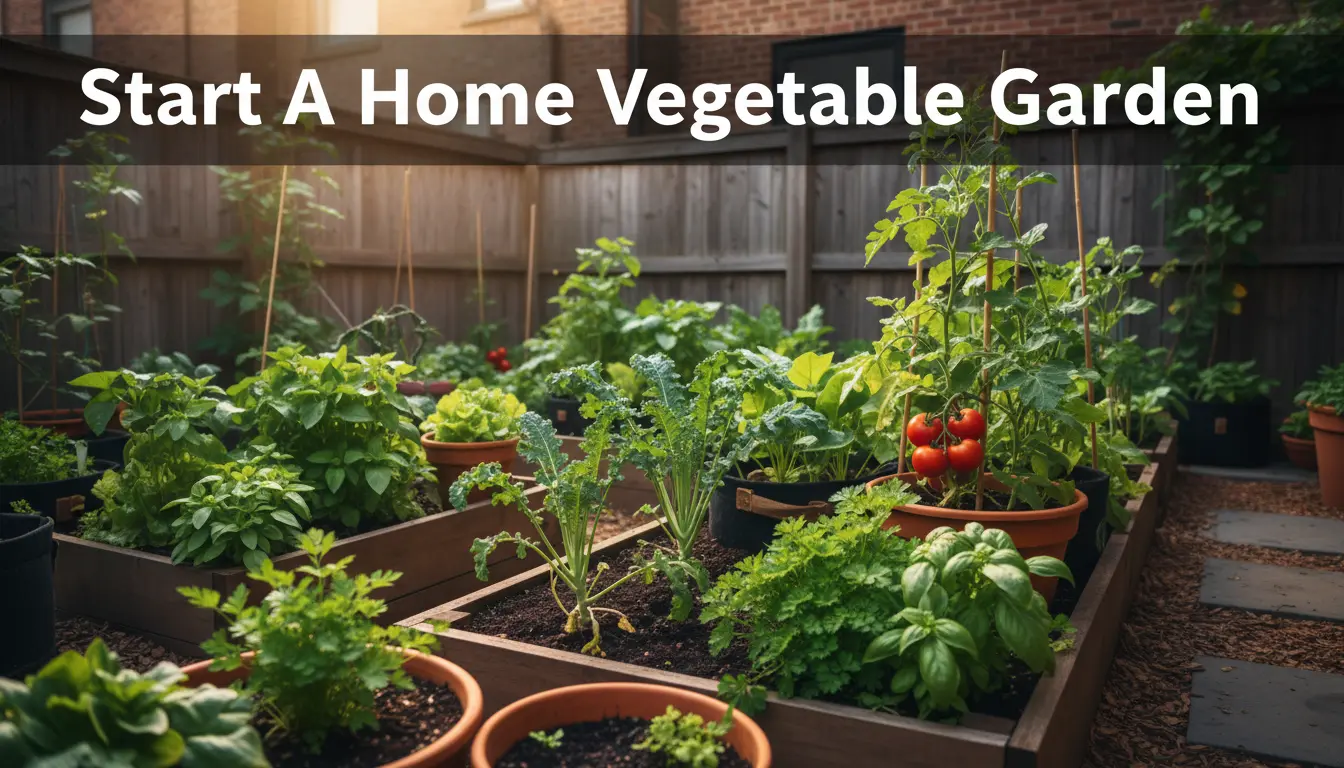
Starting a vegetable garden is a practical way to grow fresh food and reduce grocery costs. This guide gives clear, step-by-step instructions you can apply in a backyard, raised bed, or balcony container.
Why start a vegetable garden
A home vegetable garden provides fresher produce, better flavor, and control over growing methods. Many gardeners report better nutrition and reduced food miles when they grow vegetables at home.

It also offers hands-on learning and a satisfying seasonal hobby you can scale to your available space.
Plan and choose the best site to start a vegetable garden
Good planning reduces problems later. When you start a vegetable garden, consider sunlight, water access, and wind protection.
Sun and microclimate
Most vegetables need 6–8 hours of sun daily. Observe the space morning to evening for several days before planting. Choose the sunniest spot you have.
Water and drainage

Place the garden near a water source to make irrigation easier. Avoid spots that stay soggy; good drainage prevents root disease.
Accessibility and scale
Start small so maintenance stays manageable. A 4×8 foot raised bed or a few large containers is enough to learn and provide regular harvests.
Prepare soil and beds before you start a vegetable garden
Soil quality matters more than planting technique. Healthy soil boosts plant health, reduces pests, and increases yields.
Test and amend soil

Use a basic soil test kit to check pH and nutrient levels. Most vegetables prefer slightly acidic to neutral soil (pH 6.0–7.0).
Add compost and well-rotted manure to improve texture and fertility. For heavy clay, mix in coarse sand and organic matter to improve drainage.
Raised beds and containers
Raised beds warm faster in spring and let you control soil mix. Use a blend of topsoil, compost, and a light amendment like coconut coir for containers.
Choose vegetables and create a planting schedule
Select plants suited to your climate and the season. When you start a vegetable garden, pick a mix of quick crops and longer-season plants.
- Easy starters: lettuce, radishes, spinach, green beans, cherry tomatoes, zucchini.
- Stagger planting: sow lettuce every 2–3 weeks for continuous harvest.
- Follow frost dates: plant cool-season crops early and warm-season crops after the last frost.
Companion planting and layout
Place taller plants like tomatoes to the north side of beds so they don’t shade smaller crops. Use companion pairs like basil with tomatoes to improve flavor and deter pests.
Planting, watering, and feeding when you start a vegetable garden
Correct planting depth and regular watering are essential for seedlings and transplants. Squeeze the soil: it should feel moist but not waterlogged.
Watering best practices
- Water deeply once or twice a week rather than light daily sprinkling.
- Use drip irrigation or soaker hoses to reduce leaf wetness and disease.
- Mulch with straw or wood chips to conserve moisture and suppress weeds.
Feeding and fertilizing
Feed with a balanced organic fertilizer or compost tea at planting and midseason. Watch leaf color; pale leaves usually indicate the need for nitrogen.
Pests, disease, and common problems
Most issues can be minimized with good cultural practices: crop rotation, clean beds, and healthy soil. Scout regularly for pests and remove affected leaves early.
- Use row covers to protect seedlings from insect damage.
- Encourage beneficial insects by planting flowers like calendula and dill.
- Rotate crops yearly to reduce soil-borne diseases.
Real-world example: Small balcony case study
Maria had a 6-foot balcony and wanted fresh herbs and salad greens. She used two 12-inch containers and a 2×3 foot raised trough.
Within eight weeks she harvested continuous lettuce and basil. Her tips: move containers for afternoon sun, use slow-release fertilizer, and harvest outer leaves to encourage growth.
Some vegetables, like radishes and arugula, mature in 25–40 days. Fast crops make it easy to learn and stay motivated when you start a vegetable garden.
Quick checklist to start a vegetable garden
Use this checklist to move from planning to planting quickly.
- Choose site with 6+ hours sun and water access.
- Test soil and add compost or buy quality potting mix.
- Select 4–6 easy crops for your first season.
- Decide on beds or containers and prepare planting layout.
- Install simple irrigation or plan hand-watering routine.
- Mulch, feed, and scout regularly for pests and disease.
Common mistakes to avoid when you start a vegetable garden
Don’t plant too much at once — beginners often overcommit and burn out. Avoid planting in poor drainage areas or using low-quality soil mixes.
Start small, track what works, and expand next season with lessons learned.
Starting a vegetable garden is a manageable project that rewards consistent care. Follow these steps, adapt to your space, and keep simple records to improve each year.