
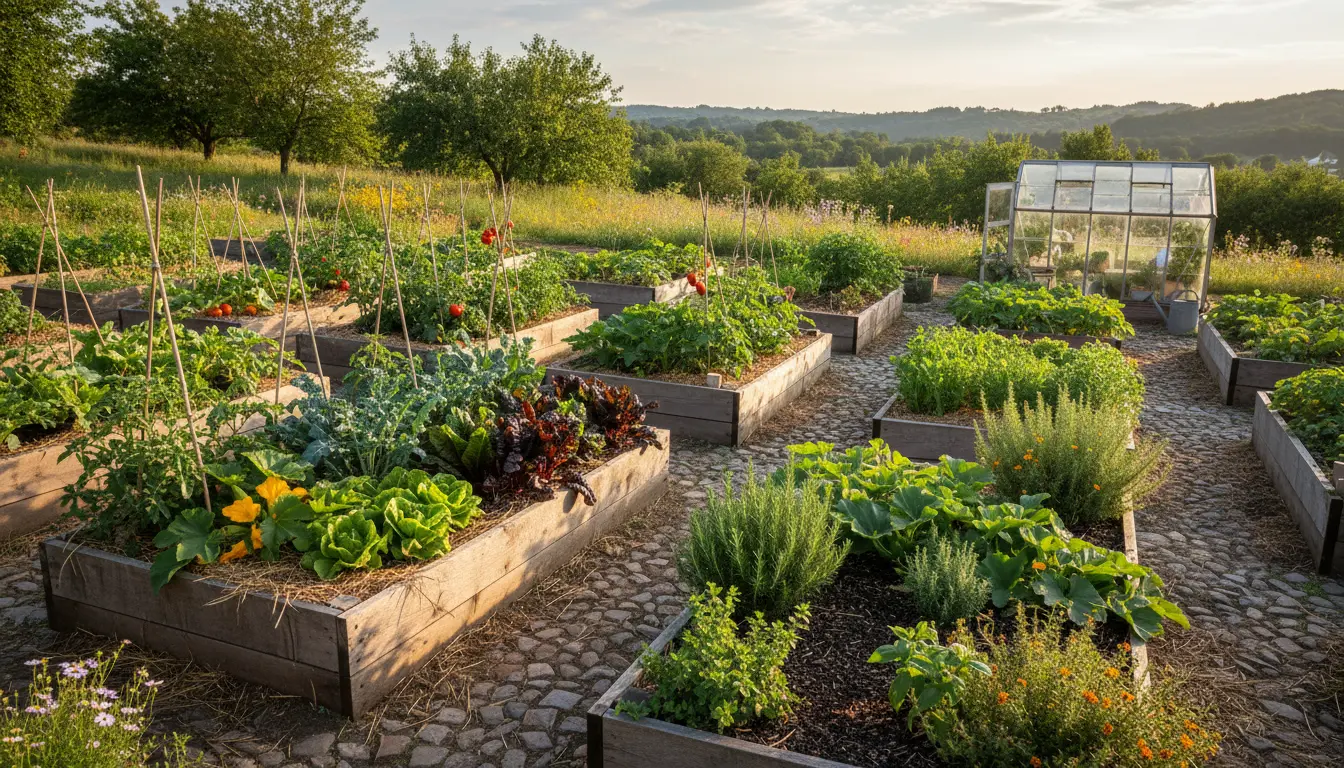
Why Start an Organic Vegetable Garden
Starting an organic vegetable garden gives you fresh produce and control over what goes into your food. It also supports biodiversity and reduces chemical runoff in your yard.
This guide gives practical steps to plan and run an organic vegetable garden, from soil to harvest.
Planning Your Organic Vegetable Garden

Good planning saves time and increases success. Choose a site with at least six hours of sunlight and easy access to water.
Decide between in-ground beds, raised beds, or containers based on space and mobility needs.
Choosing Plants for an Organic Vegetable Garden
Select varieties suited to your climate and season. Start with easy crops like lettuce, radishes, tomatoes, and beans.

Consider succession planting to keep the harvest steady through the season.
Layout and Spacing for an Organic Vegetable Garden
Plan rows or beds so you can reach plants without stepping on soil. Maintain recommended spacing to reduce disease and improve airflow.
Use companion planting to deter pests and improve pollination, such as planting marigolds near tomatoes.
Preparing Soil for an Organic Vegetable Garden

Soil is the foundation of an organic vegetable garden. Test soil pH and nutrient levels with a simple kit or lab test.
Amend soil with organic matter like compost or well-rotted manure to improve structure and fertility.
How to Build Fertile Soil
Add 2–4 inches of compost to beds and work it into the top 6–8 inches of soil. This increases water retention and supplies slow-release nutrients.
Use cover crops in the off-season to add nitrogen and prevent erosion. Clover, rye, and vetch are common choices.
Planting and Watering an Organic Vegetable Garden
Plant at recommended depths and times for your region. Hardening off seedlings before transplanting reduces shock.
Water deeply and infrequently to encourage strong root systems. Morning watering limits evaporation and leaf wetness at night.
Efficient Watering Techniques
- Use drip irrigation or soaker hoses to deliver water to roots, reducing disease and waste.
- Mulch with straw, wood chips, or leaf mold to conserve moisture and suppress weeds.
- Install a rain barrel to capture roof runoff for sustainable watering.
Pest and Disease Management in an Organic Vegetable Garden
Organic pest control focuses on prevention and physical controls rather than synthetic chemicals. Start with healthy soil and diverse planting.
Inspect plants regularly to catch issues early and remove affected foliage promptly.
Organic Pest Control Methods
- Hand-pick large pests like beetles and caterpillars early in the morning.
- Use row covers to protect seedlings from flying insects while allowing light and water through.
- Encourage beneficial insects by planting flowers and providing habitat for predators like ladybugs and lacewings.
- Apply organic sprays (neem oil, insecticidal soap) only when necessary and follow label directions.
Harvesting and Maintaining an Organic Vegetable Garden
Harvest vegetables at peak ripeness for best flavor and to encourage more production. Regular harvesting reduces pests and disease pressure.
Rotate crops each year to reduce buildup of pests and diseases in the soil. Keep records of what you planted and where.
Season Extension Tips
- Use cold frames or row covers to extend the growing season in spring and fall.
- Plant fast-maturing varieties and succession sow to make the most of short seasons.
Compost can increase soil microbial activity by up to 100 percent, improving nutrient availability and plant resilience in an organic vegetable garden.
Small Case Study: A Backyard Organic Vegetable Garden
Sara, a city homeowner, converted a 4×8 foot patch into a raised bed for an organic vegetable garden. She tested soil and added two inches of compost before planting.
Sara started with lettuce, cherry tomatoes, bush beans, and herbs. She used drip irrigation and mulched around plants. Within eight weeks she harvested continuous salad greens and tomatoes by mid-summer.
Her yield covered most of her summer salad needs and reduced grocery trips. Sara documented planting dates and pest observations to improve next season.
Practical Checklist to Start an Organic Vegetable Garden
- Choose a sunny site and decide bed type: in-ground, raised, or container.
- Test soil and add compost or organic amendments as needed.
- Select easy, region-appropriate varieties and plan spacing.
- Install drip irrigation or water deeply and mulch beds.
- Monitor for pests and use organic controls first.
- Rotate crops and use cover crops in the off-season.
Final Tips for a Successful Organic Vegetable Garden
Start small and expand as you gain experience. Small beds are easier to manage and help you learn local conditions faster.
Keep a simple garden journal with planting dates, varieties, and outcomes. Over time you’ll build a reliable schedule tailored to your microclimate.
Following these practical steps will help you start and maintain an organic vegetable garden that produces healthy food and supports the local ecosystem.