
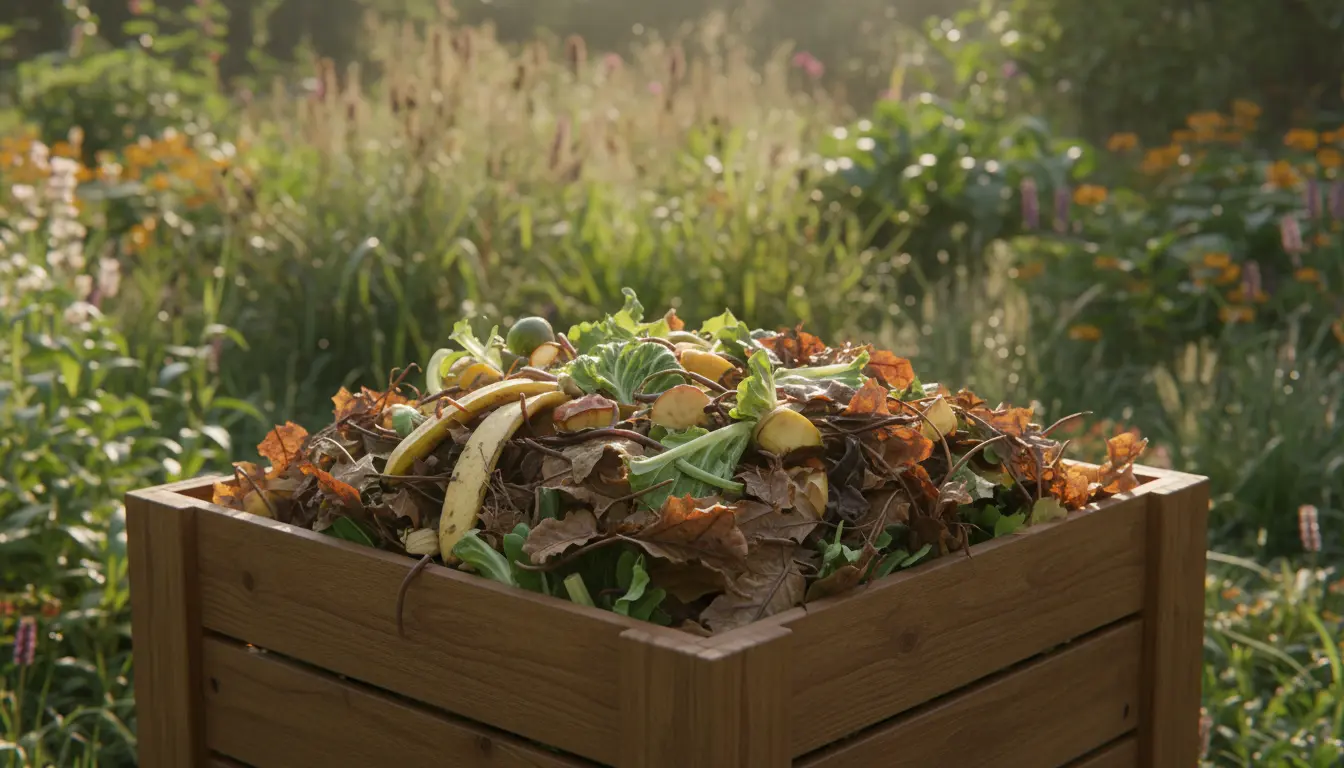
Home composting turns kitchen and yard waste into valuable soil amendment. This guide explains easy, practical steps you can follow today to build and maintain a healthy compost pile.
Why Home Composting Matters
Home composting reduces household waste and supports healthy soil. Compost improves water retention, supplies nutrients, and reduces the need for chemical fertilizers.

Composting also lowers methane emissions from landfills by diverting organic waste. Small efforts at home add up to measurable environmental benefits.
How Home Composting Works
Composting is the biological breakdown of organic matter by microbes, worms, and insects. The process needs a balance of carbon, nitrogen, moisture, and oxygen to work efficiently.
Think of carbon-rich materials as browns and nitrogen-rich items as greens. Proper layering and occasional turning keep the pile active and odor-free.
Key Components for Home Composting
- Carbon (Browns): dry leaves, straw, shredded paper, cardboard
- Nitrogen (Greens): vegetable scraps, coffee grounds, fresh grass clippings
- Water: moist but not soggy, similar to a wrung-out sponge
- Air: aeration through turning or passive ventilation
Step-by-Step: How to Start Home Composting

Starting composting is simple when you follow these basic steps. You can begin with a small bin or a simple pile in the backyard.
1. Choose a Location and Container
Pick a level, shaded spot near a water source for convenience. For containers, options include tumblers, wire bins, or simple wooden frames.
Tumblers speed up turning but hold less material. Open bins are cheaper and work well if you can turn the pile manually.
2. Gather Materials

Collect a mix of browns and greens. A good rule is about 2–3 parts brown to 1 part green by volume.
Keep a small countertop bin for kitchen scraps to make collection easier. Avoid meat, dairy, and oily foods in backyard compost to prevent pests.
3. Build the Pile
Start with a layer of coarse browns to help airflow. Alternate layers of greens and browns, aiming for consistent moisture.
Shredding or chopping materials speeds decomposition. Aim for pieces under a few inches when possible.
4. Maintain Temperature and Moisture
Active compost heats up as microbes break down materials. A working hot pile may reach 120–140°F (50–60°C) but small home piles often stay cooler.
Monitor moisture: add water during dry spells and cover during heavy rain to avoid waterlogging.
5. Turn and Harvest
Turn the pile every 1–3 weeks to add oxygen and mix materials. Compost is ready when dark, crumbly, and earthy-smelling—usually in 2–6 months.
Sift finished compost and use it in garden beds, pots, or as a soil top-dressing.
Troubleshooting Common Issues in Home Composting
Compost problems usually indicate an imbalance. Odors are often caused by excess greens or lack of air. Add dry browns and turn the pile.
Slow decomposition can result from too-large materials or low moisture. Chop materials and moisten to boost activity.
Pest Prevention Tips
- Avoid meat, bones, dairy, and oily food waste
- Bury kitchen scraps in the center of the pile
- Use closed bins or wire cages if rodents are a concern
Composting a quarter of typical household food waste could eliminate about 100 kilograms of CO2-equivalent emissions per year for an average household.
Case Study: A Small Apartment Balcony Compost
Maria, a city renter, started composting in a 20-liter tumbler on her balcony. She used coffee grounds, vegetable peels, and shredded paper as her materials.
Within four months she produced enough compost to refresh a few potted herbs and reduce her weekly trash by nearly 30 percent. Regular turning and keeping the tumbler shaded prevented odor issues.
Practical Tips for Busy Beginners
Start small if you have limited time. A countertop container with frequent emptying into an outdoor bin keeps the process manageable.
Use these quick practices to stay consistent:
- Keep a dedicated compost scoop or tongs for kitchen scraps
- Store shredded paper near the bin to balance greens
- Set a calendar reminder to turn the pile every two weeks
Using Finished Compost
Mix finished compost into garden beds at a ratio of about 1:3 compost to soil for general use. Use straight compost as a top dressing for potted plants.
Compost can also be steeped in water to make a mild liquid feed for container plants and established gardens.
Final Checklist for Successful Home Composting
- Balance browns and greens; aim for 2–3:1 ratio
- Maintain moisture like a wrung-out sponge
- Turn regularly for aeration
- Avoid prohibited items like meat and dairy
- Harvest and use finished compost in soil or pots
Home composting is a low-cost, high-benefit practice anyone can adopt. Start with small steps and adjust as you learn what works for your space and routine.