
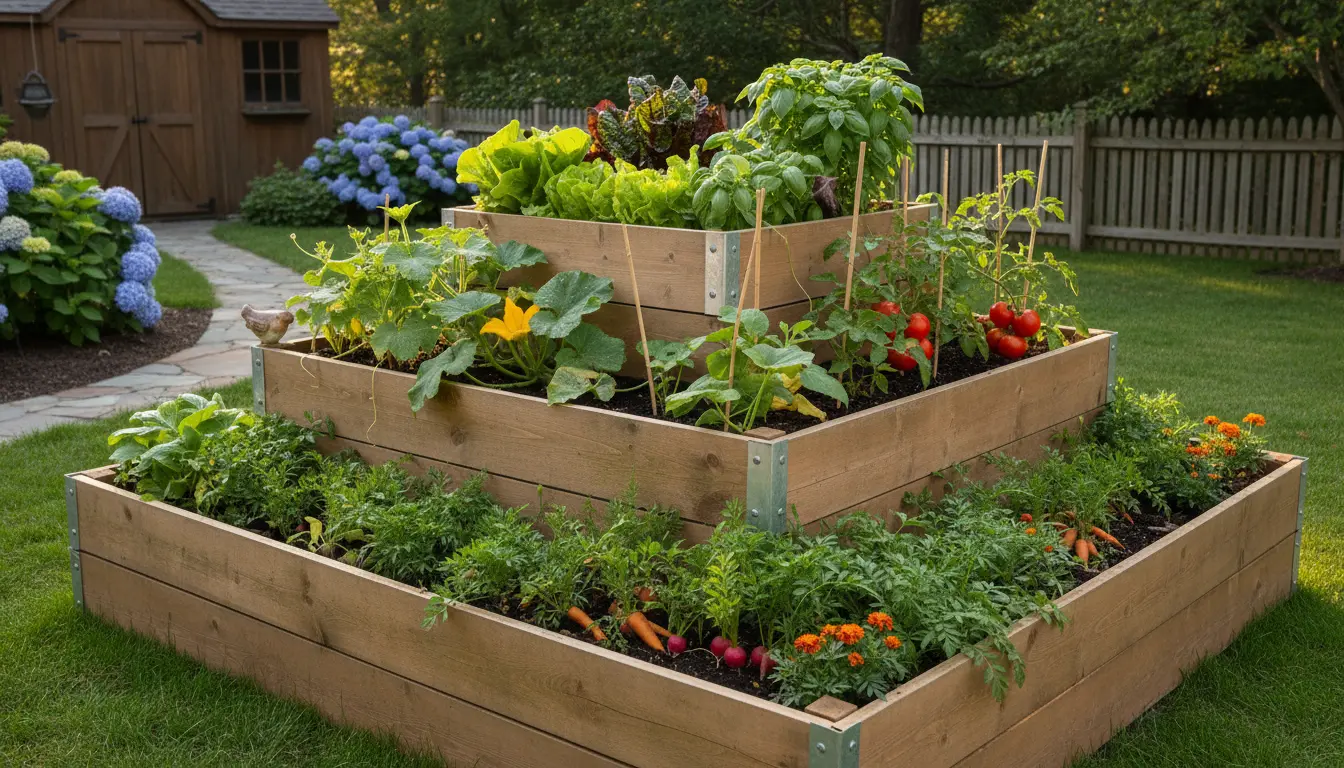
Raised bed vegetable gardens are a practical way to grow food in small or challenging spaces. This guide walks you through planning, building, planting, and maintaining a productive raised bed vegetable garden with clear steps and examples.
Why choose a raised bed vegetable garden
Raised beds improve soil conditions and drainage while concentrating effort in a manageable area. They reduce bending and compaction, and often increase yields per square foot.
Key benefits of a raised bed vegetable garden
- Better drainage and warmer soil in spring
- Improved soil structure by using chosen mixes
- Easier weed and pest control
- Accessible design for small yards, patios, and balconies
Planning your raised bed vegetable garden

Start by choosing a location with good sunlight and access to water. Most vegetables need at least six hours of sun daily.
Site selection and size
Place beds where they receive morning sun and have easy watering access. Common sizes are 4×4 feet or 4×8 feet to keep all planting within reach.
- Width: 3–4 feet to reach the center from either side
- Length: any, but 8 feet is easy to manage and move materials
- Depth: 12–18 inches for most vegetables; deeper for root crops
Materials and construction options
Use rot-resistant wood like cedar, recycled composite boards, or galvanized metal. Avoid treated lumber that can leach chemicals into soil if you plan to grow food.
Soil mix for a healthy raised bed vegetable garden

Good soil is the most important factor. A balanced, light, well-draining mix feeds plants and holds moisture without waterlogging.
Simple soil mix recipe
Use a mix that combines mineral and organic components for structure and fertility.
- 40% topsoil or screened garden soil
- 30% compost (well-aged)
- 30% coarse sand or perlite mixed with coconut coir or peat for moisture retention
Adjust amounts based on local soil quality. Add a balanced organic fertilizer at planting if compost is low quality.
Planting and maintenance in a raised bed vegetable garden

Planting in a raised bed uses space efficiently. Follow recommended spacing and rotate crops each year to avoid disease buildup.
Crop selection and spacing
- Leafy greens: plant closer (6–8 inches apart) in succession for continuous harvest
- Tomatoes and peppers: stake or cage; allow 18–24 inches between plants
- Root crops: carrots and beets need 2–4 inches spacing for thin roots
Watering and feeding
Water deeply at the base of plants 2–3 times per week depending on weather. Raised beds dry faster than ground soil, so monitor moisture with a hand test 3–4 inches down.
Top-dress with compost mid-season and use a balanced fish emulsion or other organic feed every 4–6 weeks for heavy feeders like tomatoes.
Seasonal schedule and crop rotation for raised bed vegetable garden
Plan beds into crop groups: heavy feeders, light feeders, and soil builders. Rotate groups yearly to reduce pests and maintain soil health.
Simple seasonal approach
- Spring: direct sow peas, lettuce, radishes; transplant brassicas
- Summer: tomatoes, peppers, beans, squash
- Fall: leafy greens, cover crops like clover or winter rye
Small case study: Urban family grows tomatoes in a 4×4 raised bed
A two-adult family in an apartment converted a sunny 4×4 bed on their balcony to grow food. They built a 12-inch cedar bed, filled it with the mix above, and planted two indeterminate tomatoes, basil, and a row of lettuce.
Results: By mid-summer the tomatoes produced 20–25 pounds of fruit. Lettuce was harvested in stages and basil kept pests low. The compact layout provided weekly salad greens through the season.
Raised beds warm faster in spring, allowing earlier planting by up to 2–3 weeks compared with in-ground gardens.
Troubleshooting common problems in raised bed vegetable garden
Watch for common issues early to reduce crop loss. Inspect plants weekly for pests and signs of disease.
Common problems and fixes
- Poor drainage: loosen soil and mix in coarse sand or perlite; consider deeper beds
- Low yield: test soil for nutrients and add compost or organic fertilizer as needed
- Pests: use row covers early, hand-pick larger pests, and introduce beneficial insects
- Wilting in heat: add shade cloth for hottest months and mulch to retain moisture
Keeping a simple journal of planting dates, varieties, and yields helps refine choices year to year. Adjust spacing and feeding based on what performed best.
Ready to start your raised bed vegetable garden?
Begin small to learn your microclimate and expand as you gain experience. A single 4×4 bed can supply a household with fresh salad greens and herbs, while multiple beds allow rotation and diverse crops.
Follow the planning, soil mix, planting, and maintenance steps above for a productive raised bed vegetable garden. With basic care and seasonal planning, you can grow reliable harvests even in tight urban spaces.