
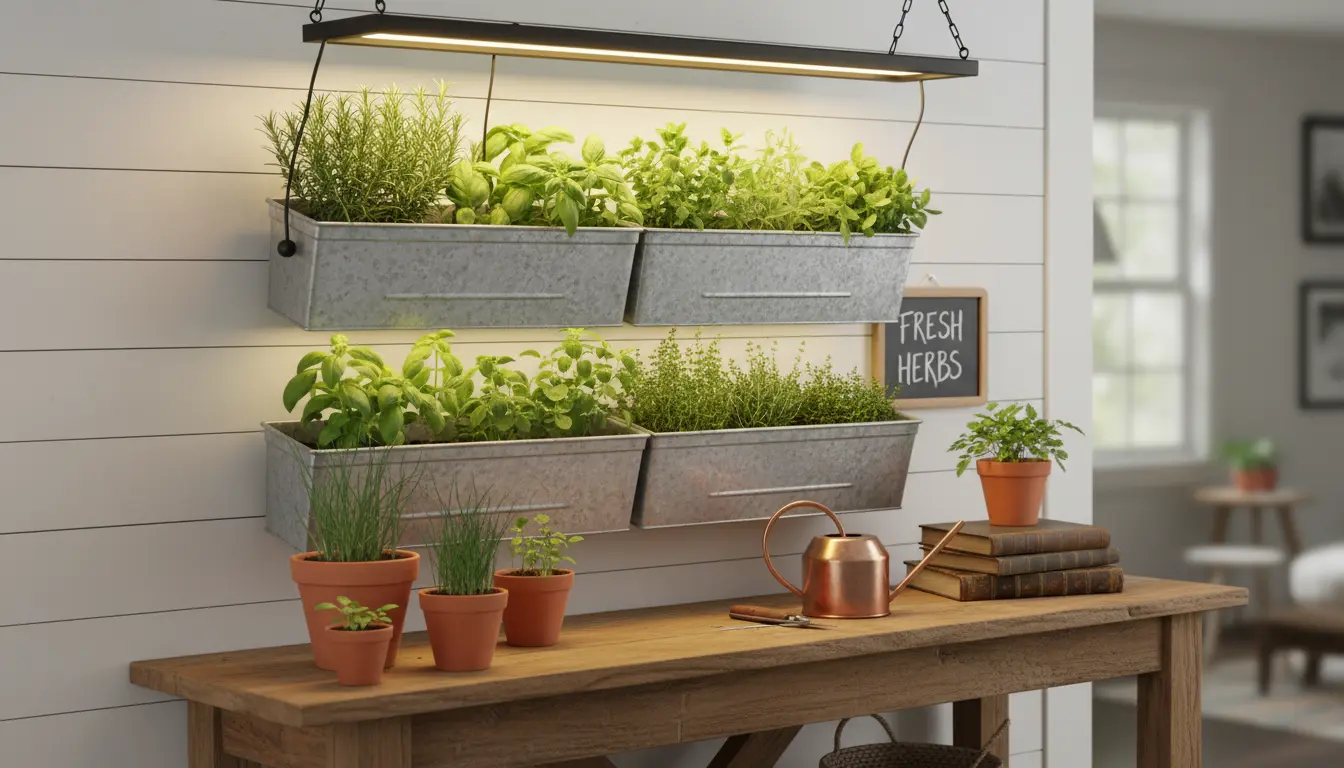
Growing an indoor herb garden is a practical way to have fresh flavor year-round and to learn basic gardening skills. This guide explains clear steps to set up, maintain, and troubleshoot an indoor herb garden for beginners and busy home cooks.
Indoor Herb Garden Basics
An indoor herb garden needs three essentials: light, soil, and water. Pay attention to each one and adjust to your home’s conditions.
Light for an Indoor Herb Garden

Most culinary herbs need at least 6 hours of bright light. A south- or west-facing windowsill is ideal, or use a full-spectrum LED grow light if natural light is limited.
Soil and Containers for an Indoor Herb Garden
Use a well-draining potting mix labeled for indoor plants or herbs. Choose containers with drainage holes and a tray to catch excess water to prevent root rot.
Choosing Plants for Your Indoor Herb Garden
Start with easy, reliable herbs that adapt well indoors. Pick a mix of leafy and aromatic herbs to cover cooking needs.
- Basil — likes warm, bright locations and regular pruning.
- Mint — tolerant of different light levels but can spread quickly.
- Parsley — slower to establish but useful and hardy.
- Rosemary — prefers bright light and drier soil.
- Chives — compact and ideal for small pots.
Step-by-Step Setup for an Indoor Herb Garden

Follow these steps to set up your herb garden and avoid common beginner mistakes. Keep the process simple and incremental.
- Pick a location with sufficient light or install a grow light.
- Choose pots with drainage and fill with potting mix.
- Plant from seedlings for faster results or sow seeds for lower cost.
- Water thoroughly after planting, then allow the top inch of soil to dry before watering again.
- Fertilize lightly once a month with a balanced liquid fertilizer during the growing season.
Example Layout
Place three to five pots on a single windowsill. Arrange tallest herbs (rosemary) at the back and low-growing ones (chives) at the front for even light exposure.
Watering and Feeding Your Indoor Herb Garden
Overwatering is the most common problem. Check soil moisture with your finger and water only when the top 1 inch feels dry.

Use a dilute liquid fertilizer every 3–4 weeks during active growth. Cut back fertilizing in winter or when growth slows.
Pruning and Harvesting an Indoor Herb Garden
Regular pruning keeps herbs productive and bushy. Harvest by cutting just above a pair of leaves or a node to encourage new shoots.
- Pinch basil leaves regularly to prevent flowering and keep flavor strong.
- Harvest no more than one-third of the plant at one time to avoid stress.
- Use the trimmings fresh or dry them for later use.
Troubleshooting Common Problems in an Indoor Herb Garden
Watch for yellowing leaves, leggy growth, and pests. Each symptom points to different fixes.
- Yellow leaves: often from overwatering or poor drainage.
- Leggy stems: a sign of inadequate light; rotate plants or add a grow light.
- Small white insects or sticky residue: check for aphids or mealybugs and treat with insecticidal soap.
Preventive Tips
Keep good air circulation, avoid crowding plants, and use clean tools when pruning. Quarantine new plants for a week to check for pests before adding them to your main setup.
Some herbs like mint and lemon balm prefer cooler indoor temperatures and will perform better in rooms under 70°F. Room temperature affects aroma and oil production in herbs.
Small Case Study: Anna’s Kitchen Windowsill Herb Garden
Anna, a busy teacher, started an indoor herb garden on a small kitchen windowsill. She chose basil, chives, and mint in three 4-inch pots and used a basic LED clip-on light.
Within six weeks she had consistent harvests. Regular pinching kept basil bushy, and rotating pots weekly ensured even growth. Anna saved money on grocery herbs and used fresh leaves in weeknight meals.
Key takeaways from her setup were: start small, monitor light, and prune regularly. These simple habits made her indoor herb garden sustainable and low maintenance.
Advanced Tips for an Indoor Herb Garden
Once comfortable, try companion planting and vertical setups to expand without losing space. Consider hydroponic kits if you want a soil-free option with faster growth.
Experiment with less common herbs like Thai basil, tarragon, or sage to broaden your culinary options. Keep notes on watering and light so you can repeat what works.
Final Checklist for a Successful Indoor Herb Garden
- Choose the right location or invest in a grow light.
- Use well-draining soil and pots with holes.
- Water when the top inch of soil is dry; avoid overwatering.
- Prune regularly to encourage bushy growth and prevent flowering.
- Monitor for pests and maintain air circulation.
An indoor herb garden is rewarding and quick to set up. With the right light, simple care routines, and a few starter plants, you can enjoy fresh herbs at home all year.