
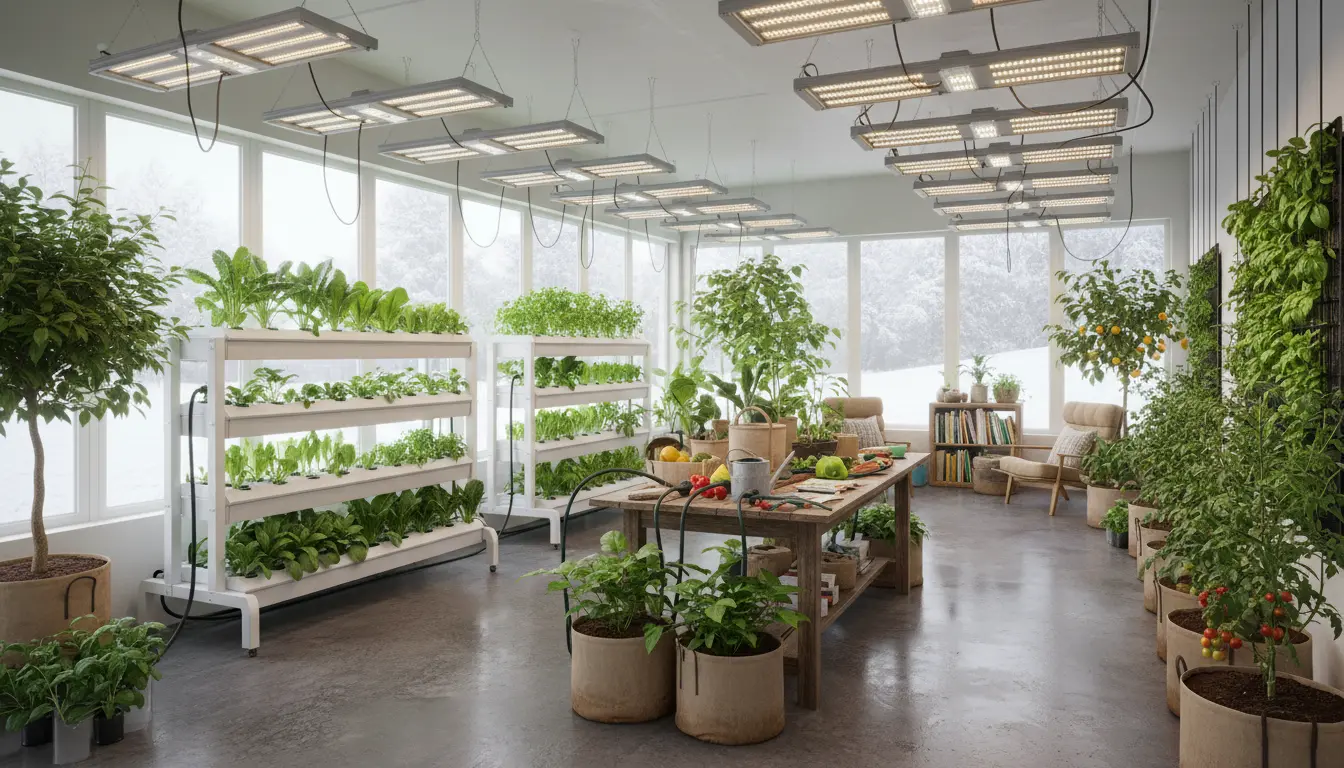
Start Small with Indoor Vegetable Gardening
Indoor vegetable gardening lets you grow fresh produce year-round, even in small apartments. You can control light, water, and temperature to optimize plant health.
This guide gives clear steps for beginners to choose plants, set up containers, and manage common problems. Follow practical advice to get harvests within weeks or months depending on the vegetable.
Benefits of Indoor Vegetable Gardening

Indoor gardening reduces grocery trips and ensures pesticide-free produce. It also makes gardening possible where outdoor space or seasons are limited.
Other benefits include better air quality and the ability to experiment with high-value herbs and vegetables year-round.
How to Start Indoor Vegetable Gardening
Starting an indoor vegetable garden involves four main choices: plants, light, containers, and soil. Each choice affects growth speed and yield.

Plan a small trial with 3–6 plants to learn how your environment behaves before expanding.
Choosing Plants for Indoor Vegetable Gardening
Choose plants that perform well in containers and limited light. Fast-growing, compact varieties are best for beginners.
- Herbs: basil, chives, parsley
- Leafy greens: lettuce, spinach, arugula
- Compact fruiting plants: cherry tomatoes, dwarf peppers
- Microgreens and sprouts: harvest in 1–3 weeks
Lighting and Watering for Indoor Vegetable Gardening
Most vegetables require 10–14 hours of bright light daily. South-facing windows help, but many gardeners use grow lights to ensure consistent light quality.

Water lightly but regularly — avoid waterlogged soil. Use containers with drainage holes and a well-draining potting mix to prevent root rot.
Soil, Containers, and Fertilizer for Indoor Vegetable Gardening
Use a high-quality potting mix formulated for containers; avoid outdoor garden soil. Potting mixes retain moisture and provide aeration for roots.
Fertilize on a schedule with a balanced liquid fertilizer or slow-release pellets. Follow product directions to avoid nutrient burn.
Layout and Equipment Checklist
Set up a compact, organized space where plants receive proper light and you can access them easily. A single shelf with adjustable LED grow lights often works well.
- Containers with drainage
- Quality potting mix
- Adjustable LED grow light
- Basic tools: trowel, watering can, pH test (optional)
- Fertilizer appropriate for vegetables
Daily and Weekly Care Routine
Maintain a simple routine to keep plants healthy. Daily checks and weekly adjustments prevent most problems.
- Daily: check soil moisture and inspect leaves for pests
- Weekly: rotate plants for even light, measure height, prune as needed
- Monthly: apply fertilizer if using liquid feeds or top up slow-release fertilizer
Common Problems and Solutions in Indoor Vegetable Gardening
Pests, diseases, and poor light are the most common issues. Early detection and targeted action keep plants productive.
- Aphids and whiteflies: wipe leaves, use insecticidal soap
- Yellowing leaves: check for overwatering or nutrient deficiency
- Leggy growth: increase light intensity or reduce light distance
Harvesting and Success Tips for Indoor Vegetable Gardening
Harvest herbs and greens frequently to encourage new growth. For fruiting plants, pick ripe fruit regularly to stimulate further production.
Keep a simple journal of planting dates, light hours, and fertilizer used. Small records help identify patterns and improve yields next season.
Many leafy greens like lettuce and spinach can be harvested as baby leaves in 3–4 weeks when grown indoors under proper light. Microgreens are ready in as little as 7–14 days.
Simple Case Study: Small Apartment Cherry Tomato Setup
Anna, a city renter, set up three dwarf cherry tomato plants on a balcony shelf with a single 18-inch LED grow light. She used 3-gallon containers and a peat-based potting mix.
With 12 hours of light and weekly liquid feeding, each plant produced 20–30 tomatoes over three months. The total cost of setup was under $120, and she harvested enough for weekly salads.
Key takeaways: choose compact varieties, invest in a reliable LED light, and start with a small number of plants to manage time and cost.
Quick Start Plan for the First 30 Days
Follow these steps to get a first successful crop within a month for fast growers like microgreens and salad greens.
- Week 1: Choose seeds, fill containers with potting mix, sow seeds as directed.
- Week 2: Ensure 10–14 hours of light daily, thin seedlings to recommended spacing.
- Weeks 3–4: Start light feeding, continue regular watering, harvest baby greens or microgreens.
Final Notes on Indoor Vegetable Gardening
Indoor vegetable gardening is practical and scalable from a few herbs to a full shelf of vegetables. Start small, learn from each crop, and expand what works in your space.
Consistency in light, water, and simple record-keeping will make the biggest difference in steady yields and healthy plants.