
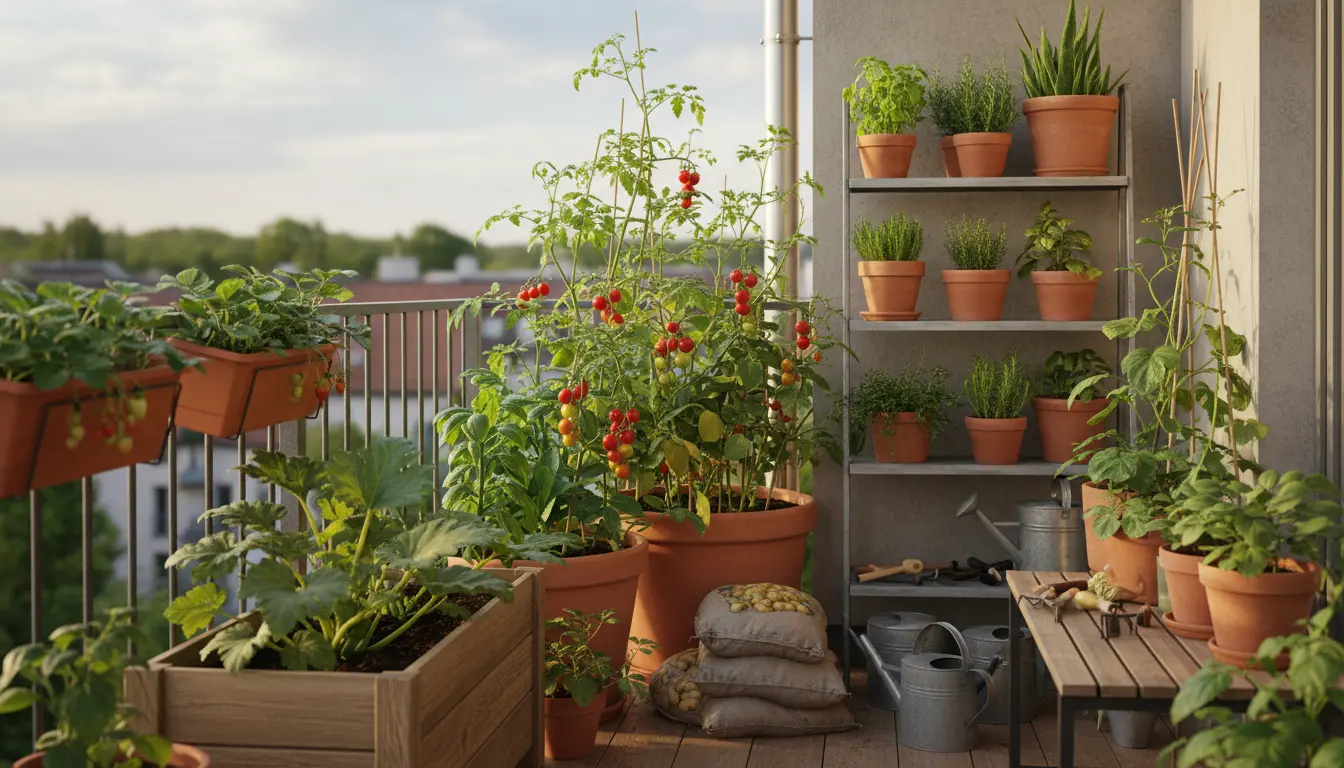
Growing vegetables in limited space is entirely possible with the right planning and techniques. This guide covers compact layouts, container choices, plant selection, and simple maintenance steps for a reliable harvest.
Plan Your Small Space Vegetable Garden
Start by measuring the available area and noting light exposure for at least a day. Most vegetables need 4 to 6 hours of direct sun; leafy greens tolerate less sunlight.

Decide whether you will use containers, raised beds, vertical systems, or a combination. The planning stage saves time and reduces wasted effort later.
Assess light and microclimate for your small space vegetable garden
Balconies and patios create microclimates that affect plant choice. South-facing spots get the most sun, while north-facing areas need shade-tolerant crops.
Observe wind, reflected heat, and cold pockets. These factors influence watering, plant protection, and container placement.
Choose Containers and Soil

Containers are the core of a small space vegetable garden. Use pots, grow bags, window boxes, or repurposed tubs to fit your layout and plant needs.
Good soil and drainage are critical. Use a quality potting mix designed for vegetables rather than garden soil.
Container types and soil tips
- Deep pots (12+ inches) for tomatoes, peppers, and root crops.
- Shallow trays for lettuce, spinach, and herbs.
- Self-watering containers reduce watering frequency and help prevent root stress.
- Mix 60% potting mix with 40% compost for nutrient balance and moisture retention.
Pick the Right Plants for a Small Space Vegetable Garden
Choose compact, high-yield, and fast-maturing varieties. Look for words like bush, patio, or compact on seed packets and plant labels.

Consider crops that give large returns in small footprints: salad greens, radishes, herbs, dwarf beans, cherry tomatoes, and compact peppers.
Plant suggestions by container size
- Small pots (6-8 in): basil, chives, microgreens, baby lettuce.
- Medium pots (10-12 in): dwarf tomatoes, peppers, bush beans.
- Large pots (15+ in) or grow bags: carrots, beets, larger tomato varieties, eggplant.
Layout and Vertical Gardening
Maximize floor area by going vertical. Trellises, hanging baskets, and stacked planters free up valuable space.
Vining crops like peas, cucumbers, and indeterminate tomatoes do well on trellises and save horizontal space for other plants.
Simple vertical systems for small space vegetable garden
- Trellis against a wall or railing for cucumbers and peas.
- Hanging baskets for strawberries and herbs.
- Stacked planters or tiered shelves to create layers of plants.
Some tomato varieties called determinate or bush tomatoes stop growing after a set height and yield all their fruit in a short period. These varieties are ideal for containers in small space vegetable gardens.
Watering, Feeding, and Maintenance
Regular watering is crucial because containers dry out faster than ground soil. Water deeply so roots grow down rather than staying near the surface.
Use a balanced liquid fertilizer every 2 to 4 weeks for vegetables in containers. Compost tea or a slow-release granular fertilizer can also work well.
Practical maintenance checklist
- Check soil moisture daily during hot weather and water when the top inch is dry.
- Pinch back herbs to encourage bushy growth and prevent bolting.
- Rotate crops or refresh potting mix each season to prevent disease buildup.
Pest Management in a Small Space Vegetable Garden
Small gardens still face pests. Preventive steps are the most effective: clean containers, good airflow, and healthy soil reduce problems.
Use physical barriers like row covers for young plants and hand-pick larger pests. Organic controls like neem oil or insecticidal soap work for many common insects.
Real-World Example: A Simple Balcony Case Study
Emma lives in a third-floor apartment with a 6-foot by 3-foot balcony. She used three 12-inch deep pots, two hanging baskets, and a small trellis.
She planted compact cherry tomatoes, basil, parsley, and a tray of mixed salad greens. With daily morning sun and consistent watering, Emma harvested salad greens weekly and tomatoes by late summer.
Her tips: use a saucer under each pot to capture runoff, move containers to follow sunlight patterns, and prune tomato suckers to focus plant energy.
Seasonal Timing and Succession Planting
Plan successive plantings to keep the space productive. Sow fast crops like radishes or salad greens between slower-growing vegetables.
In cool months, swap warm-season crops for cold-hardy greens or overwinter herbs to maintain continuous production.
Succession planting example for a small space vegetable garden
- Early spring: sow spinach and radishes.
- Late spring: plant tomatoes and peppers in larger containers.
- Late summer: sow a fall crop of lettuce and kale after harvesting early vegetables.
Final Tips for Success
- Start small and expand as you learn what works in your space.
- Label your containers and keep a simple garden journal for planting and harvest dates.
- Choose disease-resistant varieties when available and replace potting mix every 1 to 2 years for fresh nutrients.
With careful planning, routine care, and the right plant choices, a small space vegetable garden can supply fresh produce and satisfy the joy of growing. Start with a few containers and scale up as you gain confidence.