
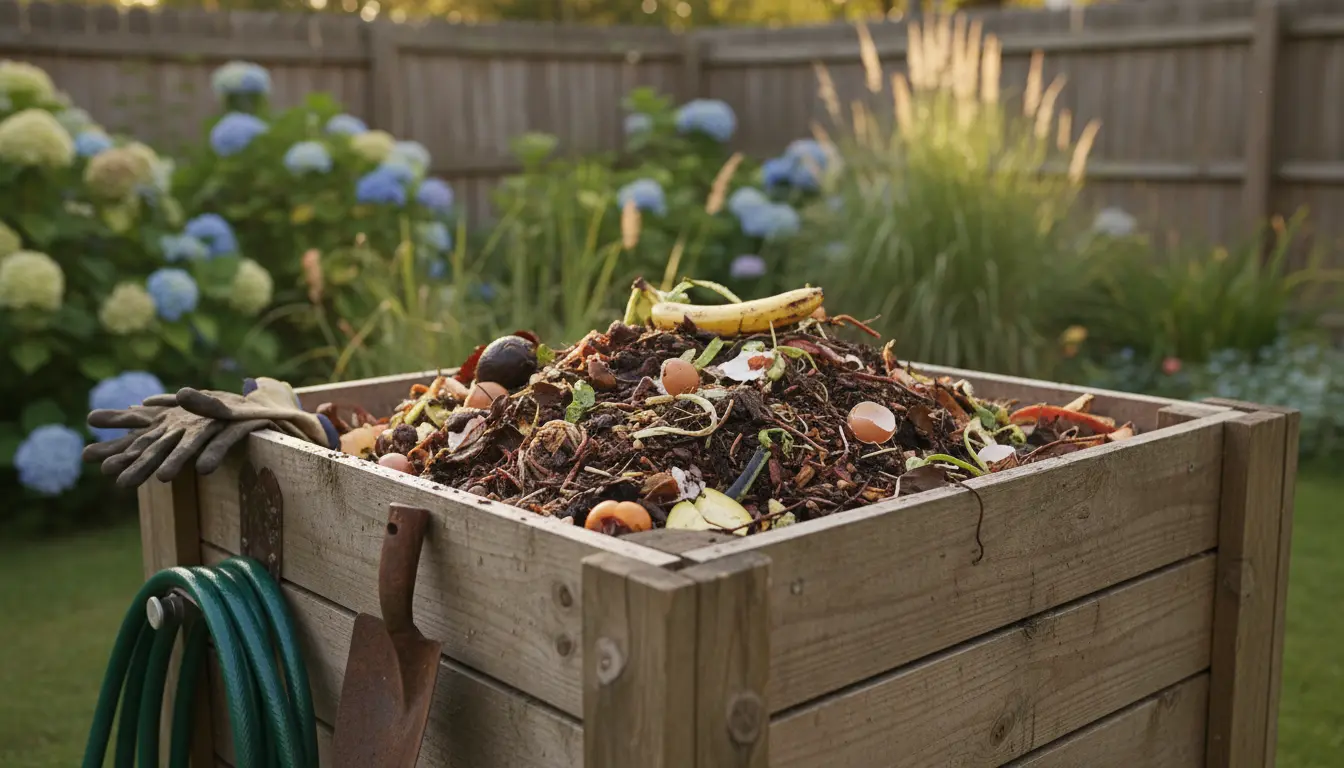
Composting at home reduces waste and creates valuable soil amendment. This guide explains clear steps to set up and maintain a home compost bin, aimed at beginners and small-space gardeners.
Why Choose a Home Compost Bin
A home compost bin confines materials, keeps pests away, and speeds up decomposition. It is ideal for yards, balconies with small bins, and community gardens.

Bins reduce mess and help maintain heat and moisture—two critical factors for effective composting.
How to Start a Home Compost Bin
Follow a few basic steps to get your bin working efficiently. Each step helps balance the materials and conditions inside the bin.
1. Choose the Right Location and Bin
Pick a spot with partial shade and good drainage. Avoid areas with standing water or direct, full sun that dries the pile too quickly.

Bin options include:
- Plastic tumblers for faster turning and small yards
- Stationary wooden or plastic bins for larger volumes
- Wire mesh or DIY pallets for low-cost, aerated systems
2. Gather Materials: Browns and Greens
Compost needs a balance of carbon-rich (browns) and nitrogen-rich (greens) materials. Aim for roughly a 25–30:1 carbon-to-nitrogen ratio by weight.
- Greens: vegetable scraps, coffee grounds, fresh grass clippings
- Browns: dry leaves, shredded paper, straw, cardboard
A simple rule: add one part greens to three parts browns by volume if unsure.
3. Build the Pile and Maintain Moisture

Start with a layer of coarse browns to promote airflow at the base. Alternate greens and browns in layers, keeping pieces small to speed decomposition.
Moisture should be like a wrung-out sponge. If it is too dry, add water and green scraps; if too wet, add more browns and turn the pile.
4. Aerate and Turn the Compost
Oxygen supports the microbes that break down organic waste. Turn the bin every 1–2 weeks for active composting, or once a month for slower systems.
Methods to aerate:
- Use a compost fork or turning tool
- Rotate a tumbler-style bin frequently
- Add coarse materials to maintain air pockets
Common Problems and Troubleshooting
Even simple compost systems can have issues. Troubleshoot quickly to keep the process on track.
Bad Odor
A sour or rotten smell usually means too many greens or poor aeration. Add dry browns, turn the pile, and ensure drainage.
Pests
Attracting rodents often means exposed food scraps. Bury food in the center, avoid meat and dairy, and use a closed bin if necessary.
Slow Decomposition
Slow breakdown can stem from large pieces, low moisture, or low nitrogen. Chop materials, maintain moisture, and add fresh greens or a small amount of manure to boost nitrogen.
When Is Compost Ready?
Finished compost is dark, crumbly, and earthy-smelling. It may take 2 months in a hot system or 6–12 months in a passive pile.
Screen the compost to remove large pieces, then use it in potting mixes, topdress beds, or as mulch.
Tips to Speed Up Home Composting
- Shred or chop materials before adding them
- Keep the pile at least 3 feet wide for heat retention
- Use a compost activator like finished compost or a small handful of garden soil
- Turn regularly to maintain oxygen levels
Household food scraps can make up 20–30% of residential waste. Composting them reduces landfill volume and produces nutrients for plants.
Small Real-World Example
Case study: A city apartment gardener used a 50-liter tumbling bin on a balcony. By layering shredded paper with vegetable scraps and turning twice a week, they produced usable compost in 3 months.
That compost went into containers growing herbs and tomatoes, reducing store-bought soil costs and cutting food scraps by roughly half.
Practical Checklist to Start Today
- Choose a bin size that fits your space (5–50 liters for balconies; 200–600 liters for yards)
- Collect a mix of browns and greens
- Place the bin in a semi-shaded spot with good drainage
- Monitor moisture and aerate regularly
- Use finished compost to enrich soil and reduce fertilizer needs
Final Notes on Home Composting
Starting a home compost bin is low-cost and practical. It requires simple routines: balancing materials, maintaining moisture, and occasional turning.
With consistent care, a home compost bin delivers healthy soil amendment while cutting household waste. Begin small and adjust methods to your space and goals.