
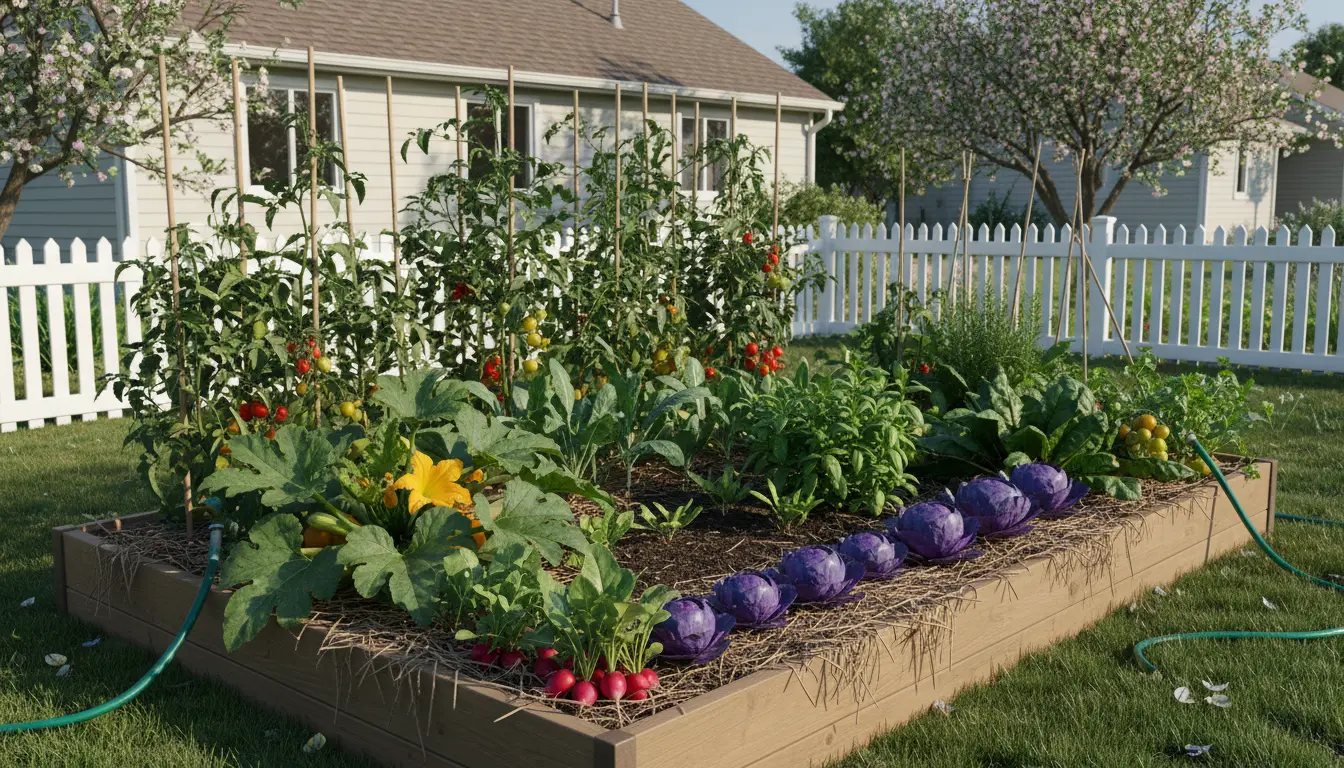
Starting a home vegetable garden is a practical way to grow fresh food, save money, and enjoy time outdoors. This guide covers site selection, soil preparation, planting, and common maintenance tasks in clear steps you can follow.
Plan Your Home Vegetable Garden
Decide what you want to grow and why. Choose vegetables you and your family eat regularly and varieties suited to your climate and season.

Think about space and time. A small raised bed or a few containers can be easier for beginners than a large plot.
Choose the Right Location for a Home Vegetable Garden
Most vegetables need at least six hours of direct sun a day. Pick the sunniest spot with good drainage.
- Full sun areas for tomatoes, peppers, and cucumbers
- Partial shade areas for leafy greens and herbs
- Close to a water source to make watering easier
Prepare Soil for a Home Vegetable Garden
Soil quality is the most important factor for healthy plants. Good soil improves water retention, root growth, and nutrient availability.

Test basic soil texture by feel and consider a simple soil test for pH and nutrients from a local extension service.
Amend Soil and Build Beds
Mix in organic matter such as compost or well-rotted manure to improve structure. For heavy clay, add coarse sand and compost; for sandy soil, add compost and peat or coconut coir.
- Raised beds: Easier to control soil and drainage
- In-ground beds: Use sheet composting or double-dig for better root depth
- Containers: Use quality potting mix and ensure good drainage holes
Planting and Care in a Home Vegetable Garden
Follow seed packet instructions or plant labels for spacing and depth. Stagger plantings every two to three weeks for a longer harvest period.

Water deeply and less frequently to encourage strong roots. Mulch helps conserve moisture and reduce weeds.
Basic Maintenance Tasks
Maintain a simple routine: check for pests, pull weeds, and harvest on time. Keep a garden notebook to track planting dates and successes.
- Watering: Morning is best to reduce disease risk
- Weeding: Remove weeds while small to prevent competition
- Fertilizing: Use balanced organic fertilizer or compost tea as needed
Common Problems and Troubleshooting in a Home Vegetable Garden
Pests and diseases are normal. Identify the problem before treating it to avoid unnecessary products or actions.
Use simple, low-impact strategies first: hand-picking pests, row covers, companion planting, and soapy water sprays for soft-bodied insects.
- Yellowing leaves: Check water and nutrient levels
- Holes in leaves: Look for caterpillars or beetles
- Poor fruit set: Ensure adequate pollination and consistent watering
Harvesting and Extending the Season in a Home Vegetable Garden
Harvest on time for best flavor and continuous production. Many vegetables taste better when picked regularly, such as beans and zucchini.
Use simple season extension methods like row covers or cold frames to get earlier starts and later harvests in cooler climates.
Seed Saving and Succession Planting
Save seeds from open-pollinated varieties to reduce costs next season. Practice succession planting by sowing small batches every few weeks.
- Succession planting: Keeps beds productive through the season
- Seed saving: Learn variety-specific methods to ensure viability
Small Real-World Case Study
Case study: Sarah converted a 4 by 8 foot raised bed near her kitchen into a productive space. She planted tomatoes, peppers, lettuce, and bush beans in spring.
Using compost-amended soil and drip irrigation, she harvested summer lettuce and repeated plantings of beans. By late summer she had enough tomatoes to can three quarts of sauce and shared excess lettuce with neighbors.
Key actions that worked: choosing compact varieties, mulching to retain moisture, and rotating crops the following season to reduce pests.
Simple Seasonal Checklist for a Home Vegetable Garden
- Early spring: Test soil, amend with compost, start cool-season crops
- Late spring: Plant warm-season crops after the last frost date
- Summer: Mulch, water deeply, and harvest frequently
- Fall: Plant cover crops, clean up debris, and save seeds
Starting a home vegetable garden is a manageable project when broken into steps. Begin small, learn from each season, and expand as your confidence grows. Consistent care and simple records will yield steady improvements and fresh food for your table.