
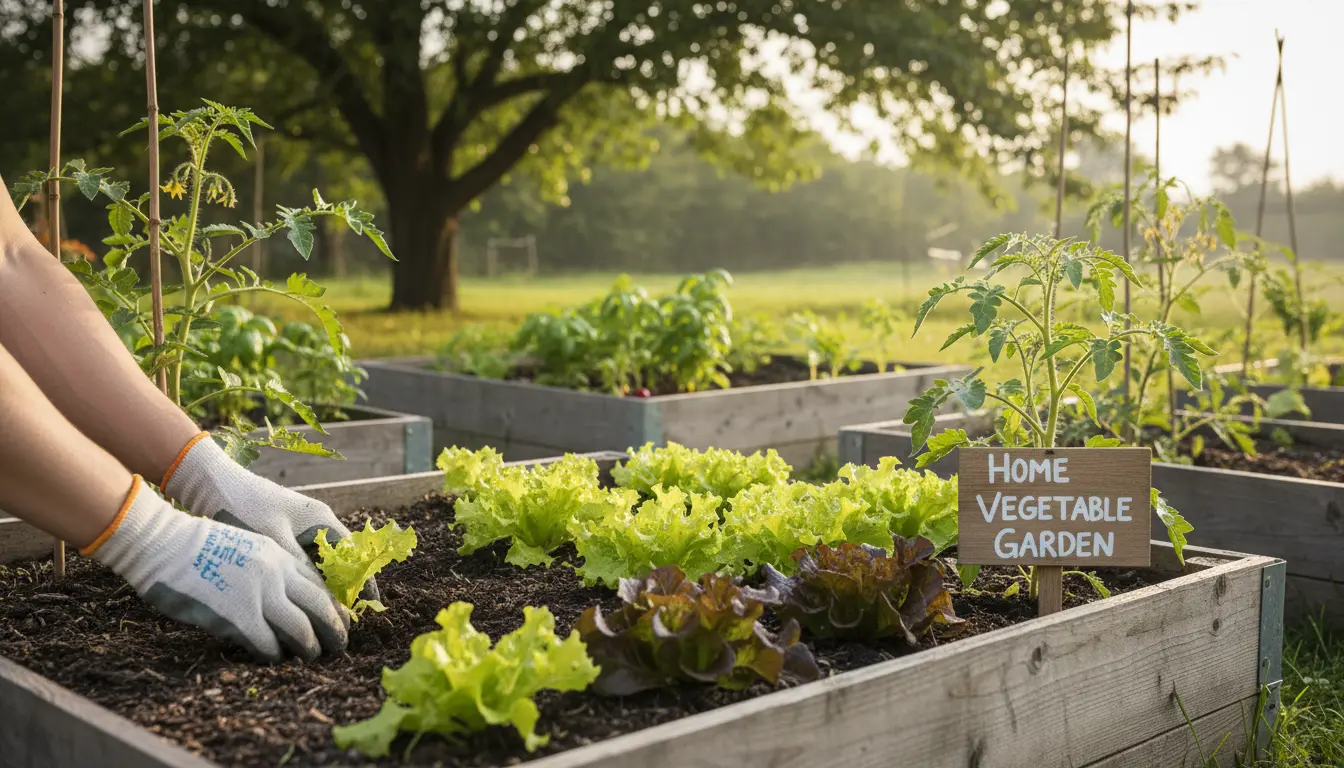
Why start a home vegetable garden
Growing your own vegetables saves money, improves food freshness, and gives you better control over how your food is grown. A home vegetable garden can fit a backyard, a raised bed, or even containers on a balcony.
This guide shows practical steps for beginners so you can plan, plant, and maintain a productive garden without unnecessary complexity.
Choose the right location for your home vegetable garden

Location determines how well your plants grow. Most vegetables need 6–8 hours of direct sunlight each day.
Check sunlight patterns over several days, noting morning vs. afternoon sun and any shading from trees or buildings.
Sunlight and microclimate
South-facing spots typically get the most light in the northern hemisphere. Walls and fences can reflect heat and extend the growing season.

Also consider wind exposure; provide windbreaks or choose sheltered spots for fragile plants.
Soil access and drainage
Good soil drains well but holds moisture. Avoid low spots that collect water. If drainage is poor, use raised beds or containers to improve conditions.
Step-by-step: How to start a home vegetable garden
Follow these steps to move from idea to planted garden. Each step is simple and actionable for beginners.
1. Plan what to grow

Choose vegetables you and your family eat and those suited to your climate. Start with easy, high-reward crops:
- Tomatoes and peppers (warm-season)
- Lettuce, spinach, and kale (cool-season)
- Radishes and carrots (root crops)
- Herbs like basil, parsley, and chives
2. Prepare the soil
Test soil pH with a simple kit. Most vegetables prefer pH 6.0–7.0. Improve soil with organic matter like compost or well-rotted manure.
Work compost into the top 6–8 inches of soil for raised beds. For containers, use a quality potting mix labeled for vegetables.
3. Plant at the right time
Use seed packets or plant labels to check frost dates and planting windows. Plant cool-season crops in early spring and late summer; warm-season crops after the last frost.
Start some plants indoors if your season is short, then transplant seedlings when conditions are right.
4. Water wisely
Consistent moisture is critical. Water deeply and less frequently to encourage strong roots. Avoid wetting foliage to reduce disease risk.
Mulch around plants to conserve moisture and suppress weeds. A 2–3 inch layer of straw or shredded leaves works well.
Tools, supplies, and simple layout ideas
You don’t need expensive gear to begin. A few basic tools make gardening easier and more efficient.
- Hand trowel and hand fork
- Spade or shovel for beds
- Garden hose with a nozzle or soaker hose
- Mulch and compost
- Stakes, cages, or trellises for vining crops
Simple layout ideas:
- Row beds: Good for larger yards and full-sun areas.
- Raised beds: Improve drainage and soil quality.
- Container gardens: Ideal for balconies and patios.
Maintenance and pest management for a home vegetable garden
Routine care keeps plants healthy and yields high. Spend time each week weeding, checking for pests, and monitoring moisture.
Common maintenance tasks
- Remove weeds regularly to reduce competition.
- Thin seedlings so plants have enough space.
- Fertilize lightly with compost tea or balanced fertilizer as needed.
Simple pest and disease strategies
Use physical barriers like row covers for insect control. Handpick larger pests and encourage beneficial insects by planting flowers.
Rotate crops each season to reduce soil-borne diseases and avoid planting related crops in the same spot year after year.
Companion planting, like placing basil near tomatoes, can improve flavor and deter pests without chemicals. Simple pairings often help both plants.
Harvesting and storing produce from your home vegetable garden
Harvest when fruits and leaves reach the recommended size for each crop. Regular harvesting often encourages more production.
Store herbs in the fridge wrapped in a damp paper towel. Most vegetables can be blanched and frozen for longer storage.
Case Study: A small city balcony garden
Maria had a 6-foot balcony and wanted fresh herbs and salad greens. She used three deep containers and two hanging baskets. Within eight weeks she harvested lettuces, basil, and cherry tomatoes.
Key choices that worked: full-sun placement, weekly compost tea, and trellises for tomato vines. Maria saved on grocery bills and cooked with pantry-fresh ingredients.
Quick checklist to start your home vegetable garden
- Choose a sunny, well-drained spot
- Decide between beds, raised beds, or containers
- Amend soil with compost or buy good potting mix
- Plant appropriate crops for the season
- Water deeply, mulch, and maintain weekly
Starting a home vegetable garden is a practical way to grow fresh food and learn a new skill. Keep planning simple, start small, and expand as you gain confidence. With basic care and attention, even a small plot can provide a steady supply of vegetables.